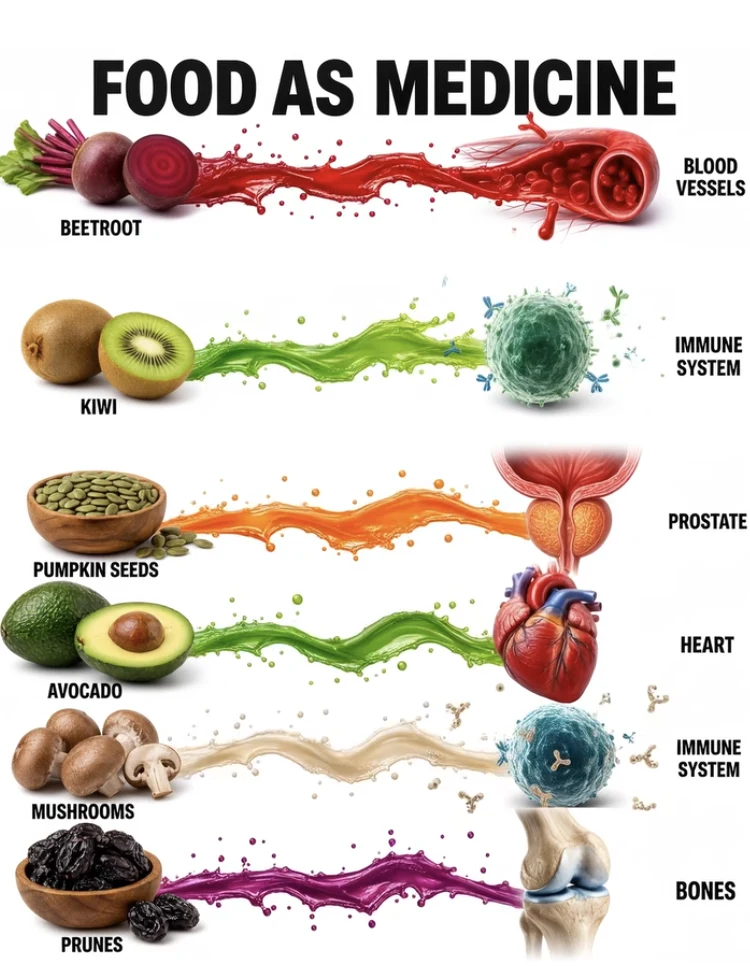
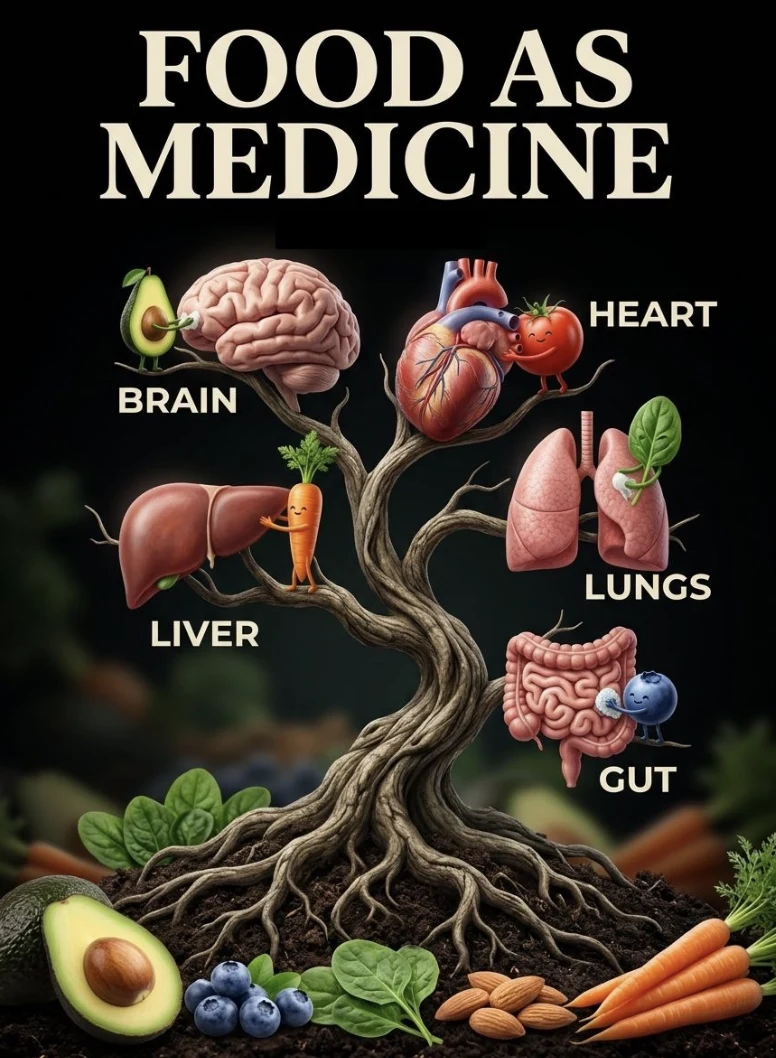
Your body is made up of dozens of organs working together every second of the day. Your heart pumps blood, your immune system defends against harmful microbes, your bones constantly rebuild themselves, and your prostate relies on a unique balance of nutrients to function normally.
Because every organ performs a different job, it also has different nutritional needs.
That’s why no single food can do everything. Instead, each food contributes its own mix of vitamins, minerals, healthy fats, fiber, and plant compounds that help support specific biological processes throughout the body.
Let’s take a closer look at how nutrition supports some of the body’s most important systems.
Heart & Blood Vessels: Keeping Blood Moving Efficiently
Every minute, your heart pumps about 5 liters (1.3 gallons) of blood through nearly 100,000 kilometers (60,000 miles) of blood vessels.
For this system to work properly, blood vessels need to stay flexible, blood pressure needs to remain within a healthy range, and cholesterol needs to stay balanced.
Several nutrients contribute to these processes.
Foods commonly associated with cardiovascular health include:
- Beetroot
- Oats
- Avocados
- Olive oil
- Fatty fish
- Walnuts
- Beans
- Spinach
Why these foods work
Although they look completely different, many of these foods provide nutrients that support the cardiovascular system in complementary ways.
Dietary nitrates, found naturally in beetroot and leafy greens, can be converted into nitric oxide. Nitric oxide acts as a signaling molecule that helps blood vessels relax, allowing blood to flow more efficiently throughout the body.
Soluble fiber, abundant in oats and beans, binds to bile acids inside the digestive tract. Since bile acids are made from cholesterol, the liver pulls more cholesterol from the bloodstream to replace them, helping maintain healthy LDL cholesterol levels.
Monounsaturated fats, found in avocados and olive oil, help replace saturated fats in the diet and support a healthier blood lipid profile.
Omega-3 fatty acids, supplied by fatty fish and walnuts, help maintain normal heart function and support healthy inflammatory responses.
Together, these nutrients help support healthy circulation, flexible arteries, balanced cholesterol, and efficient oxygen delivery throughout the body.
Immune System: Feeding the Cells That Protect You
Your immune system isn’t one organ—it’s an entire network of white blood cells, lymph nodes, antibodies, and protective barriers working together every day.
Producing and maintaining these cells requires a constant supply of nutrients.
Foods commonly linked with immune health include:
- Kiwi
- Citrus fruits
- Bell peppers
- Mushrooms
- Garlic
- Yogurt
- Broccoli
- Spinach
Why these foods work
Immune cells multiply rapidly when responding to infection, which increases their demand for vitamins and minerals.
Vitamin C, found in kiwi, citrus fruits, and bell peppers, contributes to the normal function of several types of white blood cells while also protecting them from oxidative damage.
Zinc, present in many whole foods, is involved in the development and communication of immune cells.
Beta-glucans, naturally occurring compounds in certain mushrooms, have been widely studied for how they interact with immune cells.
Meanwhile, probiotics found in fermented foods such as yogurt help nourish beneficial bacteria living in the gut. Since a large portion of immune tissue is closely connected to the digestive system, maintaining a healthy gut microbiome plays an important role in overall immune health.
Rather than “boosting” immunity, these nutrients help the immune system perform its normal functions efficiently.
Prostate: Supporting a Small Gland with Big Responsibilities
The prostate is a walnut-sized gland that helps produce fluid for semen and plays an important role in male reproductive health.
As men age, maintaining normal prostate function becomes increasingly important.
Foods commonly associated with prostate health include:
- Pumpkin seeds
- Tomatoes
- Broccoli
- Soy foods
- Green tea
- Fatty fish
Why these foods work
One of the prostate’s most unique characteristics is its unusually high concentration of zinc.
Pumpkin seeds are naturally rich in zinc, along with magnesium and plant sterols, nutrients involved in normal cellular function.
Tomatoes provide lycopene, a carotenoid antioxidant that accumulates in prostate tissue and has been widely researched for its potential role in supporting prostate health.
Broccoli and other cruciferous vegetables contain glucosinolates, sulfur-containing compounds that the body converts into biologically active molecules currently being studied for their effects on healthy cell function.
These nutrients don’t target the prostate individually. Instead, they support the normal maintenance and protection of prostate tissue over time.
Bones: Living Tissue That Never Stops Rebuilding
Bones aren’t static structures.
Throughout your life, specialized cells continuously remove old bone while new bone is formed.
This constant remodeling means your skeleton depends on a steady supply of nutrients every day.
Foods commonly associated with bone health include:
- Prunes
- Milk
- Greek yogurt
- Sardines
- Tofu
- Almonds
- Leafy greens
Why these foods work
Most people immediately think of calcium, but healthy bones require much more.
Calcium provides the mineral framework that gives bones their strength.
Vitamin K activates proteins responsible for binding calcium into bone tissue.
Magnesium helps regulate calcium metabolism while contributing directly to bone structure.
Protein supplies amino acids needed to build the collagen framework inside bone.
Prunes are particularly interesting because they naturally provide boron, potassium, vitamin K, and polyphenols. Researchers continue investigating how these compounds may help support normal bone remodeling, particularly during aging.
Healthy bones are built through the combined action of many nutrients—not calcium alone.
Brain: Fueling the Body’s Control Center
Your brain weighs only about 2% of your body weight, yet it consumes roughly 20% of your daily energy. Every thought, memory, movement, and emotion depends on billions of nerve cells communicating with one another.
To keep those connections working efficiently, the brain relies on a constant supply of healthy fats, antioxidants, vitamins, and minerals.
Foods commonly associated with brain health include:
- Fatty fish
- Blueberries
- Walnuts
- Eggs
- Pumpkin seeds
- Spinach
- Broccoli
- Dark chocolate
Why these foods work
Brain cells are surrounded by membranes that require healthy fats to remain flexible and function properly. Fatty fish provides omega-3 fatty acids, particularly DHA, which is a major structural component of brain tissue.
Eggs supply choline, an essential nutrient used to produce acetylcholine, a neurotransmitter involved in memory and learning.
Blueberries and dark-colored berries are rich in anthocyanins, antioxidant compounds that help protect brain cells from oxidative stress caused by normal metabolism.
Pumpkin seeds contribute magnesium, zinc, and iron, minerals involved in nerve signaling, oxygen transport, and normal cognitive function.
Together, these nutrients help support communication between brain cells, protect nervous tissue, and maintain normal cognitive performance throughout life.
Eyes: Protecting Vision Every Day
Your eyes constantly process light, color, and movement, allowing your brain to interpret the world around you. Because the retina is exposed to both light and oxygen throughout the day, eye tissues are especially vulnerable to oxidative stress.
Several nutrients help protect these delicate structures and support normal vision.
Foods commonly associated with eye health include:
- Carrots
- Spinach
- Kale
- Eggs
- Sweet potatoes
- Bell peppers
- Salmon
- Citrus fruits
Why these foods work
Carrots and sweet potatoes are excellent sources of beta-carotene, which the body converts into vitamin A. Vitamin A is essential for the retina, particularly for seeing in dim light.
Spinach, kale, and eggs provide lutein and zeaxanthin, two carotenoids that naturally accumulate in the macula—the central part of the retina responsible for sharp, detailed vision. These compounds help filter high-energy blue light and protect retinal cells from oxidative damage.
Vitamin C from citrus fruits and bell peppers supports the health of connective tissues throughout the eye, while omega-3 fatty acids from salmon contribute to healthy tear production and help maintain the surface of the eye.
Working together, these nutrients help maintain healthy vision and protect eye tissues as we age.
Digestive System & Gut: Nourishing the Microbiome
Your digestive system does much more than break down food. It absorbs nutrients, supports immune function, and is home to trillions of beneficial microorganisms collectively known as the gut microbiome.
A healthy digestive system depends on both the foods you eat and the bacteria that live within it.
Foods commonly associated with gut health include:
- Yogurt
- Kefir
- Oats
- Apples
- Bananas
- Beans
- Lentils
- Sauerkraut
Why these foods work
Many of these foods provide either probiotics or prebiotic fiber, both of which play different but complementary roles.
Fermented foods such as yogurt and kefir contain beneficial bacteria that help maintain a healthy balance within the gut microbiome.
Meanwhile, oats, apples, bananas, beans, and lentils provide soluble fiber and prebiotics, which serve as food for beneficial gut bacteria.
As these bacteria ferment fiber, they produce short-chain fatty acids (SCFAs) that help nourish the cells lining the colon and support the gut barrier.
A healthy gut microbiome also contributes to nutrient absorption, digestive comfort, and normal immune function.
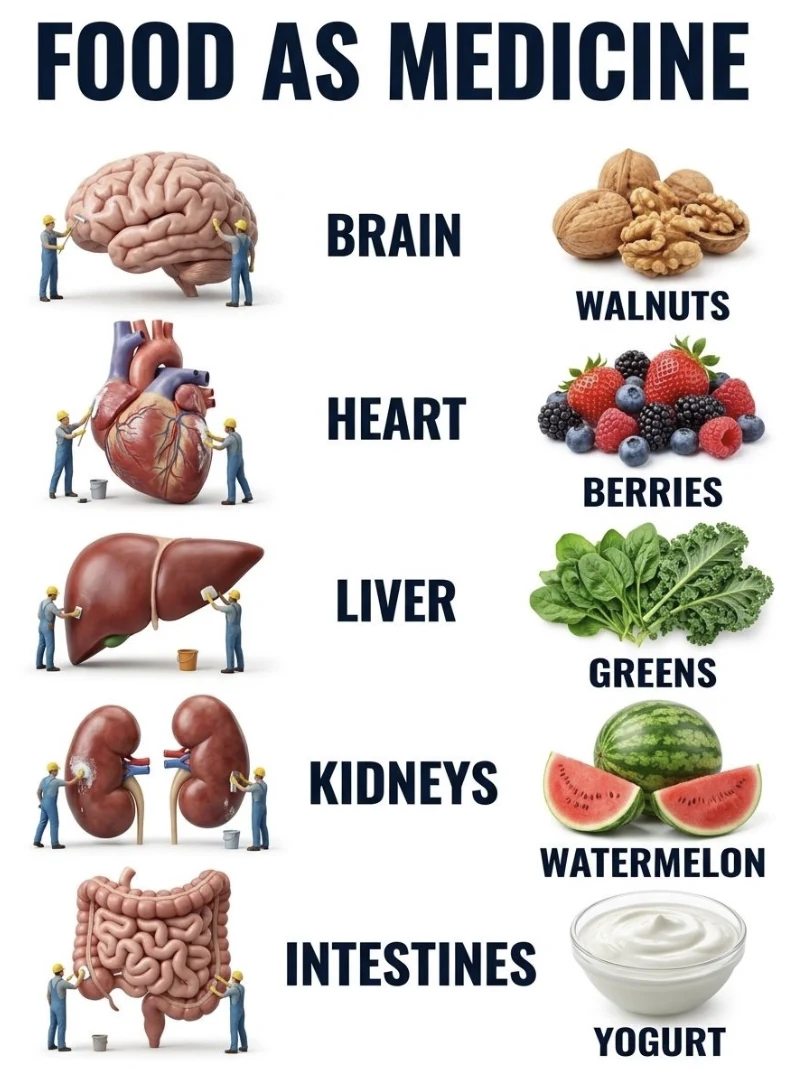
Liver: Supporting the Body’s Natural Processing Center
The liver performs hundreds of essential functions every day. It helps process nutrients, stores vitamins and minerals, produces bile for digestion, and breaks down substances that the body no longer needs.
Because these processes generate natural by-products, the liver benefits from a steady supply of protective nutrients.
Foods commonly associated with liver health include:
- Broccoli
- Brussels sprouts
- Garlic
- Beetroot
- Citrus fruits
- Walnuts
- Berries
Why these foods work
Cruciferous vegetables such as broccoli and Brussels sprouts contain glucosinolates, natural compounds that the body converts into biologically active molecules involved in normal cellular processes.
Garlic provides sulfur-containing compounds that participate in many metabolic pathways.
Beetroot and berries are rich in betalains, anthocyanins, and other antioxidant compounds that help protect cells from oxidative stress.
Citrus fruits contribute vitamin C, while walnuts provide healthy fats and polyphenols that complement an overall nutrient-rich dietary pattern.
Rather than “detoxing” the liver, these foods simply provide nutrients that help the liver perform its normal functions efficiently.
Muscles: Building and Repairing Strength
Whether you’re walking, lifting groceries, exercising, or simply maintaining your posture, your muscles are constantly working.
Muscle tissue is continuously being repaired and rebuilt, making adequate nutrition essential throughout life.
Foods commonly associated with muscle health include:
- Chicken
- Eggs
- Greek yogurt
- Cottage cheese
- Salmon
- Beans
- Lentils
- Quinoa
Why these foods work
Muscles are primarily built from protein, which supplies the amino acids needed to repair and maintain muscle tissue.
Many protein-rich foods also contain leucine, an amino acid that plays an important role in stimulating muscle protein synthesis after meals.
Magnesium and potassium contribute to normal muscle contraction and nerve signaling, while vitamin D supports normal muscle function.
Combining adequate protein intake with regular physical activity helps maintain muscle mass and strength throughout adulthood.
Skin: Nourishing the Body’s Largest Organ
Your skin serves as the body’s first line of defense against the outside environment. It protects against physical damage, harmful microorganisms, and excessive water loss while constantly renewing itself.
Healthy skin depends on a combination of structural proteins, healthy fats, antioxidants, and vitamins.
Foods commonly associated with skin health include:
- Tomatoes
- Avocados
- Berries
- Citrus fruits
- Nuts
- Fatty fish
- Bell peppers
Why these foods work
Vitamin C plays a central role in collagen production, helping maintain the strength and structure of the skin.
Healthy fats from avocados, nuts, and fatty fish help support the skin’s natural barrier, reducing moisture loss and maintaining elasticity.
Tomatoes provide lycopene, while berries contribute polyphenols and anthocyanins—antioxidants that help protect skin cells from oxidative stress caused by sunlight and environmental factors.
Vitamin E, found in nuts and seeds, works alongside vitamin C to help protect cell membranes throughout the skin.
Together, these nutrients support healthy skin structure, hydration, and resilience.
The Bigger Picture: Your Body Doesn’t Need One Superfood
It’s tempting to believe that one food can “fix” one organ.
Human biology doesn’t work that way.
Your heart depends on healthy blood vessels.
Your immune system relies on nutrients absorbed by your digestive tract.
Your bones require hormones, minerals, and protein working together.
Even the healthiest foods support multiple systems at once.
Instead of asking, “What’s the best food for my heart?”, a better question is:
“Am I eating enough variety to provide every organ with the nutrients it needs?”
A colorful plate filled with vegetables, fruits, legumes, whole grains, nuts, seeds, healthy fats, and quality protein naturally delivers hundreds of nutrients that work together far better than any single “superfood” ever could.
Final Thoughts
Food isn’t medicine in the sense that it can cure disease, but nutrition is one of the most powerful tools for supporting how your body functions every day. Different organs rely on different nutrients because they perform different jobs, and that’s why foods like beetroot, kiwi, pumpkin seeds, avocados, mushrooms, and prunes are often linked with specific aspects of health. Rather than looking for one miracle ingredient, focus on eating a diverse range of whole foods that nourish every system in your body. Over time, it’s this variety—not any single food—that builds a stronger foundation for long-term health.