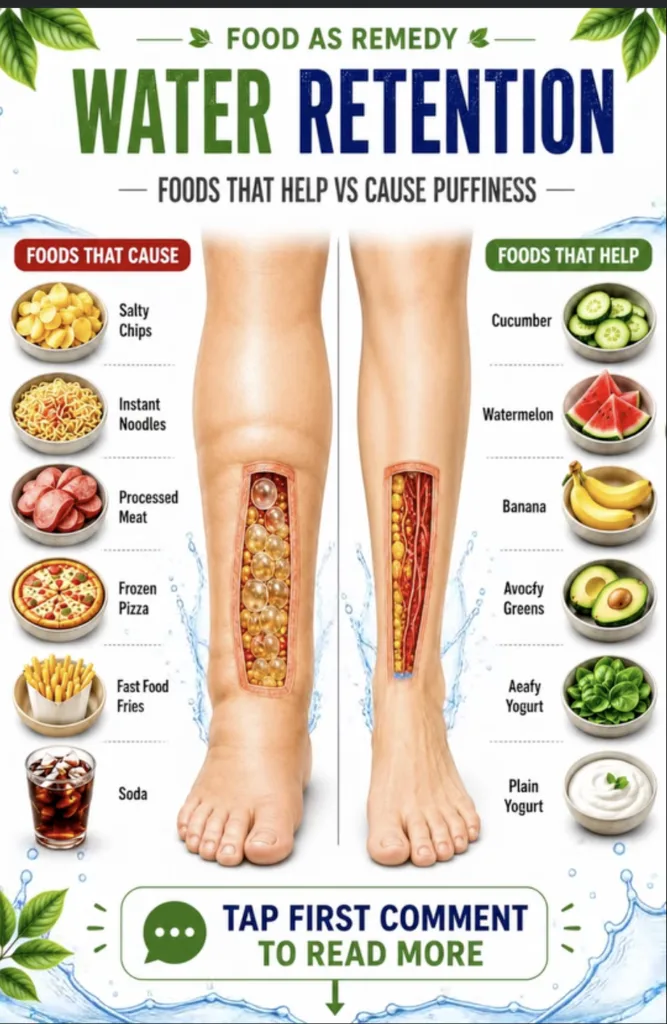
Swollen or puffy legs can be uncomfortable and frustrating. While sitting for long periods, hot weather, certain medical conditions, or hormonal changes can all contribute to swelling, your diet also plays an important role.
Some foods encourage your body to retain more water, while others provide hydration, potassium, and other nutrients that help maintain a healthy fluid balance.
Let’s take a closer look at which foods may contribute to puffiness and which ones may help support healthy circulation and hydration.
Foods That May Contribute to Puffiness
1. Salty Chips
Potato chips are typically very high in sodium.
Eating excessive sodium can cause the body to retain extra water, making your feet, ankles, and lower legs appear swollen.
Healthier choice: Unsalted popcorn or lightly salted nuts.
2. Instant Noodles
Instant noodles often contain:
- Large amounts of sodium
- Preservatives
- Flavor enhancers
A single serving may contain a significant portion of the recommended daily sodium intake.
Frequent consumption may increase water retention, especially in people sensitive to salt.
3. Processed Meats
Foods such as:
- Sausage
- Salami
- Ham
- Bacon
contain high levels of sodium and preservatives.
These ingredients may contribute to temporary fluid retention.
4. Frozen Pizza
Frozen pizza is often rich in:
- Salt
- Saturated fat
- Processed cheese
High sodium meals can cause temporary swelling, particularly if eaten regularly.
5. Fast-Food Fries
French fries combine:
- Large amounts of salt
- Deep-fried oils
While they’re delicious, eating them frequently may contribute to excess sodium intake and water retention.
6. Soda
Although soda isn’t high in sodium, sugary soft drinks may contribute to:
- Weight gain
- Increased inflammation
- Poor overall dietary quality
Replacing sugary drinks with water or sparkling water is generally a healthier choice.
Foods That May Help Support Healthy Fluid Balance
These foods don’t “cure” swelling, but they provide nutrients and hydration that may help support normal fluid balance as part of a healthy diet.
1. Cucumbers
Cucumbers are made up of about 95% water.
They help increase hydration while providing small amounts of potassium.
Great as:
- Salads
- Snacks
- Infused water
2. Watermelon
Watermelon provides:
- Water
- Vitamin C
- Lycopene
- Potassium
Its high water content can help support hydration during hot weather.
3. Bananas
Bananas are well known for being rich in potassium.
Potassium helps balance sodium levels in the body, supporting normal fluid regulation.
4. Avocados
Avocados provide:
- Potassium
- Healthy fats
- Fiber
- Magnesium
These nutrients support overall cardiovascular and metabolic health.
5. Leafy Greens
Vegetables such as:
- Spinach
- Kale
- Swiss chard
contain:
- Potassium
- Magnesium
- Antioxidants
They’re excellent additions to meals if you’re aiming for a nutrient-rich diet.
6. Plain Yogurt
Plain yogurt contains:
- Protein
- Calcium
- Probiotics
A healthy gut and balanced diet may indirectly support overall wellness, including fluid balance.
Choose unsweetened varieties whenever possible.
Other Ways to Reduce Puffy Legs
Besides choosing nutritious foods, you can also:
- Drink plenty of water throughout the day.
- Limit excessive sodium intake.
- Walk regularly to encourage circulation.
- Elevate your legs after long periods of standing or sitting.
- Stretch during long flights or desk work.
- Wear properly fitted compression socks if recommended by your healthcare provider.
- Maintain a healthy body weight.
- Exercise regularly.
When Should You See a Doctor?
Occasional mild swelling after a long day is common.
However, seek medical advice if swelling:
- Appears suddenly.
- Affects only one leg.
- Is painful or accompanied by redness or warmth.
- Comes with chest pain or difficulty breathing.
- Persists despite lifestyle changes.
Persistent leg swelling can sometimes be a sign of underlying conditions involving the heart, kidneys, liver, veins, or lymphatic system and should be evaluated by a healthcare professional.
Final Thoughts
No single food can instantly eliminate puffy legs, but your everyday eating habits can influence fluid balance. Limiting highly processed, salty foods while choosing more water-rich fruits, vegetables, potassium-rich foods, and minimally processed meals may help support healthy circulation and reduce temporary water retention as part of an overall healthy lifestyle.
If swelling becomes frequent, severe, or is accompanied by other concerning symptoms, it’s important to consult a healthcare professional to determine the underlying cause rather than relying on diet alone.