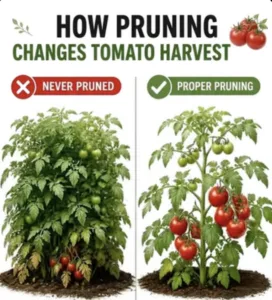
If your tomato plants are growing lots of leaves but producing only a handful of fruit, pruning may be the missing step.
Many gardeners assume that more branches mean more tomatoes. In reality, too much foliage often leads to smaller harvests, poor airflow, and a higher risk of disease. With proper pruning, your plants can focus their energy on producing healthier, larger, and tastier tomatoes.
Let’s explore why pruning makes such a big difference.
🌿 What Happens When You Never Prune?
A tomato plant that is never pruned often becomes thick and overcrowded.
While it may look lush and healthy, the dense foliage creates several problems:
- Leaves block sunlight from reaching developing fruit.
- Poor airflow traps moisture, increasing the risk of fungal diseases like early blight and powdery mildew.
- The plant spends more energy producing leaves than ripening tomatoes.
- Harvesting becomes more difficult because fruit is hidden inside the plant.
As a result, tomatoes are often smaller and ripen more slowly.
✂️ Benefits of Proper Pruning
Removing unnecessary suckers and lower leaves helps the plant direct its energy toward fruit production.
Proper pruning offers several advantages:
- 🍅 Larger tomatoes
- ☀️ Better sunlight exposure
- 🌬️ Improved air circulation
- 🦠 Lower risk of fungal diseases
- 🌱 Stronger stems and healthier growth
- 🧺 Easier harvesting
Many gardeners notice healthier plants and a more productive harvest after adopting a regular pruning routine.
🌱 Which Parts Should You Remove?
For indeterminate tomato varieties, focus on removing:
- Suckers growing between the main stem and side branches.
- Yellow or damaged leaves near the bottom of the plant.
- Branches touching the soil.
- Crowded interior growth that blocks airflow.
Avoid removing too many healthy leaves at once, as plants still need plenty of foliage for photosynthesis.
⏰ When Should You Prune?
The best time to prune is:
- Early in the morning when plants are dry.
- Every 1–2 weeks during the growing season.
- Before the plant becomes overly crowded.
Always use clean, sharp pruning shears to reduce the risk of spreading disease.
⚠️ Don’t Over-Prune
While pruning is beneficial, removing excessive foliage can expose tomatoes to intense sunlight, causing sunscald—a condition that leaves fruit with pale, damaged patches.
Aim to remove only unnecessary growth while keeping enough leaves to protect developing fruit.
🌟 Final Thoughts
Pruning isn’t about making your tomato plant look smaller—it’s about helping it grow smarter.
By improving airflow, reducing disease pressure, and directing energy toward fruit production, proper pruning can lead to stronger plants and a more abundant harvest.
A few minutes of pruning every couple of weeks can make a noticeable difference by the end of the season.
Have you tried pruning your tomato plants? Share your experience in the comments and let us know what worked best in your garden! 🍅🌿