Water is more than just a thirst quencher; it’s the very foundation of life, powering almost every function within your body. From the intricate workings of your brain to the strength of your bones, water plays an indispensable and essential role in maintaining your health and vitality.
Understanding why you need water is crucial for overall wellness. This article will explore how proper hydration contributes to the optimal functioning of your organs and systems, helping you unlock your body’s full potential.
Join us as we dive into the specific ways water supports key parts of your anatomy, revealing just how vital this simple, yet powerful, element truly is.
The Essential Role of Water in Your Body’s Systems
Our bodies are wonderfully complex, and at the heart of their performance lies water. Each organ and tissue relies on adequate hydration to perform its specific tasks. Let’s look at how water impacts some of your body’s most critical components.
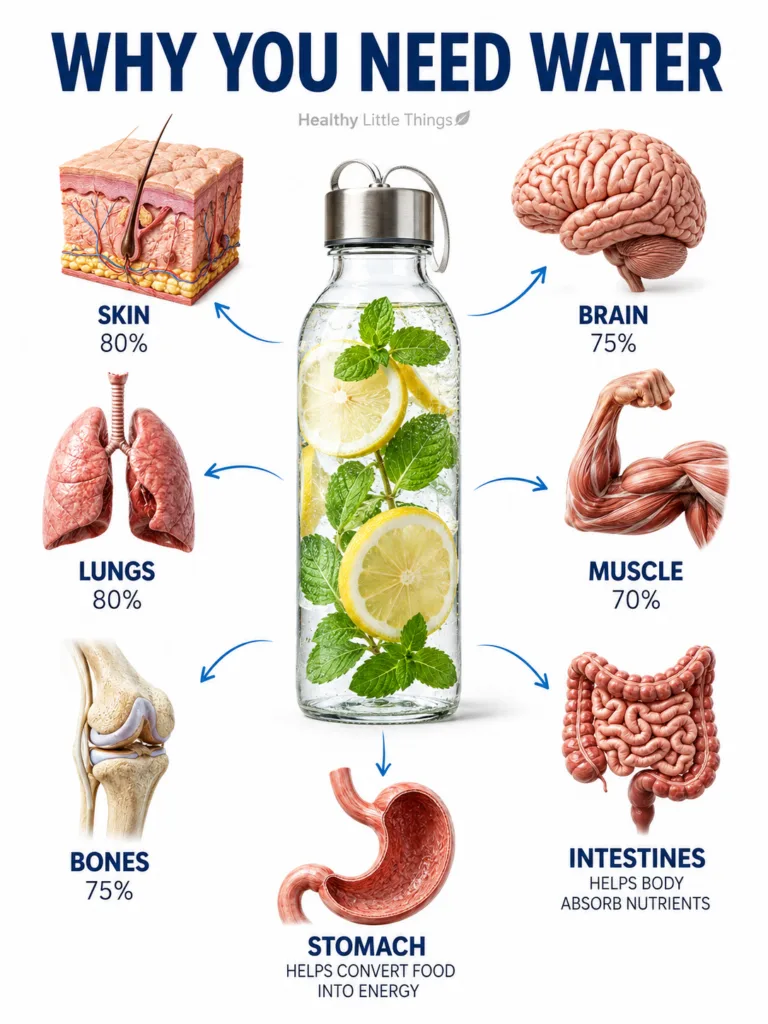
Skin: 80% Water for Elasticity and Protection
Your skin, the body’s largest organ, acts as a protective barrier against the environment. Composed of approximately 80% water, it relies heavily on hydration to maintain its elasticity, suppleness, and overall health. Adequate water intake helps keep skin cells plump, which can contribute to a smoother appearance and help prevent dryness. It also supports the skin’s ability to regulate body temperature through sweating.
Brain: 75% Water for Optimal Cognitive Function
The brain is approximately 75% water, highlighting its critical need for consistent hydration. Even mild dehydration can impact cognitive functions, affecting concentration, memory, and mood. Water helps transport nutrients and oxygen to the brain, supports neurotransmitter production, and removes waste products, all vital for clear thinking and optimal mental performance.
Lungs: 90% Water for Respiration
Your lungs, essential for breathing, are made up of about 90% water. This high water content helps to keep the lung tissues moist, facilitating the exchange of oxygen and carbon dioxide. Staying hydrated ensures that the mucous membranes in your lungs remain healthy, which helps protect against irritants and infections and supports efficient respiratory function.
Muscles: 75% Water for Strength and Movement
Muscles, which account for a significant portion of your body mass, contain roughly 75% water. Water is crucial for transporting nutrients to muscle cells, removing metabolic waste, and lubricating joints. Proper hydration helps prevent muscle cramps, supports muscle flexibility, and is essential for overall physical performance and recovery, making it vital for anyone engaged in regular activity or exercise.
Bones: 22% Water for Structure and Flexibility
While often perceived as solid, bones are living tissues with a significant water content, around 22%. Water contributes to the flexibility and shock-absorbing properties of cartilage, which protects the ends of your bones. It also helps transport nutrients to bone cells and remove waste, supporting bone health and density.
Stomach: Water’s Role in Digestion and Energy Conversion
The stomach plays a key role in the initial stages of digestion. Water is indispensable here, as it helps break down food and facilitates the conversion of food into energy. It forms part of the digestive juices and ensures that the stomach can effectively process meals, preparing nutrients for absorption further down the digestive tract.
Intestines: Water for Nutrient Absorption and Waste Elimination
The intestines are where most of your body absorbs essential nutrients from digested food. Water helps dissolve nutrients, making them easier for the intestines to absorb into the bloodstream. Furthermore, adequate water intake is critical for maintaining regular bowel movements, preventing constipation, and efficiently eliminating waste products from the body.
Practical Tips for Staying Hydrated
Given water’s widespread importance, making hydration a priority is simple yet profoundly effective for your health. Here are some actionable tips:
- Drink Regularly: Don’t wait until you’re thirsty. Sip water throughout the day.
- Keep Water Accessible: Carry a reusable water bottle (perhaps one perfect for healthy meal prep ideas) with you everywhere.
- Eat Water-Rich Foods: Incorporate fruits and vegetables like watermelon, cucumbers, and oranges into your diet.
- Flavor Your Water: Add slices of lemon, cucumber, or berries to enhance the taste without added sugars.
- Hydrate Around Workouts: Drink water before, during, and after physical activity to replenish fluids lost through sweat.
Frequently Asked Questions About Water and Health
How much water should I drink daily?
The general recommendation is about eight 8-ounce glasses (around 2 liters or half a gallon) per day, but individual needs vary based on activity level, climate, health status, and body size. Listen to your body and adjust accordingly.
What are the signs of dehydration?
Common signs include thirst, dark urine, fatigue, dry mouth, dizziness, and decreased urination. Severe dehydration can lead to more serious symptoms.
Can drinking water help with weight management?
Yes, water can aid in weight management by increasing feelings of fullness, which may reduce overall calorie intake. It also plays a role in metabolism, supporting the body’s ability to burn calories.
Final Thoughts
The human body is an intricate system, and water is the unsung hero that keeps it running smoothly. From nourishing your skin and fueling your brain to supporting digestion and muscle function, the essential role of water cannot be overstated. By prioritizing hydration, you’re not just quenching your thirst; you’re investing in your overall well-being, helping your body function at its best, every single day. Make a conscious effort to integrate more water into your daily routine, and feel the difference it makes.