10 Viral DIY Beauty Recipes You Can Make at Home
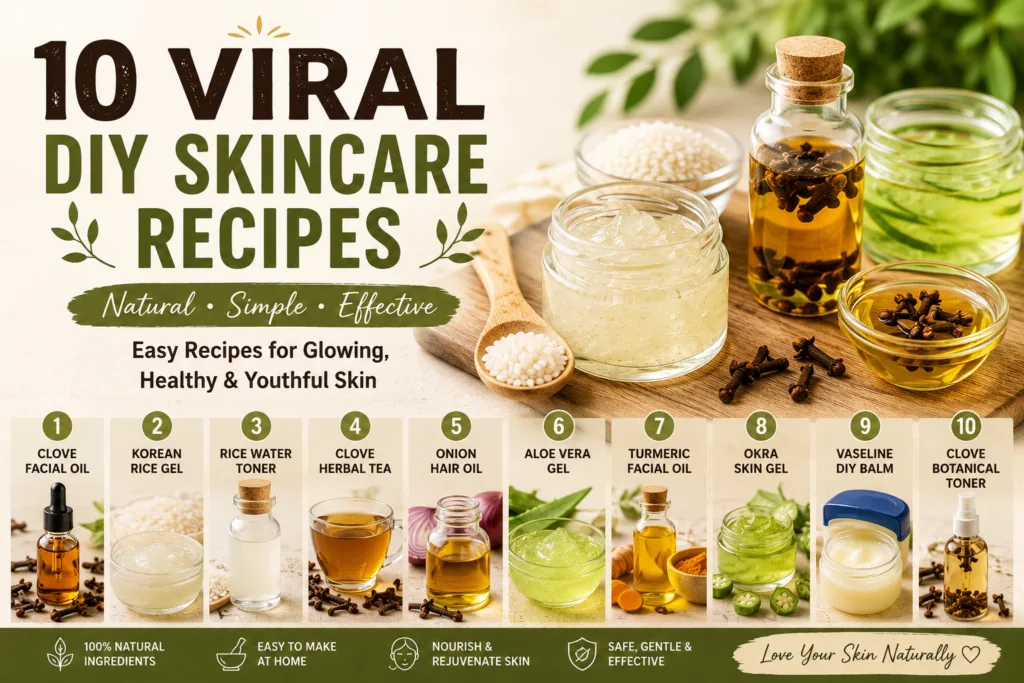
Homemade beauty recipes are popular because they are simple, affordable, and fun to prepare. The following ten recipes use familiar ingredients such as rice, aloe vera, rose water, turmeric, cloves, okra, and onion.
These recipes are intended for general cosmetic or culinary use only. They are not treatments for wrinkles, acne, hair loss, pigmentation, infections, or other medical conditions. Always patch-test skincare products before applying them to a larger area.
1. DIY Clove Facial Oil
This gently infused facial oil can be used as a moisturizing massage oil. Because cloves can irritate sensitive skin, this recipe uses only a small amount.
Ingredients
- 1 teaspoon whole cloves
- ½ cup jojoba oil, sweet almond oil, or grapeseed oil
- ½ teaspoon vitamin E oil, optional
- 1 clean glass jar
- 1 dark glass dropper bottle
- Fine strainer or cheesecloth
Instructions
- Clean and dry the jar completely.
- Lightly crush the cloves using the back of a spoon. Do not grind them into powder.
- Place the crushed cloves inside the jar.
- Pour the carrier oil over the cloves.
- Seal the jar and store it in a cool, dark place for three to five days.
- Shake the jar gently once each day.
- Strain the oil carefully so that no clove pieces remain.
- Add vitamin E oil and stir.
- Transfer the finished oil to a dark dropper bottle.
How to Use
Apply one or two drops to slightly damp skin after cleansing. Massage gently, avoiding the eyes, lips, nostrils, and broken skin.
Use no more than two or three times per week at first.
Storage
Store in a cool, dark place and use within two to three months. Discard it if the smell, color, or texture changes.
Safety Note
Do not apply undiluted clove essential oil directly to the face. Stop using the product immediately if it causes burning, redness, itching, or swelling.
2. Homemade Rice Gel
Rice gel has a soft, lightweight texture that can be used as a temporary moisturizing mask or rinse-off facial gel.
Ingredients
- ¼ cup uncooked white rice
- 1 cup filtered water
- 1 tablespoon pure aloe vera gel
- ½ teaspoon vegetable glycerin, optional
- Clean jar with a lid
Instructions
- Rinse the rice several times until the water becomes mostly clear.
- Place the rice and one cup of water in a small saucepan.
- Bring the mixture to a gentle boil.
- Reduce the heat and simmer for 15 to 20 minutes.
- Stir occasionally so the rice does not stick.
- When the rice is very soft and the liquid appears cloudy, remove it from the heat.
- Allow it to cool slightly.
- Blend the cooked rice and a small amount of its cooking water until smooth.
- Pass the mixture through a fine strainer for a smoother texture.
- Once completely cool, stir in the aloe vera gel and glycerin.
- Transfer the gel to a clean container.
How to Use
Apply a thin layer to clean skin. Leave it on for 10 minutes, then rinse with lukewarm water.
It can also be applied briefly to damp hair as a rinse-out mask. Rinse thoroughly afterward.
Storage
Keep refrigerated and use within three days. Because this recipe contains water and no preservative, it spoils quickly.
3. DIY Rice Toner
This simple rice-water toner can be used as a refreshing skin mist. It does not lighten skin permanently or treat pigmentation.
Ingredients
- ¼ cup uncooked rice
- 1 cup filtered or distilled water
- 1 clean bowl
- Fine strainer
- Spray bottle
Instructions
- Rinse the rice quickly to remove dust and surface debris.
- Place the cleaned rice in a bowl.
- Add one cup of filtered water.
- Gently stir the rice for one to two minutes.
- Allow it to soak for 20 to 30 minutes.
- Stir it again before straining.
- Pour the cloudy rice water into a clean spray bottle.
- Label the bottle with the preparation date.
How to Use
After cleansing, spray a small amount onto a cotton pad or directly onto the face with the eyes closed.
Pat it gently into the skin and follow with moisturizer.
Storage
Refrigerate immediately and use within two to three days.
Discard it if it develops an unusual odor, bubbles, mold, or a thick texture.
Optional Variation
Mix two tablespoons of fresh rice water with one tablespoon of commercial, preserved rose water immediately before use. Do not add fresh flower petals to the bottle.
4. Clove Herbal Tea
Clove tea is a warming, strongly flavored drink. It should be consumed in modest amounts rather than treated as a cure or detox drink.
Ingredients
- 2 cups water
- 3 whole cloves
- 1 thin slice of fresh ginger, optional
- 1 small cinnamon stick, optional
- 1 teaspoon honey, optional
- 1 lemon wedge, optional
Instructions
- Pour the water into a small saucepan.
- Add the whole cloves.
- Add ginger or cinnamon if desired.
- Bring the water to a gentle boil.
- Lower the heat and simmer for five minutes.
- Turn off the heat.
- Cover the saucepan and allow the tea to steep for another five minutes.
- Strain the tea into a cup.
- Add honey only after the tea has cooled slightly.
- Finish with a squeeze of lemon if desired.
Serving Suggestion
Drink one small cup while warm. The flavor is strong, so additional water may be added.
Safety Note
Avoid consuming large quantities of concentrated clove tea. People who are pregnant, have bleeding disorders, take blood-thinning medication, or have medical conditions should ask a qualified healthcare professional before using concentrated herbal preparations regularly.
5. Onion Hair Oil
Onion-infused oil is a traditional pre-shampoo scalp oil. Evidence for hair-growth claims is limited, so it should not replace professional evaluation for sudden or persistent hair loss.
Ingredients
- ½ small onion
- ½ cup coconut oil, sunflower oil, or olive oil
- 1 teaspoon black seed oil, optional
- Fine strainer
- Clean glass bottle
Instructions
- Peel and finely chop the onion.
- Pat the pieces with a clean paper towel to remove excess surface moisture.
- Place the carrier oil in a small saucepan.
- Add the chopped onion.
- Warm the mixture over very low heat for 10 to 15 minutes.
- Do not fry, brown, or burn the onion.
- Remove the saucepan from the heat.
- Allow the oil to cool completely.
- Strain it carefully through cheesecloth.
- Press lightly but avoid allowing wet onion pieces into the finished oil.
- Add black seed oil if using.
- Transfer the oil to a clean bottle.
How to Use
Apply a small amount to the scalp before shampooing. Massage gently for three to five minutes.
Leave it on for 20 to 30 minutes, then wash thoroughly with shampoo.
Use once a week.
Storage
Refrigerate and use within one week. Make small batches because fresh onion can introduce moisture and shorten shelf life.
Safety Note
Do not apply to irritated, scratched, infected, or recently treated scalp skin. Stop using it if irritation occurs.
6. Fresh Aloe Vera Gel
Fresh aloe gel can feel cooling and soothing, but it spoils much faster than commercially preserved aloe products.
Ingredients
- 1 mature aloe vera leaf
- Clean knife
- Spoon
- Bowl
- Blender, optional
- Clean jar
Instructions
- Wash the aloe leaf thoroughly.
- Cut off the pointed tip and the sharp edges.
- Stand the leaf upright in a bowl for 10 to 15 minutes.
- Allow the yellow liquid, called latex, to drain out.
- Rinse the leaf again.
- Slice away the green outer skin.
- Scoop out only the clear inner gel.
- Rinse the clear gel briefly to remove any remaining yellow residue.
- Blend for a few seconds if a smoother texture is desired.
- Transfer the gel to a clean container.
How to Use
Apply a thin layer to a small area of clean skin. Leave it on for 10 to 15 minutes and rinse.
For hair, apply a small amount to damp lengths and rinse after 10 minutes.
Storage
Refrigerate and use within two to three days.
For greater safety and convenience, commercially preserved pure aloe vera gel is preferable for regular use.
Safety Note
Do not ingest homemade aloe gel. Avoid the yellow latex, which can be irritating and unsafe to consume.
7. DIY Rose Toner
A homemade rose infusion offers a pleasant scent and refreshing feel. It is not the same as professionally distilled, preserved rose water.
Ingredients
- ½ cup fresh, pesticide-free rose petals
- 1 cup distilled water
- Small saucepan with lid
- Fine strainer
- Clean spray bottle
Instructions
- Examine the petals and remove damaged areas.
- Rinse them gently under cool water.
- Place the petals in a small saucepan.
- Add distilled water.
- Cover the saucepan.
- Warm over the lowest heat for 10 to 15 minutes.
- Do not boil vigorously.
- Remove the pan from the heat when the petals have lost some of their color.
- Leave the mixture covered until completely cool.
- Strain it into a clean bottle.
- Label it with the date.
How to Use
Mist lightly over clean skin with the eyes closed, or apply with a cotton pad.
Follow with a moisturizer.
Storage
Refrigerate and use within three days.
For a longer-lasting option, purchase cosmetic-grade rose water containing an appropriate preservation system.
8. Okra Gel
Okra naturally creates a slippery gel when cooked in water. This recipe works best as a short-contact, rinse-off hair gel.
Ingredients
- 5 fresh okra pods
- 1½ cups water
- Small saucepan
- Fine strainer or cheesecloth
- Clean container
Instructions
- Wash the okra thoroughly.
- Trim off the ends.
- Slice each pod into small pieces.
- Place the sliced okra in a saucepan.
- Add the water.
- Bring it to a gentle simmer.
- Cook for 10 to 15 minutes, stirring occasionally.
- When the liquid becomes slippery and gel-like, remove it from the heat.
- Strain while still warm.
- Allow the gel to cool completely.
- Transfer it to a clean container.
How to Use on Hair
After shampooing, apply a small amount to damp hair, concentrating on the lengths and ends.
Leave it on for five to 10 minutes, then rinse thoroughly.
How to Use as a Styling Gel
Apply a very small amount to wet curls, then allow the hair to dry. Because homemade okra gel has no preservative, avoid leaving a thick layer on the scalp.
Storage
Refrigerate and use within three days.
Discard it immediately if it smells sour, separates unusually, or develops visible growth.
9. Turmeric Facial Oil
Turmeric-infused oil may leave a temporary yellow stain on pale skin, clothing, towels, and surfaces. Use only a very small amount of turmeric.
Ingredients
- ½ cup jojoba oil, sunflower oil, or squalane
- ⅛ teaspoon turmeric powder
- ½ teaspoon vitamin E oil, optional
- Coffee filter or tightly woven cheesecloth
- Dark glass bottle
Instructions
- Pour the carrier oil into a clean glass jar.
- Add only ⅛ teaspoon of turmeric powder.
- Stir thoroughly.
- Seal the jar.
- Leave it in a dark place for 24 hours.
- Allow the turmeric powder to settle at the bottom.
- Strain the oil through a coffee filter.
- Repeat the filtering process if powder remains.
- Stir in vitamin E oil.
- Transfer to a dark glass bottle.
How to Use
Mix one drop of turmeric oil with three or four drops of plain moisturizer or carrier oil.
Apply a very thin layer at night and avoid clothing and bedding.
Rinse the face in the morning.
Storage
Store in a cool, dark place and use within two to three months.
Safety Note
Patch-test carefully. Do not use it on irritated skin, and do not combine it with multiple strong exfoliating products during the same routine.
10. Rice and Aloe Moisturizing Gel
This lightweight gel combines cooked rice paste with aloe vera. Because both ingredients contain water, the finished product must be refrigerated and used quickly.
Ingredients
- 2 tablespoons uncooked white rice
- ¾ cup filtered water
- 2 tablespoons pure aloe vera gel
- ½ teaspoon vegetable glycerin
- 2 drops jojoba oil, optional
- Clean container
Instructions
- Rinse the rice until the water becomes mostly clear.
- Place it in a small saucepan with ¾ cup water.
- Simmer over low heat until the rice becomes extremely soft.
- Remove the saucepan from the heat.
- Allow the rice to cool slightly.
- Blend two tablespoons of cooked rice with two tablespoons of its cooking liquid.
- Strain the mixture for a smoother consistency.
- Allow it to cool completely.
- Stir in the aloe vera gel.
- Add vegetable glycerin.
- Add two drops of jojoba oil if desired.
- Mix until the texture is uniform.
- Transfer it to a clean jar.
How to Use
Apply a thin layer to clean skin as a rinse-off moisturizing mask.
Leave it on for five to 10 minutes, then rinse and apply your regular moisturizer.
Avoid storing it on the face overnight because homemade, water-based mixtures can spoil quickly.
Storage
Refrigerate and use within two days.
Use a clean spoon rather than your fingers when removing the product from the jar.
Important Safety Rules for Homemade Beauty Products
Homemade skincare does not contain the professional preservation systems used in commercial cosmetics. Follow these basic rules:
- Wash and dry all equipment before use.
- Prepare small batches.
- Refrigerate all water-based recipes.
- Never keep a water-based mixture simply because it still looks normal.
- Avoid applying DIY products near the eyes.
- Do not use them on broken, burned, recently shaved, or infected skin.
- Patch-test each recipe for at least 24 hours.
- Stop immediately if you experience burning, swelling, itching, or a rash.
- Do not add lemon juice, baking soda, undiluted essential oils, or raw garlic to facial recipes.
- Seek professional advice for ongoing acne, eczema, scalp disease, hair loss, pigmentation, or allergic reactions.
Final Thoughts
These ten viral DIY recipes can be enjoyable additions to a simple self-care routine when they are prepared hygienically and used carefully. The best approach is to keep each recipe uncomplicated, make only a small quantity, and avoid exaggerated expectations.
Homemade products may temporarily soften, moisturize, refresh, or condition the skin and hair, but they should not be presented as substitutes for sunscreen, properly formulated cosmetics, medical treatment, or professional skincare advice.