Unlock the Secret: Ancient Wisdom of Castor Leaves for Unexpected Topical Relief
Do you ever find yourself seeking gentle, natural ways to soothe minor external discomforts that seem to linger? Many people experience localized aches or stiffness that can interfere with their daily ease. While modern solutions are abundant, sometimes the most unexpected answers lie hidden in the remedies of the past, passed down through generations.
This traditional botanical compress, utilizing the often-overlooked castor leaf, offers a surprisingly resourceful approach to topical comfort. Most people never realize this works because the focus often falls on castor oil, leaving the leaves themselves as a quiet treasure in traditional wellness practices.
Ingredients
- Fresh, clean castor leaves (Ricinus communis)
- Warm water (for softening, if desired)
- A clean cloth or bandage for securing
How to Prepare
- Select Leaves: Choose several fresh, healthy castor leaves, free from blemishes. Gently wash them under cool water and pat dry.
- Soften (Optional): For easier application and to enhance the release of plant compounds, you can gently warm the leaves. This can be done by briefly dipping them in warm water (not boiling) or placing them on a warm, dry pan for a few seconds until pliable. Avoid cooking them.
- Lightly Bruise: Gently crush or roll the leaves with a rolling pin or the back of a spoon to slightly bruise them. This helps to break cell walls and release the plant’s natural components.
How to Use + Best Time to Take
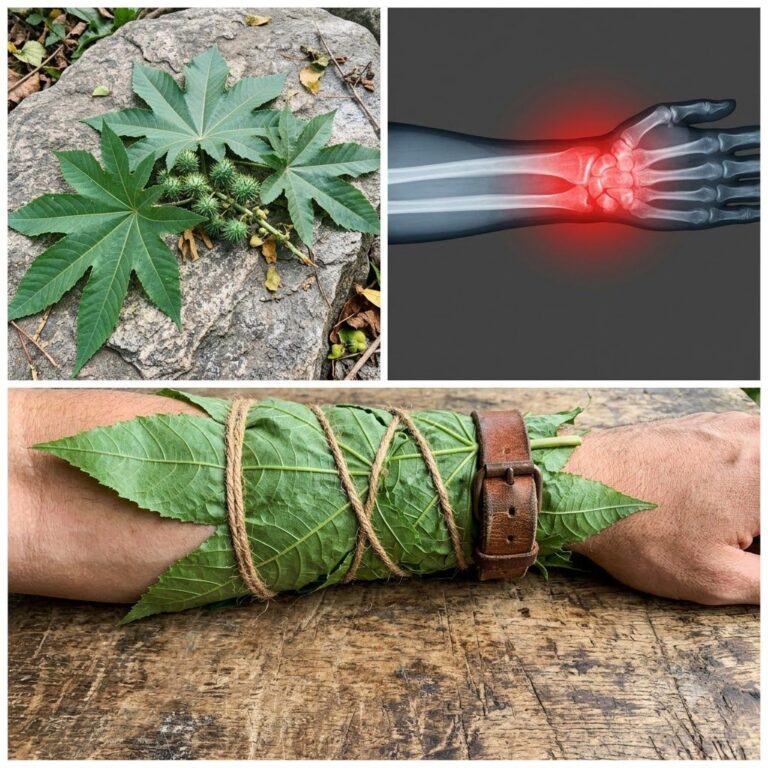
Apply the softened, bruised castor leaves directly to the skin over the area of minor discomfort. Cover the leaves with a clean cloth or bandage to hold them in place. You can secure the compress with medical tape, twine, or a light wrap.
The compress can be left on for 1-2 hours, or longer if comfortable, such as before bed. It’s often beneficial to apply it when you can rest and allow the natural plant energies to work their soothing influence.
Why It Works (Science Insight)
While the exact mechanisms are a subject of ongoing inquiry, traditional knowledge suggests that the castor leaf compress works through a combination of factors. The warmth and moisture from the compress itself can promote local circulation and provide immediate comfort. Furthermore, castor leaves contain various plant compounds, including flavonoids and phenolic acids, which in botanical tradition are often associated with soothing properties. While not acting as a pharmaceutical, these plant constituents may contribute to a calming sensation and support the body’s natural response to minor external irritations. The topical application allows for direct contact with the affected area, allowing these components to interact locally.
Who Benefits Most
This traditional method is particularly beneficial for individuals seeking a natural, external approach to alleviate minor, localized physical discomforts, such as occasional muscle stiffness or areas of mild tension. It’s ideal for those who appreciate time-honored botanical practices and prefer a gentle, resourceful solution from nature’s pantry.
Quick Notes / Safety / Simple Adjustments
- Caution is Key: It is crucial to remember that while castor leaves are used topically in traditional practices, the castor beans/seeds are highly toxic if ingested. This compress is for external use only. Never ingest any part of the castor plant.
- Patch Test: Before applying a large compress, perform a small patch test on a discreet area of skin to ensure no adverse reaction occurs. Discontinue use if irritation develops.
- Freshness: Always use fresh, healthy leaves. Discard them after each use.
- Not a Substitute: This is a traditional home comfort technique and should not replace professional medical advice or treatment for persistent or severe conditions. If discomfort persists, consult a healthcare professional.