When it comes to healthy eating, choosing the right staples for your meals can make a big difference. Two common grains often found on plates around the world are quinoa and white rice. While both serve as versatile bases for countless dishes, their nutritional profiles offer distinct advantages. Understanding the differences between quinoa vs. white rice can empower you to make more informed choices that align with your wellness goals.
Many people wonder which grain truly offers more for their health. Is one a clear winner, or do both have a place in a balanced diet? Let’s dive into a side-by-side comparison of their nutritional facts, helping you decide which grain might be the better fit for your next healthy meal.
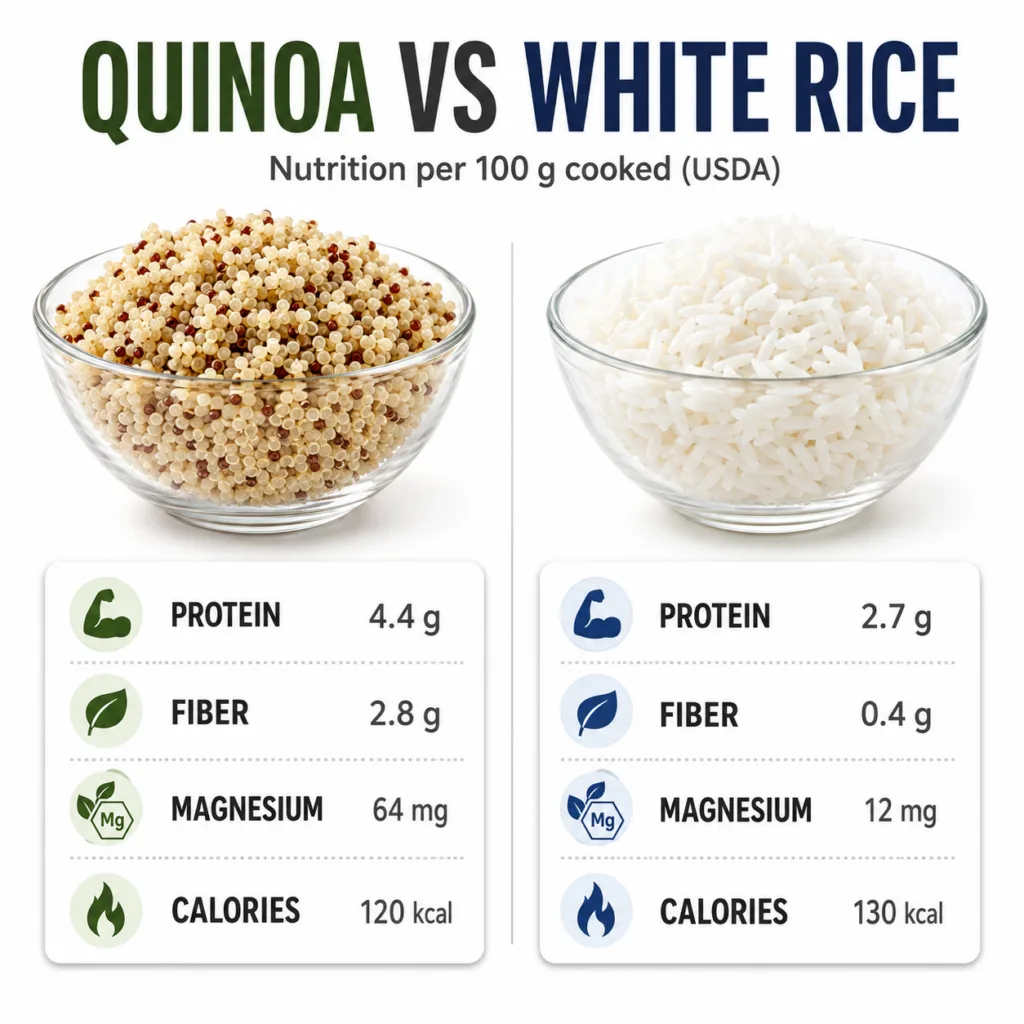
We’ll explore key nutrients like protein, fiber, magnesium, and calories per 100 grams of cooked grain, based on USDA data, to give you a clear picture of what each brings to your table.
Quinoa vs. White Rice: The Nutritional Showdown
To help you compare, here’s a detailed look at how 100 grams of cooked quinoa stacks up against 100 grams of cooked white rice.
Protein Power: Building Blocks for Your Body
- Quinoa: 4.4 g
- White Rice: 2.7 g
Quinoa stands out as a superior source of protein, offering nearly double the amount found in white rice. What makes quinoa truly special is that it’s a “complete protein,” meaning it contains all nine essential amino acids that your body cannot produce on its own. This makes it an excellent choice for vegetarians, vegans, and anyone looking to boost their protein intake for muscle repair, growth, and overall satiety. Including quinoa in your meals can help you feel fuller longer, which may support weight management goals as part of a balanced diet.
Fiber Content: Essential for Digestive Health
- Quinoa: 2.8 g
- White Rice: 0.4 g
When it comes to dietary fiber, quinoa is the clear winner, boasting significantly more fiber than white rice. Fiber is crucial for healthy digestion, helping to regulate bowel movements and prevent constipation. It also plays a key role in maintaining stable blood sugar levels, reducing the risk of spikes and crashes that can leave you feeling sluggish. Furthermore, adequate fiber intake contributes to heart health and can help lower cholesterol. Opting for quinoa can significantly increase your daily fiber intake, supporting a healthy gut and overall well-being.
Magnesium: The Often-Overlooked Mineral
- Quinoa: 64 mg
- White Rice: 12 mg
Magnesium is an essential mineral involved in over 300 biochemical reactions in the body, impacting everything from nerve and muscle function to blood sugar control and blood pressure regulation. Quinoa provides a substantial amount of magnesium, offering more than five times the amount found in white rice. Many people don’t get enough magnesium in their diet, making quinoa an excellent food to include for boosting this vital nutrient. Adequate magnesium intake supports energy production, bone health, and can even help reduce fatigue.
Calorie Count: Fueling Your Day
- Quinoa: 120 kcal
- White Rice: 130 kcal
Interestingly, 100 grams of cooked quinoa contains slightly fewer calories than the same amount of white rice, despite its higher nutrient density. While the difference in calories isn’t vast, it highlights that you can gain more nutritional value – more protein, fiber, and magnesium – from quinoa for a similar caloric intake. For those mindful of their calorie consumption while seeking nutrient-rich foods, quinoa presents a compelling option.
Making the Healthier Choice for Your Meals
While both quinoa and white rice can be part of a healthy diet, this nutritional comparison clearly highlights quinoa’s advantages. Its higher content of protein, fiber, and magnesium makes it a nutrient-dense powerhouse. Incorporating quinoa into your weekly meal prep can be a simple yet effective way to boost your intake of essential nutrients.
For instance, try swapping white rice for quinoa in your favorite:
- Stir-fries
- Salad bowls
- Side dishes
- Breakfast porridge (a great high protein breakfast idea!)
- Even homemade veggie burgers
These simple substitutions can elevate the nutritional value of your meals without sacrificing flavor or versatility.
The Role of White Rice in Your Diet
Does this mean white rice is “bad”? Not necessarily. White rice is a staple in many cultures, providing readily available energy and serving as a comforting food. However, it is a refined grain, meaning much of its fiber, vitamins, and minerals are removed during processing. If you enjoy white rice, consider pairing it with plenty of vegetables and lean protein sources to balance your meal’s nutritional profile. Alternatively, explore healthier rice options like brown rice, which retains more nutrients and fiber.
Frequently Asked Questions About Quinoa and Rice
Is quinoa good for weight loss?
Yes, quinoa can be beneficial for weight loss due to its high protein and fiber content. Protein helps increase satiety and preserve muscle mass, while fiber keeps you feeling full, reducing overall calorie intake. It’s a great addition to a calorie deficit meal plan when portioned appropriately.
Can I eat quinoa every day?
Yes, incorporating quinoa into your daily diet is generally healthy. It provides a wide range of essential nutrients. However, as with any food, variety is key for a well-rounded diet.
What are some healthy breakfast ideas using quinoa?
Quinoa makes an excellent breakfast base. You can prepare it like oatmeal with milk (dairy or non-dairy), topped with fruits, nuts, seeds, and a drizzle of honey. It’s a fantastic high protein breakfast option.
How does quinoa compare to brown rice?
While brown rice is a whole grain and healthier than white rice, quinoa still often provides more protein and slightly more fiber and magnesium per serving. Both are excellent choices, but quinoa typically has a slight nutritional edge.