Imagine fresh, crisp lettuce, aromatic herbs, or juicy tomatoes grown right in your home, without a single speck of soil! Sound like a dream? Welcome to the wonderful world of hydroponics! This innovative gardening method allows you to grow plants using nutrient-rich water instead of soil, offering a host of benefits from faster growth to significant water savings.
Whether you’re a seasoned gardener looking for a new challenge or a beginner eager to try something different, setting up a DIY hydroponic system can be a rewarding and surprisingly simple project. Let’s dive into everything you need to know to start your own soilless garden and enjoy homegrown goodness all year round!
What Exactly is Hydroponics?
Hydroponics is a method of growing plants without soil by providing them with a nutrient-rich water solution. The word ‘hydroponics’ comes from the Greek words ‘hydro’ (water) and ‘ponos’ (labor), literally meaning ‘water working.’ Instead of soil providing nutrients and support, a specialized mineral nutrient solution delivers everything your plants need directly to their roots.
Why Choose Hydroponics for Your Home Garden?
- Faster Growth: Plants often grow faster in hydroponic systems because nutrients are readily available, and roots don’t have to search for them.
- Water Efficiency: Hydroponic systems use significantly less water (up to 90% less!) than traditional soil gardening, as water is recirculated and not lost to evaporation or runoff.
- No Soil, No Weeds: Eliminate common gardening nuisances like weeds and soil-borne pests and diseases.
- Space Saving: Hydroponic systems can be compact and even vertical, making them ideal for small spaces like apartments or balconies.
- Year-Round Gardening: With indoor setups and controlled environments, you can grow your favorite plants regardless of the season.
Getting Started: Your DIY Hydroponic System Setup
While there are many types of hydroponic systems, some are much easier for beginners to build at home. The Wick System is a fantastic starting point due to its simplicity, low cost, and passive nature (no pumps or electricity needed!).
DIY Wick System: Step-by-Step Guide
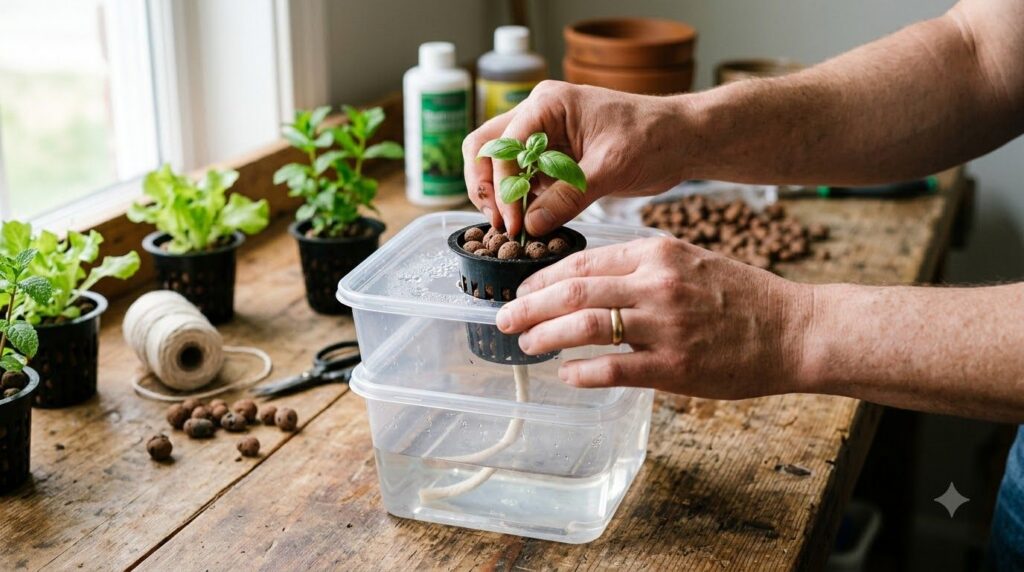
What You’ll Need:
- Two opaque containers (one for the nutrient reservoir, one for the plant, or a single container with a lid)
- Growing medium (e.g., perlite, coco coir, vermiculite, or rockwool)
- Nylon rope or felt strip (for the wick)
- Net pots (optional, but helpful for holding plants)
- Hydroponic nutrient solution (specifically formulated for hydroponics)
- pH testing kit and pH adjuster (up/down)
- Seeds or small plant starts
Assembly Instructions:
- Prepare Your Containers: If using two containers, stack the plant container on top of the nutrient reservoir. If using one, create a platform or lid for the plant to sit on, above the nutrient solution. Ensure the plant container has drainage holes if using a separate one, or simply drill holes in the lid for net pots.
- Insert the Wick: Thread one end of your nylon rope or felt strip through a hole in the bottom of your plant container (or net pot), allowing it to extend into the growing medium. The other end should reach down into the nutrient reservoir.
- Add Growing Medium: Fill your plant container or net pot with your chosen soilless growing medium. This provides support for the plant and helps distribute water from the wick.
- Plant Your Seeds/Starts: Carefully place your seeds or small plant starts into the growing medium.
- Fill the Reservoir: Prepare your hydroponic nutrient solution according to the manufacturer’s instructions. Fill the bottom container (reservoir) with this solution, ensuring the wick is submerged.
- Check pH: Use your pH testing kit to check the pH of the nutrient solution. Most plants thrive in a pH range of 5.5 to 6.5. Adjust with pH Up or pH Down solutions if necessary.
- Monitor and Enjoy: Keep an eye on your water level and plant growth. The wick will passively draw nutrient solution up to the plant roots, keeping them hydrated and fed.
Choosing the Right Plants for Hydroponics
Not all plants are created equal when it comes to hydroponics, especially for beginners. Here are some excellent choices:
- Leafy Greens: Lettuce (Romaine, Butterhead, Leaf), Spinach, Kale
- Herbs: Basil, Mint, Chives, Cilantro, Parsley
- Fruiting Plants (for more advanced systems): Strawberries, Cherry Tomatoes, Bell Peppers
Essential Hydroponic Plant Care Tips
- Nutrient Solution: Always use a hydroponic-specific nutrient solution. Follow the mixing instructions carefully. Change the solution every 1-2 weeks to ensure plants receive fresh nutrients and prevent algae growth.
- pH Levels: Regularly monitor and adjust the pH of your nutrient solution. Inconsistent pH can lead to nutrient lockout, where plants can’t absorb essential minerals.
- Lighting: Ensure your plants receive adequate light. For indoor setups, grow lights are often necessary. Most plants need 12-16 hours of light per day.
- Temperature and Humidity: Maintain optimal environmental conditions for your chosen plants.
- Oxygenation: While the Wick System is passive, other systems might require an air pump and air stone to oxygenate the nutrient solution, preventing root rot.
Troubleshooting Common Hydroponic Issues
- Algae Growth: Keep your nutrient reservoir opaque to block light, which prevents algae from growing. Algae compete with your plants for nutrients.
- Nutrient Deficiencies: Yellowing leaves, stunted growth, or unusual spots can indicate a nutrient imbalance. Check your pH and nutrient solution concentration.
- Root Rot: Overwatering or lack of oxygen in the nutrient solution can cause roots to turn brown and mushy. Ensure proper drainage and aeration.
Embrace the Future of Gardening!
Starting your own DIY hydroponic system is an exciting journey into sustainable and efficient gardening. It offers the joy of fresh, healthy produce right at your fingertips, reduces your carbon footprint, and is a fantastic learning experience. With a little patience and attention, you’ll be harvesting your own delicious, soil-free vegetables in no time. Happy growing!