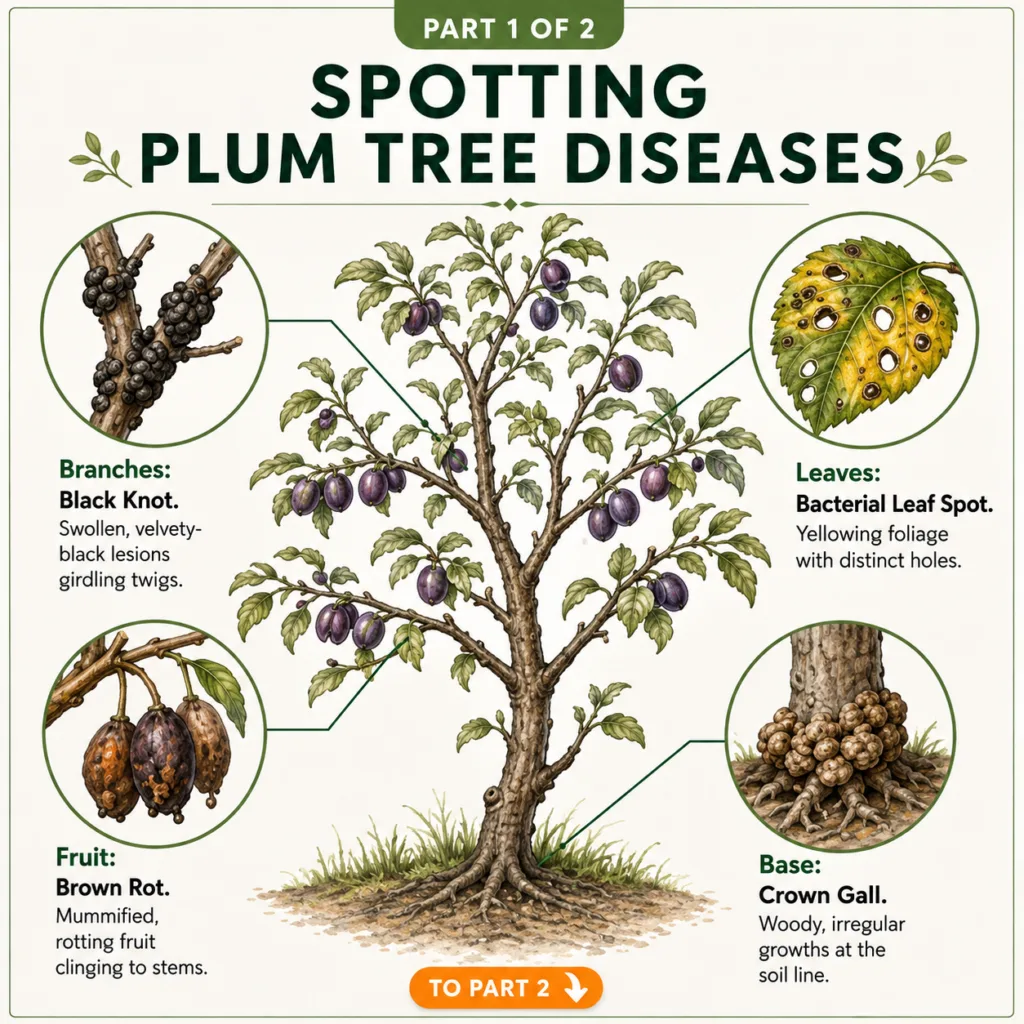
A healthy plum tree can produce delicious fruit for many years, but like all fruit trees, it can be affected by diseases that reduce growth and harvest quality. Learning to recognize the early warning signs is one of the best ways to keep your tree healthy.
In this guide, we’ll cover four common plum tree diseases, how to identify them, and what you can do to protect your tree.
1. Black Knot
What Is It?
Black Knot is a fungal disease that primarily affects plum and cherry trees. It appears as rough, swollen black growths on branches and twigs.
Signs to Look For
- Black, knot-like swellings on branches
- Enlarging growths that become hard and cracked
- Twigs may weaken and eventually die back
How to Manage It
- Prune infected branches at least 6–8 inches below the visible knot.
- Disinfect pruning tools between cuts.
- Dispose of infected wood instead of composting it.
- Improve air circulation by thinning crowded branches.
2. Bacterial Leaf Spot
What Is It?
Bacterial Leaf Spot is caused by bacteria that attack the leaves, especially during warm, wet weather.
Symptoms
- Small brown or black spots on leaves
- Yellowing around the spots
- Holes may form as damaged tissue falls out (“shot-hole” appearance)
- Severe infections can lead to early leaf drop
Prevention Tips
- Avoid overhead watering whenever possible.
- Remove fallen infected leaves.
- Prune for better airflow through the canopy.
- Water at the base of the tree.
3. Brown Rot
What Is It?
Brown Rot is one of the most common fungal diseases affecting stone fruits such as plums, peaches, cherries, and apricots.
Symptoms
- Fruit develops soft brown patches
- Gray or tan fungal spores may appear
- Infected fruit shrivels and becomes “mummified”
- Diseased fruit often remains attached to the branches
How to Reduce Brown Rot
- Remove infected fruit immediately.
- Clean up fallen fruit from the ground.
- Harvest ripe fruit promptly.
- Improve airflow through regular pruning.
4. Crown Gall
What Is It?
Crown Gall is caused by a soil-dwelling bacterium that infects the tree through wounds near the roots or trunk.
Signs
- Hard, rough, woody growths near the base of the trunk
- Reduced tree vigor
- Slower growth over time
- Severe infections may weaken young trees
Prevention
- Avoid damaging the trunk and roots during gardening.
- Buy disease-free nursery stock.
- Remove severely infected young trees if necessary.
- Maintain healthy soil conditions to reduce stress.
General Tips for Keeping Plum Trees Healthy
Healthy trees are naturally more resistant to disease. Good garden practices can make a big difference.
✔ Prune regularly to improve sunlight and airflow.
✔ Remove dead, damaged, or diseased branches.
✔ Water deeply but avoid overwatering.
✔ Keep weeds and fallen debris away from the base of the tree.
✔ Sanitize pruning tools before moving between trees.
✔ Inspect leaves, branches, and fruit throughout the growing season.
When Should You Be Concerned?
Occasional leaf spots or a small amount of damaged fruit isn’t always a reason to panic. However, if you notice:
- Rapid branch dieback
- Large black growths
- Extensive fruit rot
- Severe leaf loss
- Large woody galls at the base of the tree
it’s a good idea to seek advice from your local agricultural extension service or a certified arborist for an accurate diagnosis and management plan.
Final Thoughts
Early detection is the key to keeping plum trees healthy and productive. By learning to recognize diseases like Black Knot, Bacterial Leaf Spot, Brown Rot, and Crown Gall, you can take action before serious damage occurs.
Regular pruning, proper sanitation, and routine inspections go a long way toward protecting your tree and ensuring a healthier harvest season after season.
Stay tuned for Part 2, where we’ll cover more common plum tree diseases and how to identify them before they spread. 🌳🍑