Are you looking to boost the nutrition and flavor of your favorite vegan recipes? Look no further than homemade oat flour! This incredibly simple trick transforms ordinary rolled oats into a versatile ingredient that can elevate your baking, smoothies, and sauces. Best of all, it takes just minutes to prepare, making it a perfect addition to your healthy habits and meal prep routine.
Why Make Your Own Oat Flour?
Making oat flour at home offers several advantages:
- Cost-Effective: Buying rolled oats is often more economical than purchasing pre-made oat flour.
- Freshness: Enjoy the freshest possible flour, free from preservatives or additives.
- Customizable Texture: You control the fineness of the grind, from a coarse meal to a super-fine powder.
- Nutrient-Rich: Oats are a fantastic source of fiber, plant-based protein, vitamins, and minerals, making oat flour a nutritious addition to any diet.
- Gluten-Free Option: If you use certified gluten-free rolled oats, your homemade oat flour will be gluten-free, perfect for those with sensitivities.
The Simple Process: How to Make Oat Flour
You’ll be amazed at how easy this is!
Ingredients:
- Rolled Oats (Old-fashioned oats work best. Avoid instant or steel-cut oats for this process.)
Equipment:
- High-speed blender or food processor
- Airtight container for storage
Instructions:
- Measure Your Oats: For every 1 cup of rolled oats, you’ll yield slightly less than 1 cup of oat flour.
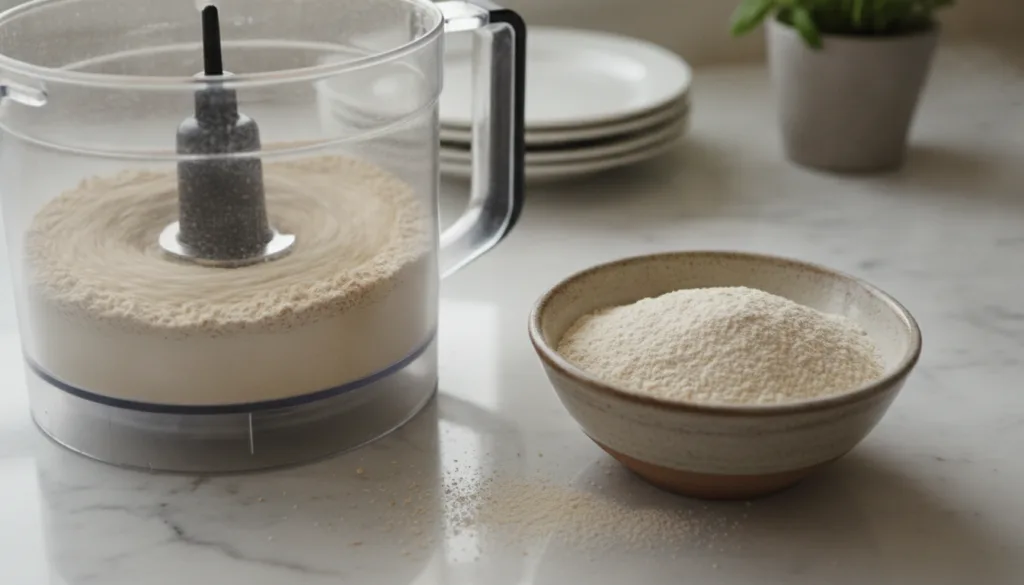
- Blend: Add the rolled oats to your blender or food processor. Blend on high speed for about 30-60 seconds, or until a fine, flour-like consistency is achieved. Stop and scrape down the sides if necessary to ensure even blending.
- Check Consistency: Gently rub a small amount of the flour between your fingers. It should feel soft and powdery, with no large pieces of oats remaining. If it’s too coarse, blend for a few more seconds.
- Store: Transfer the fresh oat flour to an airtight container. Store it in a cool, dry place like your pantry for up to a month, or in the refrigerator for extended freshness.
Tip: Avoid over-blending, as this can generate heat and slightly cook the flour, affecting its texture and shelf life. Blend just until desired fineness.
Creative Ways to Use Homemade Oat Flour
Once you have your freshly made oat flour, the possibilities are endless for incorporating it into your plant-based nutrition plan:
- Baking: Use it as a partial or full substitute for wheat flour in muffins, pancakes, waffles, cookies, and quick breads. It adds a lovely tenderness and a subtle nutty flavor.
- Smoothies: Add a tablespoon or two to your morning smoothie for an extra boost of fiber and a thicker texture.
- Thickening Agent: Use it to thicken soups, stews, and gravies, offering a healthier alternative to cornstarch or refined flours.
- Binder: It works wonderfully as a binder in vegan burgers, meatless meatballs, or energy balls.
- Breakfast Bowls: Sprinkle it over your oatmeal, yogurt, or fruit bowls for added nutrients.
Embracing homemade oat flour is a fantastic step towards a healthier, more sustainable, and delicious vegan lifestyle. It’s a simple change that yields big results in your daily meals and treats.
What’s your favorite way to use oat flour in your cooking? Share your ideas in the comments below!