Understanding the intricate world of gut health can seem complex, but two key players make it simpler: prebiotics and probiotics. These distinct components work together to foster a thriving internal environment, crucial for everything from digestion to immunity. Many of us know that a healthy gut is vital for overall wellness, but do you know the difference between prebiotics and probiotics and how to effectively incorporate them into your diet for optimal health?
This guide will demystify the roles of prebiotics and probiotics, explaining what they are, how they benefit your body, and, most importantly, which foods are rich in each. Let’s unlock the secrets to a healthier gut and discover how you can support your digestive system through smart food choices.
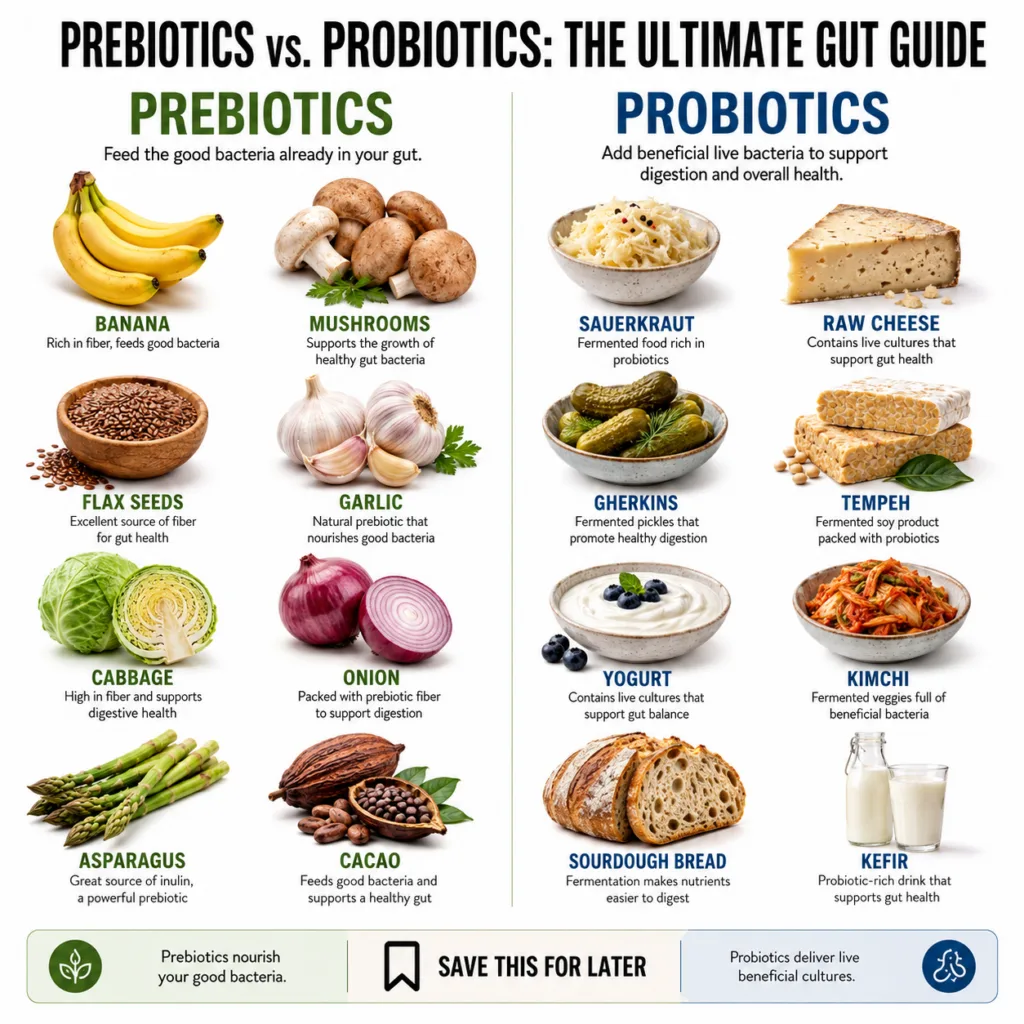
What Are Prebiotics? Fueling Your Gut’s Good Bacteria
Prebiotics are specialized plant fibers that act as food for the beneficial bacteria (probiotics) already living in your gut. They are non-digestible by human enzymes but are fermented by the microbes in your large intestine, promoting the growth and activity of a healthy microbiome. Think of them as the ‘fertilizer’ for your gut garden, helping your good bacteria flourish and perform their vital functions.
Top Prebiotic Foods to Include in Your Diet
- Bananas: These readily available fruits are an excellent source of resistant starch, especially when slightly unripe. Resistant starch bypasses digestion in the small intestine and reaches the large intestine where it ferments, fueling beneficial bacteria and promoting a healthy gut environment.
- Mushrooms: Rich in polysaccharides like beta-glucans, mushrooms contribute to gut health by acting as prebiotics. These complex carbohydrates support the growth of beneficial gut flora, which in turn can bolster immune function and digestive regularity.
- Flax Seeds: A powerhouse of soluble and insoluble fiber, flax seeds are fantastic for gut health. The soluble fiber forms a gel-like substance that feeds gut bacteria, while insoluble fiber adds bulk to stool, aiding in regular bowel movements and promoting digestive regularity.
- Garlic: Beyond its flavor-enhancing properties, garlic is a potent prebiotic, thanks to its fructans and fructooligosaccharides (FOS). These compounds are fermented by beneficial bacteria, stimulating their growth and activity, which can help maintain a balanced gut microbiome.
- Cabbage: This versatile vegetable, particularly green cabbage, is high in fiber and sulfur-containing compounds. Its fiber content serves as a prebiotic, nourishing good bacteria and supporting healthy digestion.
- Onion: Similar to garlic, onions are packed with FOS and inulin, both powerful prebiotics. These fibers pass through the small intestine undigested and are fermented in the colon, supporting the proliferation of beneficial bifidobacteria in the gut.
- Asparagus: A natural source of inulin, asparagus is an effective prebiotic. Inulin is a soluble fiber that selectively stimulates the growth of beneficial bacteria, which can enhance nutrient absorption and improve overall digestive function.
- Cacao: Unprocessed or minimally processed cacao (like in dark chocolate with high cacao content) contains fiber and polyphenols. These compounds act as prebiotics, promoting the growth of beneficial gut microbes and contributing to a diverse and healthy microbiome.
What Are Probiotics? Introducing Beneficial Microbes
Probiotics are live microorganisms, primarily bacteria and yeasts, that, when consumed in adequate amounts, confer a health benefit on the host. These are the ‘good guys’ that populate your gut, helping with digestion, nutrient absorption, and supporting your immune system. They can be introduced through fermented foods or supplements and play a crucial role in maintaining the balance of your gut microbiome.
Key Probiotic-Rich Foods for a Healthy Gut
- Sauerkraut: This traditional fermented cabbage dish is teeming with beneficial lactic acid bacteria. The fermentation process makes nutrients more bioavailable and introduces a rich array of probiotics that support digestive health and immune function.
- Raw Cheese: Certain types of raw, unpasteurized cheese can contain beneficial bacteria strains like Lactobacillus and Bifidobacterium. These live cultures contribute to a healthy gut flora, but always ensure the cheese is from a reputable source.
- Gherkins: Fermented pickles, specifically those brined in salt and water (not vinegar), are an excellent source of probiotics. The lactic acid fermentation creates an environment where beneficial bacteria thrive, aiding in digestion and microbial diversity.
- Tempeh: A fermented soybean product, tempeh is a rich source of probiotics, particularly strains like Rhizopus oligosporus. Its fermentation process also makes it easier to digest and enhances its nutrient profile.
- Yogurt: One of the most well-known probiotic foods, yogurt made with live and active cultures contains strains such as Lactobacillus bulgaricus and Streptococcus thermophilus. Regularly consuming yogurt can help replenish beneficial gut bacteria and support digestive wellness.
- Kimchi: This spicy Korean side dish, made from fermented vegetables (often cabbage and radish), is a probiotic powerhouse. Kimchi contains a diverse range of lactic acid bacteria that contribute to a healthy gut microbiome and may offer various health benefits.
- Sourdough Bread: The traditional fermentation process used to make sourdough bread involves lactic acid bacteria and wild yeast. While the baking process can reduce live cultures, the fermentation predigests some starches, making it easier to digest for some and contributing to gut health.
- Kefir: A fermented milk drink, kefir is a more potent source of probiotics than many yogurts, offering a wider variety of bacterial strains and yeasts. Its diverse microbial content makes it exceptionally beneficial for gut health and immunity.
Prebiotics vs. Probiotics: Understanding the Key Differences
While often discussed together, it’s essential to understand that prebiotics and probiotics play distinct, yet complementary, roles in gut health:
- Prebiotics are ‘food’ for bacteria: They are non-digestible fiber compounds that feed the existing good bacteria in your gut.
- Probiotics are ‘live bacteria’: They are living microorganisms that you introduce into your gut to add to the population of beneficial bacteria.
Think of it this way: Probiotics are the new, helpful residents moving into your gut, while prebiotics are the groceries that keep all the residents (both old and new) happy and thriving.
How to Incorporate Them into Your Diet for Better Gut Health
To maximize your gut health benefits, aim for a balanced intake of both prebiotics and probiotics. Here are some practical tips:
- Start Gradually: If you’re new to high-fiber or fermented foods, introduce them slowly to avoid digestive discomfort.
- Vary Your Sources: Don’t rely on just one or two foods. A diverse diet rich in various prebiotic and probiotic sources encourages a more diverse and resilient gut microbiome.
- Daily Habits: Try to include at least one prebiotic-rich food and one probiotic-rich food in your daily meals. For example, add flax seeds to your morning yogurt or enjoy a side of sauerkraut with dinner.
- Smart Snacking: Opt for a banana or a handful of raw almonds (another good fiber source) as snacks.
- Consider Fermented Drinks: Kefir is an excellent way to get a concentrated dose of probiotics.
Frequently Asked Questions About Gut Health
Can I get enough prebiotics and probiotics from food alone?
For most healthy individuals, a balanced diet rich in diverse fruits, vegetables, whole grains, and fermented foods can provide sufficient prebiotics and probiotics. However, individuals with specific health conditions or dietary restrictions may benefit from supplements, always under professional guidance.
Are probiotic supplements better than food?
Not necessarily. While supplements can offer concentrated doses of specific strains, food sources provide a wider range of beneficial microbes, fibers, and other nutrients that work synergistically. Whole foods also offer the benefit of dietary fiber (prebiotics), which supplements often lack.
Who should avoid prebiotics or probiotics?
While generally safe, some individuals with conditions like SIBO (Small Intestinal Bacterial Overgrowth) may experience discomfort with certain prebiotic-rich foods. Those with compromised immune systems should consult a healthcare professional before taking probiotic supplements. Always listen to your body and consult a doctor if you have concerns.
What is the best time to consume prebiotics and probiotics?
There’s no single