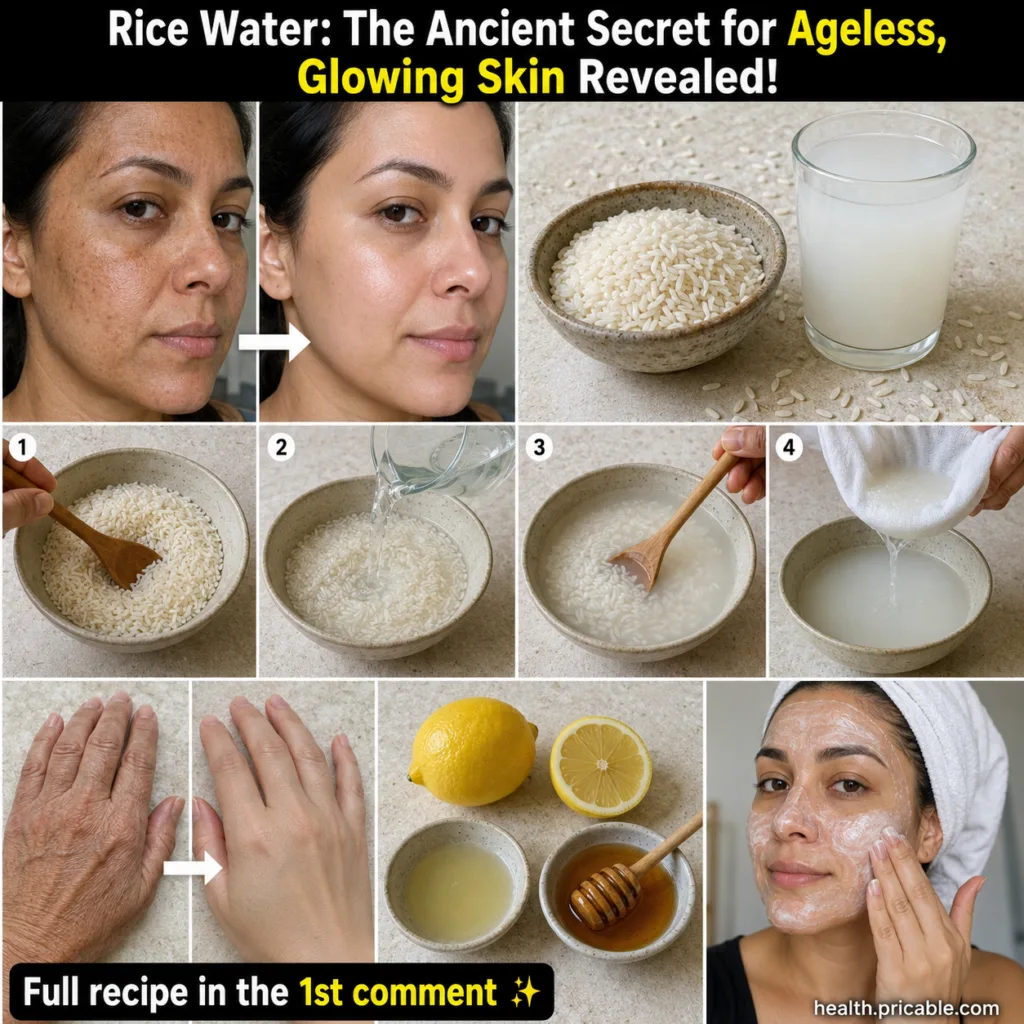
Dull-looking skin? This ancient rice water secret is getting attention for a reason. It’s a simple DIY routine to unveil visibly brighter, smoother, and more radiant skin. Discover how to create this versatile beauty tonic at home and incorporate it into your routine for a fresh, glowing complexion.
Quick Recipe
Prep time: 10 minutes (plus 30 minutes to 24 hours for soaking/fermentation)
Best for: Dull skin, uneven skin tone, those seeking a brighter, smoother complexion.
Use type: Topical rinse, toner, or mask base
Main ingredients:
- Rice
- Water
Ingredients
- 1/2 cup raw, uncooked rice (white, brown, or jasmine works well)
- 2-3 cups filtered water
- Optional: A few drops of lemon juice or a teaspoon of honey for additional benefits (for masks only, avoid lemon if sensitive to sun)
How to Make It
- Rinse the Rice: Place 1/2 cup of rice in a fine-mesh strainer and rinse it quickly under cold running water. This helps remove any impurities or excess starch.
- Soak the Rice: Transfer the rinsed rice to a clean bowl or jar. Add 2-3 cups of filtered water. Stir gently to ensure all the rice is submerged.
- Choose Your Method:
- Simple Rice Water: Let the rice soak for 30 minutes to 1 hour. The water will become cloudy. Strain the rice water into a clean spray bottle or jar, separating it from the rice. The rice can then be used for cooking.
- Fermented Rice Water (for enhanced benefits): After soaking for 30 minutes, strain the rice water into a clean jar. Cover loosely (e.g., with cheesecloth) and let it sit at room temperature for 12 to 24 hours. You’ll notice a slightly sour smell, indicating fermentation. Dilute this fermented rice water with 1-2 parts clean water before use to reduce its potency.
- Store: Store your rice water in an airtight container in the refrigerator for up to one week.

How to Use It
- As a Facial Rinse/Toner: After cleansing your face, apply the rice water using a cotton pad or by gently spraying it onto your skin. Pat lightly until absorbed. Follow with your usual moisturizer.
- As a Facial Mask Base: Mix a small amount of simple or diluted fermented rice water with a natural thickener like a pinch of clay powder or a bit of aloe vera gel to form a paste. You can also add a drop of lemon juice (use caution, especially if sun exposure is expected) or a teaspoon of honey. Apply to clean skin, leave on for 10-15 minutes, then rinse thoroughly with cool water.
- As a Hair Rinse: After shampooing, apply rice water to your hair and scalp. Massage gently and leave on for 5-10 minutes before rinsing thoroughly.
How Often to Use It
For facial application, you can use simple rice water daily as a toner. For fermented rice water or a mask, start with 2-3 times a week to see how your skin reacts. For hair, use 1-2 times a week.
Why These Ingredients Are Used
Rice
Rice is a staple in many traditional beauty rituals, especially in Asia. It contains vitamins, minerals, and amino acids that are believed to nourish the skin. The starchy water left after soaking or cooking rice is thought to help soothe, tone, and brighten the skin’s appearance, contributing to a smoother and more radiant look.
Water
Filtered water is essential for a clean base to extract the beneficial properties from the rice. It acts as the medium for creating this simple, hydrating beauty tonic, ensuring the purity of your DIY remedy.
Optional Lemon Juice
Lemon juice is sometimes added to masks for its natural alpha-hydroxy acids (AHAs), which can gently exfoliate the skin and support a brighter complexion. However, it can increase sun sensitivity, so use with caution and always apply sunscreen.
Optional Honey
Honey is known for its humectant properties, meaning it helps draw moisture to the skin, making it feel softer and more supple. It also has soothing qualities, which can be beneficial in a facial mask.

What Results to Expect
Consistent use of rice water may help your skin appear brighter and more even-toned. Many users find it helps to reduce the appearance of pores and contributes to a smoother, more radiant complexion. It can also leave your skin feeling softer and more supple, supporting a refreshed and youthful look.
Safety Notes
- Patch test first: Always apply a small amount of rice water to an inconspicuous area of your skin (e.g., behind the ear or inner forearm) and wait 24 hours to check for any irritation or allergic reaction before applying it to your face.
- Use gently: Rice water is generally mild, but sensitive skin types should start with less frequent application.
- Avoid irritated or broken skin: Do not apply rice water to skin that is broken, cut, or severely irritated.
- Stop using it if discomfort occurs: If you experience redness, itching, burning, or any other discomfort, discontinue use immediately.
- Storage: Always store rice water in the refrigerator. Discard after one week to prevent bacterial growth. Fermented rice water can have a stronger smell; if it smells foul or develops mold, discard it.
- Lemon caution: If using lemon juice in a mask, be aware it can increase sun sensitivity. Always use sunscreen after applying lemon to your skin.
FAQ
What kind of rice should I use?
Any type of raw, uncooked rice can be used, including white rice, brown rice, or jasmine rice. Organic rice is often preferred by those looking to avoid potential pesticide residues.
Can I use cooked rice water?
While you can, the benefits are typically concentrated in the water from soaking raw rice or during its fermentation. Cooked rice water may not offer the same potency as raw or fermented versions.
Is fermented rice water better than simple rice water?
Fermented rice water contains a higher concentration of antioxidants and has a lower pH, which is closer to the skin’s natural pH. This can potentially offer enhanced benefits for skin toning and clarifying. However, it’s more potent and should be diluted and patch-tested carefully.
Final Thoughts
Embracing the simplicity of rice water can be a wonderful addition to your natural beauty routine. With its history of use and potential to support a visibly brighter and smoother complexion, it’s a DIY remedy worth exploring. Give it a try and share your experience with us in the comments below!