Ever wondered why some breakfasts leave you feeling satisfied for hours while others have you rummaging for a snack within an hour? The answer lies in your breakfast choices. Understanding how different foods impact your satiety levels is key to maintaining consistent energy and avoiding the dreaded mid-morning slump.
This guide will explore how your breakfast choices truly influence how long you stay full, comparing popular options that provide lasting energy with those that lead to hunger sooner. By making smarter decisions, you can power through your day with sustained satisfaction and focus.
The Science of Satiety: Why Breakfast Foods Matter
The secret to a truly satisfying breakfast lies in its nutritional composition. Foods rich in protein, fiber, and healthy fats are digested more slowly, keeping your blood sugar stable and sending signals of fullness to your brain. This prevents the rapid spikes and crashes that leave you feeling hungry and lethargic.
Breakfasts That Keep You Full Longer
These breakfast choices are your allies in the quest for sustained energy and prolonged satiety. They combine essential macronutrients to fuel your body efficiently.
Eggs + Avocado Toast: Your Morning Power Duo
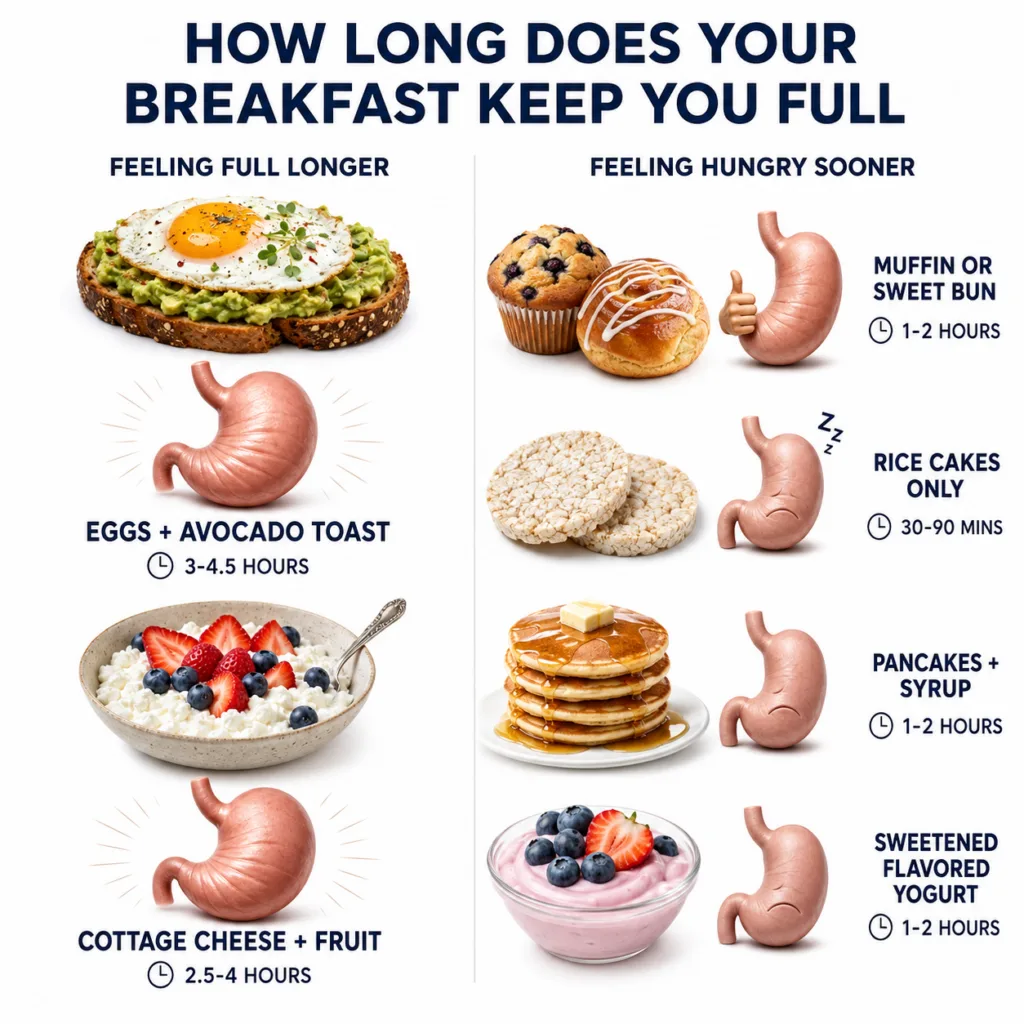
A classic for a reason, the combination of eggs and avocado toast is a powerhouse for lasting fullness. Eggs are an excellent source of high-quality protein, which is known for its satiating effects. Avocado brings healthy monounsaturated fats and fiber to the table, further slowing digestion and contributing to a feeling of satisfaction.
- Satiety Duration: 3-4.5 hours
How to Enjoy:
- Servings: 1
- Ingredients: 2 large eggs, 1 slice whole-grain toast, 1/2 medium avocado, pinch of salt and pepper.
- Instructions: Prepare your eggs as desired (scrambled, fried, or poached). Toast the whole-grain bread. Mash the avocado onto the toast and season with salt and pepper. Top the avocado toast with your cooked eggs.
Cottage Cheese + Fruit: A Protein-Packed & Refreshing Start
Cottage cheese is a fantastic source of casein protein, a slow-digesting protein that helps keep you feeling full for an extended period. Pairing it with fruit adds natural sweetness, vitamins, and beneficial fiber, creating a balanced and refreshing meal.
- Satiety Duration: 2.5-4 hours
How to Enjoy:
- Servings: 1
- Ingredients: 1/2 cup low-fat cottage cheese, 1/2 cup mixed berries (such as blueberries, raspberries, or sliced strawberries).
- Instructions: Simply spoon the cottage cheese into a bowl and top with your favorite fresh or frozen (thawed) fruit.
Breakfasts That Leave You Hungry Sooner
While convenient and often delicious, these breakfast options typically lack the key nutrients needed for sustained energy, leading to quick hunger pangs.
Muffin or Sweet Bun: The Quick Crash
Most muffins and sweet buns are loaded with refined carbohydrates and sugar, offering very little protein or fiber. This combination causes a rapid spike in blood sugar, followed by an equally rapid crash, leaving you feeling hungry and low on energy soon after eating.
- Satiety Duration: 30-90 minutes
Rice Cakes Only: A Light, But Short-Lived Choice
Eating plain rice cakes provides a quick burst of simple carbohydrates but virtually no protein, fat, or fiber. Without these crucial components, your body digests them very quickly, offering minimal satiety and a swift return of hunger.
- Satiety Duration: 1-2 hours
Pancakes + Syrup: A Sugar Rush, Then a Slump
Similar to muffins, pancakes (especially those made from refined flour) combined with sugary syrup are a recipe for a rapid blood sugar spike. This high-sugar, low-protein, low-fiber meal provides transient satisfaction, quickly followed by hunger and potentially a sugar crash.
- Satiety Duration: 30-90 minutes
Sweetened Flavored Yogurt: Hidden Sugars, Fleeting Fullness
While yogurt can be a healthy breakfast, many sweetened and flavored varieties are packed with added sugars. These sugars negate the natural benefits of yogurt’s protein, leading to a less satiating experience compared to plain, unsweetened options. The quick digestion of sugar means you’ll feel hungry again surprisingly fast.
- Satiety Duration: 30-90 minutes

Making Smarter Breakfast Choices for Sustained Energy
The key to a breakfast that truly works for you is prioritizing protein, fiber, and healthy fats. These components are essential for slowing digestion, stabilizing blood sugar, and keeping you full and energized for longer. Consider incorporating more high protein breakfast options into your routine.
- Prioritize Protein: Include sources like eggs, cottage cheese, Greek yogurt (unsweetened), or lean meats.
- Boost Fiber: Add whole grains (like whole-grain toast), fruits, and vegetables to your meal.
- Include Healthy Fats: Avocado, nuts, and seeds can contribute to greater satiety.
- Limit Added Sugars: Be mindful of hidden sugars in cereals, flavored yogurts, pastries, and sweetened beverages.
Frequently Asked Questions About Breakfast Satiety
Why do some breakfasts make me hungry so fast?
Breakfasts that lead to quick hunger are typically high in refined carbohydrates and sugar, and low in protein, fiber, and healthy fats. Without these satiating nutrients, your body processes the food rapidly, leading to a sudden drop in blood sugar and a quick return of hunger signals.
What’s the best time to eat breakfast for fullness?
While there’s no universal ‘best’ time, consuming breakfast within 1-2 hours of waking can help kickstart your metabolism and provide essential energy. The most important factor for fullness, regardless of timing, is the nutritional quality of your meal.
Final Thoughts
Your breakfast sets the tone for your entire day. By consciously choosing meals rich in protein, fiber, and healthy fats, you can significantly impact your energy levels, manage hunger, and improve your overall well-being. Swap those quick fixes for healthy breakfast ideas that truly nourish and sustain you, allowing you to stay productive and focused without the distraction of constant cravings.
Medical Disclaimer
The information provided in this article is for general knowledge and informational purposes only, and does not constitute medical advice. It is essential to consult with a qualified healthcare professional or registered dietitian for personalized advice regarding your diet and any health concerns.