Have you ever paused to notice the incredible resemblances between certain everyday foods and the human organs they often support? It’s a fascinating concept, often referred to as the ‘doctrine of signatures,’ suggesting that nature subtly guides us towards foods that are beneficial for specific parts of our body. From walnuts mirroring the brain to kidney beans resembling, well, kidneys, these visual cues offer a whimsical yet insightful way to think about healthy eating.
This article delves into Nature’s Blueprint, exploring these remarkable connections and uncovering the nutritional science behind why these foods may be particularly beneficial for the organs they visually echo. Get ready to discover how simple additions to your diet can make a significant difference to your well-being, guided by nature’s own design.
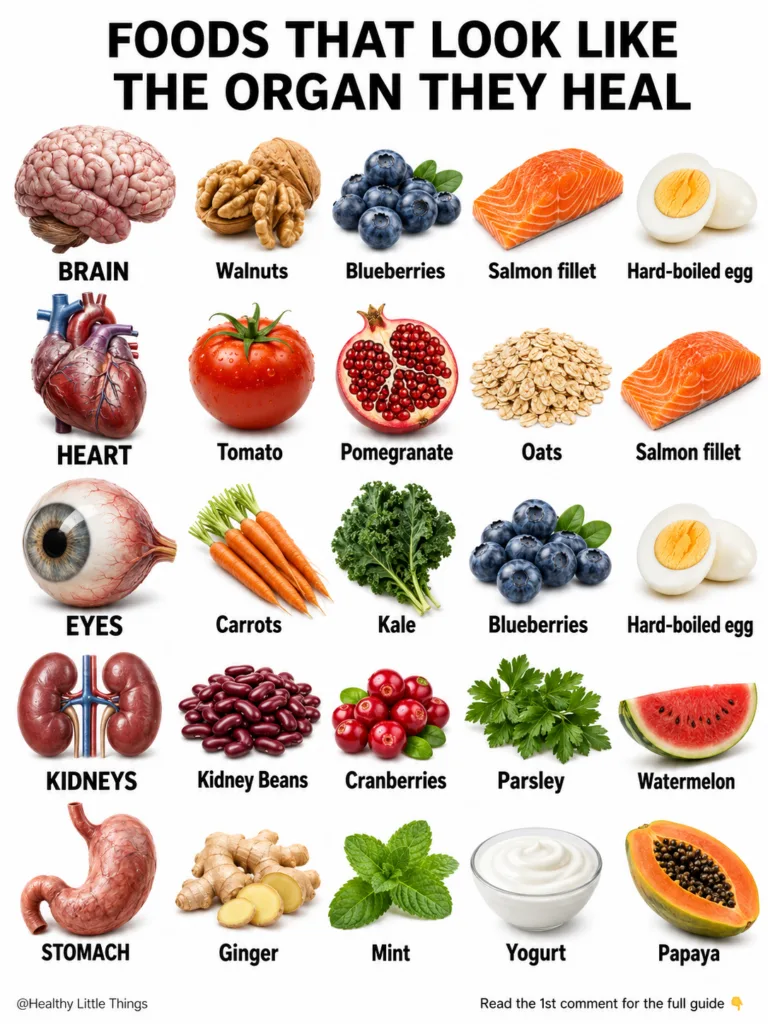
Brain Power: Walnuts and Blueberries
The human brain is an intricate organ, and surprisingly, certain foods bear a striking resemblance to it, hinting at their potential benefits.
The Walnut’s Brainy Resemblance
Crack open a walnut, and you’ll immediately see its striking resemblance to the human brain, complete with left and right hemispheres. This isn’t just a coincidence; walnuts are packed with omega-3 fatty acids, antioxidants, and vitamin E, all of which are known to play a crucial role in supporting brain health. Regular consumption of walnuts may contribute to improved cognitive function and memory, making them a smart snack choice.
Blueberries: Tiny Brain Boosters
While not a direct visual match, the deep blue hue of blueberries is often associated with their powerful antioxidant properties. These tiny berries are rich in flavonoids, which may help improve communication between brain cells, potentially enhancing memory and learning. Including blueberries in your daily diet, perhaps in a smoothie or a healthy breakfast bowl, can be a delicious way to support your brain.
Heart Health: Tomatoes and Salmon
The heart is the center of our circulatory system, and nature offers foods that not only look like it but also help keep it strong.
Tomatoes: A Red, Pumping Powerhouse
Slice a tomato horizontally, and you’ll notice it has multiple chambers, much like a heart. Tomatoes are an excellent source of lycopene, a potent antioxidant that gives them their vibrant red color. Lycopene is widely studied for its potential to support cardiovascular health by helping to reduce oxidative stress and inflammation. Enjoy tomatoes in salads, sauces, or as a simple snack.
Salmon: Omega-Rich for Your Heart
The pinkish-red flesh of salmon might not directly resemble a heart, but its rich content of omega-3 fatty acids is profoundly beneficial for cardiovascular well-being. These essential fats are known to help reduce inflammation, support healthy blood pressure, and maintain proper heart rhythm. Including fatty fish like salmon in your diet a couple of times a week is a popular recommendation for heart health.
Vision Support: Carrots and Kale
Our eyes are windows to the world, and certain foods are thought to be particularly helpful for maintaining their health.
Carrots: Peeking into Eye Health
Cut a carrot crosswise, and you might observe a pattern resembling the iris and pupil of an eye. This vegetable is famously rich in beta-carotene, which the body converts into vitamin A. Vitamin A is crucial for good vision, particularly in low light conditions, and helps protect the surface of the eye. Snacking on raw carrots or adding them to meals is a simple way to support your eyesight.
Kale: Green Goodness for Your Gaze
While kale doesn’t look like an eye, its deep green color signifies its abundance of lutein and zeaxanthin, two powerful antioxidants that accumulate in the retina. These compounds act as a natural sunglass, filtering out harmful blue light and potentially reducing the risk of age-related macular degeneration and cataracts. Incorporate kale into smoothies, salads, or lightly sautéed dishes for a vision boost.
Kidney Kindred: Kidney Beans
The kidneys are vital for filtering waste from our blood, and one food offers a striking visual reminder of their shape.
Kidney Beans: A Natural Match
The unmistakable shape of kidney beans is almost identical to that of human kidneys. These versatile legumes are a good source of fiber, magnesium, and B vitamins, which are all important for overall health, including kidney function. While the visual link is strong, kidney beans also offer benefits such as helping to regulate blood sugar and supporting digestive health. Always ensure kidney beans are thoroughly cooked before consumption.
Digestive Harmony: Ginger and Papaya
A healthy digestive system is key to overall wellness, and certain foods can offer both visual and functional support.
Ginger: Soothing Your Stomach
The gnarled, irregular shape of a ginger root can, with a little imagination, resemble a stomach. More importantly, ginger has been traditionally used for centuries to soothe digestive discomfort. Its active compounds, like gingerol, are known for their anti-inflammatory and anti-nausea properties, making it a popular remedy for indigestion, motion sickness, and bloating. Fresh ginger can be added to teas, stir-fries, or smoothies.
Papaya: Tropical Digestive Aid
A sliced papaya reveals a central cavity, which can be seen as mirroring the stomach. This tropical fruit contains an enzyme called papain, which helps break down proteins and may aid in digestion. Papaya is also a good source of fiber and water, both of which contribute to a healthy digestive tract and regularity. Enjoy fresh papaya as a breakfast fruit or a light snack to support your gut health.