Oatmeal is often hailed as a healthy breakfast staple, packed with fiber and essential nutrients. It’s a favorite for those aiming for better digestion, sustained energy, or even weight management. However, what if we told you that even two seemingly identical bowls of oatmeal could have surprisingly different calorie counts? It’s a common oversight that can subtly impact your nutrition goals.
Understanding how you measure your oatmeal is key to accurately tracking your caloric intake. Whether you’re weighing it dry, scooping it cooked, or using a measuring cup, each method presents unique challenges and potential for error. This article will help you uncover the hidden truths behind oatmeal calories, ensuring your healthy breakfast truly aligns with your wellness journey.
The Hidden Truth About Oatmeal Calories
The core of the confusion lies in how oats absorb water when cooked. Dry oats are dense, and their calorie count is based on that concentrated form. Once cooked, oats swell significantly due to water absorption, increasing in volume and weight, but not adding any extra calories. This means a given weight or volume of cooked oats will have far fewer calories than the same weight or volume of dry oats.
Let’s dive into the specifics, comparing common measuring methods:
Measuring By Weight: The Most Accurate Way
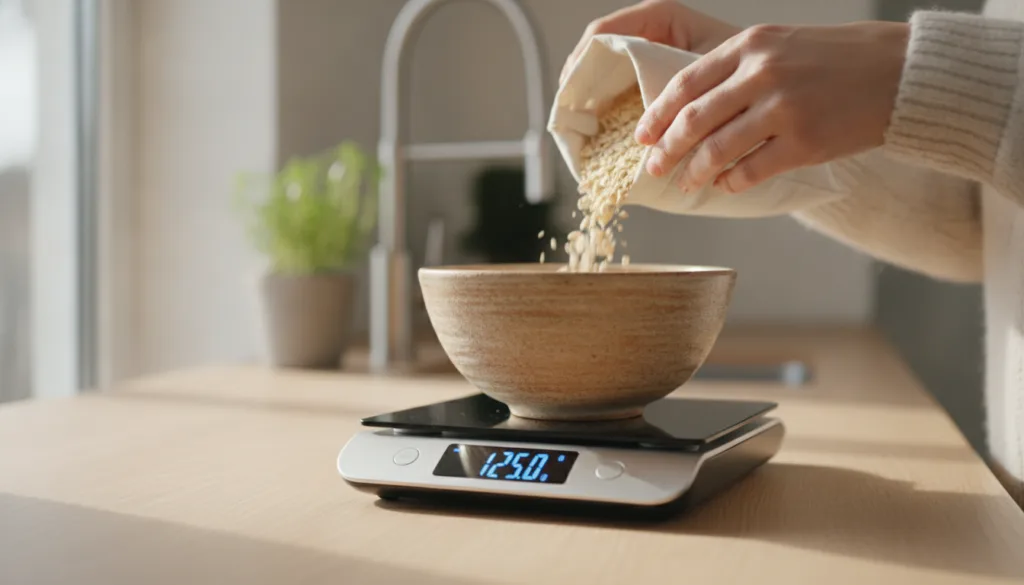
Using a food scale is generally the most precise way to measure ingredients, especially for calorie counting. It eliminates the variability that comes with how tightly ingredients are packed into a cup.
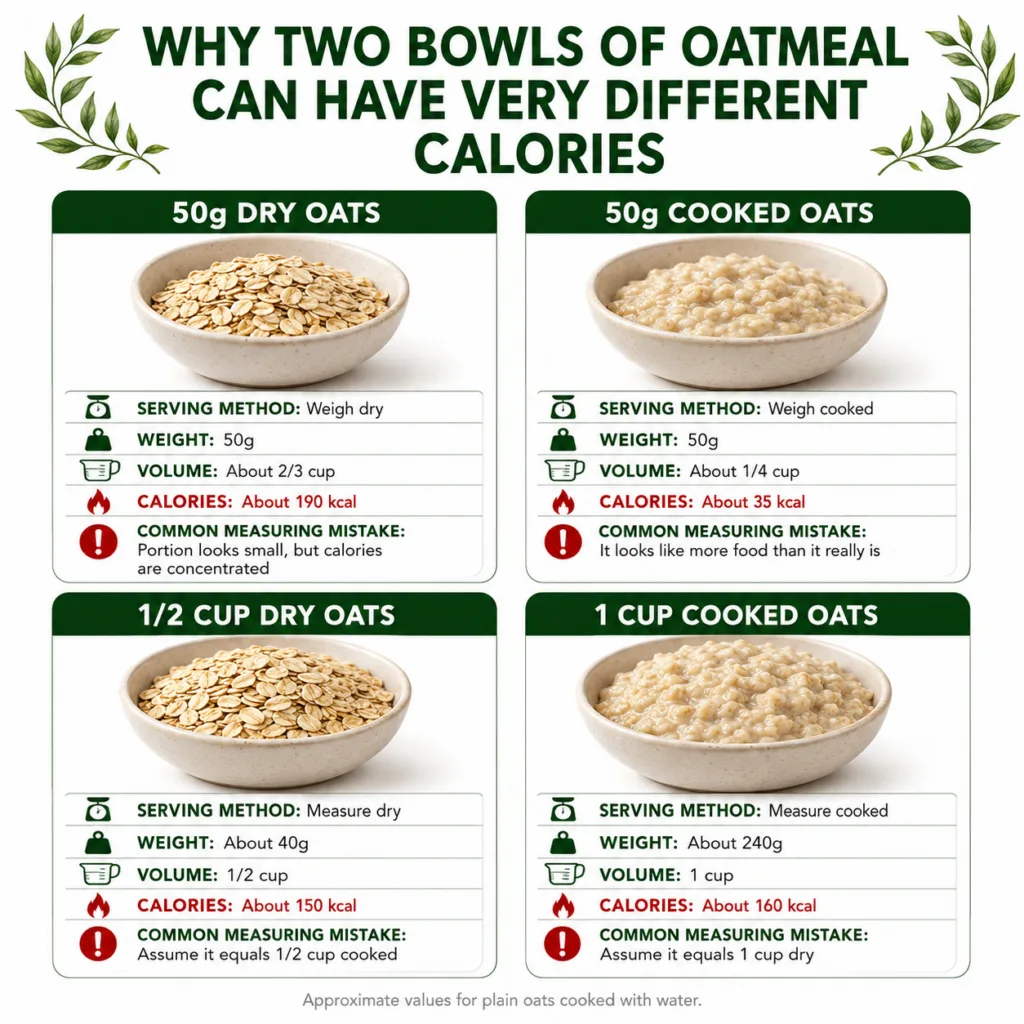
Scenario 1: 50g Dry Oats
- Serving Method: By Weight
- Weight: 50g
- Volume: Approximately 1/2 Cup (dry)
- Calories: 190 kcal
Common Measuring Mistake: Assuming that 50g of dry oats is a smaller portion than it actually is. Many underestimate the caloric density of dry oats. For example, some might mistakenly think that a very small visual portion of dry oats constitutes 50g, leading to over-serving if not weighed accurately. It’s also a mistake to assume 50g dry is the same caloric value as 50g cooked oats, as we’ll see next.
Scenario 2: 50g Cooked Oats
- Serving Method: By Weight
- Weight: 50g
- Volume: Approximately 1/4 Cup (cooked)
- Calories: 38 kcal
Common Measuring Mistake: Mistaking 50g cooked oats for 50g dry oats. This is a critical error! While both portions weigh 50g, the cooked oats have absorbed water, meaning the actual amount of oat solids (and thus calories) is significantly less. If you’re aiming for 190 calories and measure 50g of cooked oats, you’d be consuming only a fraction of your target calories. Always specify whether you’re measuring dry or cooked when tracking!
Measuring By Volume: Where Things Get Tricky
Measuring cups are convenient, but they introduce more variables. How tightly you pack, the type of cup, and whether the ingredient is dry or cooked can all affect accuracy.
Scenario 3: 1/2 Cup Dry Oats
- Serving Method: By Volume
- Weight: Approximately 50g
- Volume: 1/2 Cup
- Calories: 190 kcal
Common Measuring Mistake: Overfilling the cup. When measuring dry ingredients like oats by volume, it’s easy to accidentally pack them down or heap them over the brim, leading to a larger portion (and more calories) than intended. For accurate volume measurement, level off the top of the cup with a straight edge.
Scenario 4: 1 Cup Cooked Oats
- Serving Method: By Volume
- Weight: Approximately 200g
- Volume: 1 Cup
- Calories: 76 kcal
Common Measuring Mistake: Underestimating the amount of dry oats used to make 1 cup cooked. Someone might think that 1 cup of cooked oatmeal is a substantial meal, but compared to 1/2 cup dry oats (which is 190 kcal), 1 cup cooked is only 76 kcal. This portion is considerably lower in calories than its dry equivalent volume might suggest, due to the high water content. The mistake is often equating a ‘cup’ of cooked oats with a ‘cup’ of dry ingredients in terms of caloric impact, or thinking a larger volume means more calories when dealing with water-expanded foods.
Why Do Calories Vary So Much? Understanding Water Absorption
The significant calorie difference between dry and cooked oats for the same weight or volume comes down to one simple factor: water. When you cook oats, they absorb a considerable amount of water. This water adds weight and volume but contains zero calories. So, while a bowl of cooked oats looks much larger than the dry equivalent, its caloric density per gram or per cup is much lower because a significant portion of that weight and volume is just water.
For example, 50g of dry oats contains 190 kcal. To get 50g of cooked oats with 190 kcal, you’d need to consume about 250g of cooked oats (since 50g cooked oats is only 38 kcal). This highlights why measuring dry oats or using a scale for cooked oats is crucial for precise calorie counting.
Practical Tips for Accurate Oatmeal Portion Control
Achieving your health goals often depends on consistent and accurate portion control. Here are some actionable tips for your oatmeal:
- Invest in a Food Scale: For unparalleled accuracy, especially when tracking calories, a digital food scale is your best friend. Weighing your dry oats before cooking is the most reliable method.
- Measure Dry Oats: Whenever possible, measure your oats in their dry state. This provides the most consistent calorie count.
- Standardize Your Cooking: If you prefer to measure cooked oats, try to use a consistent water-to-oats ratio and cooking time. This helps ensure that the water absorption, and thus the calorie density, remains relatively stable.
- Be Mindful of Toppings: While the oats themselves might be lower in calories than you thought, toppings like nuts, seeds (e.g., chia seeds for weight loss), dried fruit, honey, or syrup can quickly add significant calories. Measure these carefully too!
- Meal Prep for Consistency: Prepare a larger batch of plain cooked oatmeal and then portion it out by weight using a scale into individual meal prep containers. This ensures you’re getting consistent servings throughout the week. Look for the best overnight oats containers to make this even easier.
Frequently Asked Questions About Oatmeal & Calories
Q: How can I make my oatmeal a high-protein breakfast?
A: To boost the protein in your oatmeal, consider stirring in a scoop of your favorite protein powder after cooking. Egg whites, Greek yogurt, or a handful of nuts and seeds (like chia seeds or hemp seeds) are also excellent additions for a high-protein breakfast.
Q: What are some healthy breakfast ideas that include oatmeal?
A: Oatmeal is incredibly versatile! Beyond classic cooked oats, try overnight oats with fruit and nuts, baked oatmeal with berries, or savory oatmeal topped with an egg and vegetables. These are great options for healthy breakfast ideas.
Q: How can I use chia seeds for weight loss in my oatmeal?
A: Chia seeds are rich in fiber and can help you feel full longer. Stir 1-2 tablespoons of chia seeds into your dry oats before adding liquid for overnight oats, or mix into hot oatmeal. They absorb liquid and create a thicker, more satisfying texture while adding beneficial nutrients to your calorie deficit meal plan.
Q: What’s the best way to store oatmeal for meal prep?
A: For best results, store cooked plain oatmeal in airtight containers in the refrigerator for up to 4-5 days. If making overnight oats, prepare them directly in the best overnight oats containers you have and store in the fridge.
Q: Is oatmeal good for digestion?
A: Absolutely! Oats are a fantastic source of soluble fiber, particularly beta-glucan, which is known to support digestive health, help regulate bowel movements, and can contribute to a feeling of fullness. It’s one of the top foods for digestion.
Final Thoughts
Understanding the difference between measuring dry versus cooked oatmeal, and the impact of weight versus volume, is a game-changer for accurate calorie tracking. By being mindful of these distinctions and adopting precise measuring habits, you can ensure your healthy oatmeal breakfast truly supports your nutritional goals. Remember, knowledge is power when it comes to nourishing your body effectively.