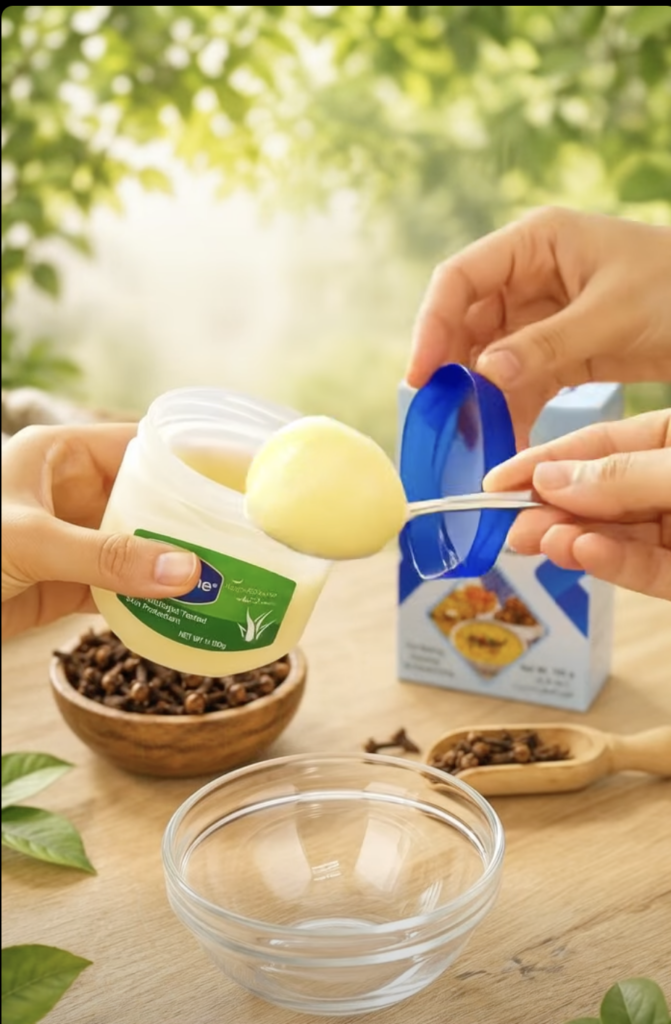
If you’ve seen the viral combination of Vaseline, baking soda, and cloves, you may be wondering what it actually does and how to use it safely. This simple DIY mixture is often used as an occasional exfoliating and moisturizing treatment for rough, dry areas of the body.
The important thing to know is that this isn’t a miracle treatment, and baking soda can irritate skin if it’s used too often. Here’s a gentler way to try the idea at home.
What You’ll Need
For one small batch:
- 1 tablespoon Vaseline petroleum jelly
- 1/4 teaspoon baking soda
- 2–3 whole cloves
- 1 teaspoon hot water for steeping the cloves
- A clean small bowl
- A clean spoon
Optional: Instead of putting whole cloves directly into the mixture, use only a few drops of cooled clove-infused water. This makes the texture easier to apply.
Step 1: Prepare the Cloves
Place 2–3 whole cloves in a small cup and add about 1 teaspoon of hot water.
Allow them to steep for approximately 10–15 minutes, then let the liquid cool completely.
Remove the cloves. You only need a few drops of the infused water for the recipe.
Step 2: Prepare the Vaseline
Add 1 tablespoon of Vaseline to a clean bowl.
Vaseline acts mainly as an occlusive moisturizer. It creates a barrier over the skin that helps reduce water loss, which is why petroleum jelly can be especially useful on very dry areas.
Step 3: Add a Small Amount of Baking Soda
Add approximately 1/4 teaspoon of baking soda.
Mix gently until it is evenly distributed through the petroleum jelly.
Don’t add large amounts. Baking soda is alkaline and can disrupt the skin’s natural barrier, particularly when it is used frequently or left on for long periods.
Step 4: Add the Clove Infusion
Add just 2–3 drops of the cooled clove-infused water.
Mix everything until you have a smooth paste.
You don’t need a strong clove concentration. Clove components can irritate sensitive skin, so more isn’t necessarily better.
How to Apply It
This recipe is better suited to rough body areas such as elbows, knees, heels, or other patches of dry skin rather than delicate facial skin.
First, wash the area with lukewarm water and pat it dry. Apply a very thin layer of the mixture, then massage gently for about 20–30 seconds without aggressive scrubbing.
For your first use, leave it on for only 3–5 minutes, then rinse thoroughly with lukewarm water.
Pat the skin dry and finish with plain moisturizer or a very thin layer of petroleum jelly.
How Often Should You Use It?
Start with once a week at most.
If your skin becomes red, itchy, painful, unusually dry, or starts burning, rinse the mixture off immediately and discontinue use.
I would not recommend a “use for 20 days straight” routine despite that wording appearing in viral posts. Daily baking-soda application can be unnecessarily irritating to the skin barrier.
Can You Use It on Your Face?
I wouldn’t recommend this particular mixture as a regular facial mask.
Facial skin can be more sensitive, and both baking soda and concentrated clove preparations may cause irritation. If your goal is facial hydration, plain petroleum jelly applied sparingly over a suitable moisturizer is generally a simpler option.
Also avoid applying this DIY mixture around the eyes, on lips, freshly shaved skin, acne lesions, eczema, irritated skin, or open wounds.
Important: Patch Test First
Before covering a larger area, apply a tiny amount to a small patch of intact skin and wait to see how your skin responds.
People with sensitive or reactive skin may be better off skipping the baking soda and cloves altogether.
What Results Should You Expect?
Think of this as an occasional DIY moisturizing/exfoliating treatment, not as a medical or anti-aging remedy.
Petroleum jelly can help dry skin feel softer by reducing moisture loss. Any immediate smoother appearance is more realistically related to hydration and removal of loose surface skin—not permanent whitening, wrinkle removal, collagen production, or treatment of pigmentation.
The Bottom Line
The viral Vaseline + baking soda + cloves recipe can be adapted into a gentler treatment for rough body skin, but the safest approach is a small amount, short contact time, and infrequent use.
For very dry or cracked heels and elbows, you can also skip the baking soda entirely: apply moisturizer to slightly damp skin, seal it with a thin layer of Vaseline, and leave it overnight. This simpler method is often all that’s needed.