Is your hair feeling a little dull, lackluster, or just not quite as vibrant as it used to be? It’s a common concern, and many of us are searching for ways to bring back that natural, healthy glow. What if we told you the secret might be brewing right in your kitchen cupboard?
Get ready to discover a simple, age-old trick that many have sworn by for generations: a black tea hair rinse! This gentle, natural method could be just what your hair needs to regain its beautiful luster. It’s a testament to the power of natural ingredients that are often overlooked.
Why This Matters: Reclaiming Your Hair’s Radiance Naturally
Our hair endures a lot – environmental stressors, heat styling, and even the products we use can strip away its natural shine, leaving it looking tired and lifeless. While countless expensive products promise miraculous results, many of us are increasingly turning to natural, home-based remedies that are both effective and kind to our bodies.
The idea of using black tea for hair might sound a little unconventional, but it taps into a rich history of herbal wisdom. For those who prefer a less chemical-laden approach to beauty, this simple rinse offers an intriguing alternative. It’s affordable, accessible, and aligns perfectly with a natural wellness lifestyle, making it a popular choice among those seeking practical solutions right from home.
The “Tea”-rrific Science Behind Hair Shine
So, how exactly does a humble cup of black tea work its magic on your locks? It all comes down to its unique composition, particularly compounds called tannins and antioxidants.
How Black Tea May Support Hair Health:
- Enhanced Shine: Tannins, the same compounds that give tea its dark color and slightly bitter taste, can temporarily bind to the hair shaft. This process may help to smooth the hair’s cuticle, leading to a flatter, more reflective surface. A smoother cuticle means more light is reflected, resulting in a noticeable increase in shine.
- Traditional Use for Hair Strength: Historically, black tea has been a folk remedy for various hair concerns, including strengthening strands and reducing shedding. While scientific research directly linking black tea rinse to reduced hair loss is limited, the antioxidants in tea are known to support overall cellular health, which could indirectly benefit the scalp environment.
- Scalp Wellness: The antioxidants and anti-inflammatory properties of black tea may also contribute to a healthier scalp. A well-balanced and nourished scalp is foundational for healthy hair growth and appearance.
It’s important to note that while many users experience positive results and the traditional uses are compelling, scientific studies specifically on black tea rinses for hair shine are not as extensive as those for other applications. We rely on a combination of anecdotal evidence and understanding of tea’s chemical properties.
Your Practical Guide to a Black Tea Hair Rinse
Ready to try this natural remedy for yourself? Here’s a simple, step-by-step guide to incorporating a black tea rinse into your hair care routine:
What You’ll Need:
- 2-3 black tea bags (or 2-3 teaspoons of loose leaf black tea)
- 2 cups of hot, almost boiling water
- A clean spray bottle or a bowl
Preparation:
- Brew Your Tea: Place the tea bags or loose tea in a heat-proof container. Pour the hot water over them.
- Steep & Cool: Let the tea steep for at least 15-20 minutes to create a strong brew. The darker, the better for this purpose.
- Cool Completely: This step is crucial! Allow the tea to cool down completely to room temperature. You don’t want to apply hot liquid to your scalp or hair. You can even refrigerate it for a refreshing boost.
- Strain (if using loose leaf): If you used loose leaf tea, strain out the leaves before use.
Usage Ideas:
- After Shampoo: After shampooing your hair as usual, gently towel-dry it so it’s damp, not dripping wet.
- Application:
- Method 1 (Spray Bottle): Pour the cooled tea into a spray bottle. Section your hair and generously spray the tea directly onto your scalp and throughout your hair, from roots to ends.
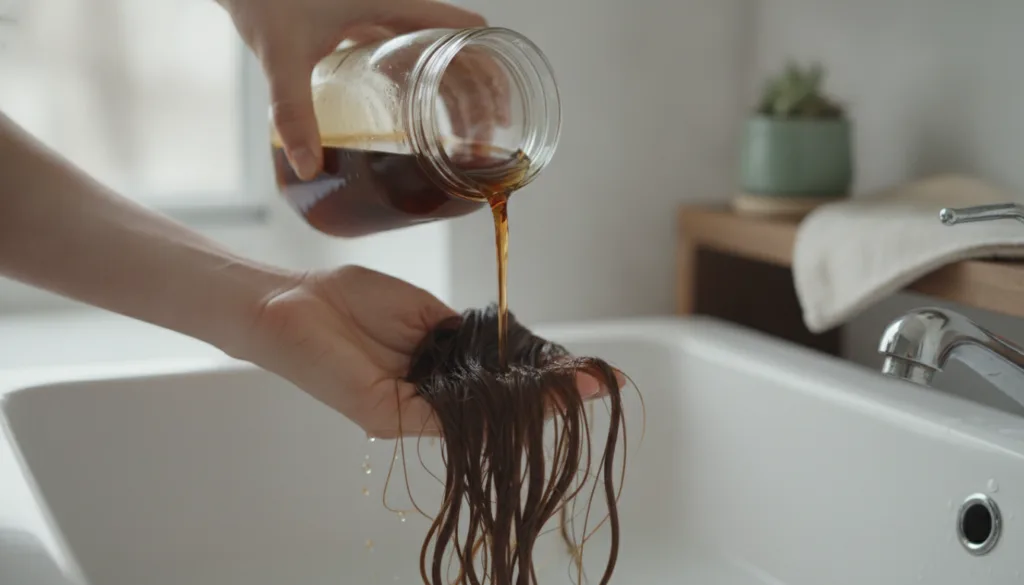
- Method 2 (Pour-Over): Stand over a sink or in the shower. Slowly pour the tea mixture over your scalp and hair, ensuring even saturation. Gently massage it into your scalp.
- Let it Sit: Leave the black tea rinse on your hair for 10-20 minutes. You can cover your hair with a shower cap if you like.
- Rinse or Leave-In:
- For a more intense effect and if you have darker hair, you might choose to leave it in.
- If you have lighter hair or are concerned about potential darkening (see precautions below), rinse it out thoroughly with cool water.
- Condition: Follow with your regular conditioner, focusing on the ends, then rinse well.
Frequency:
Start by using the black tea rinse 1-2 times a week. Observe how your hair responds and adjust as needed. Consistency is often key with natural remedies.
Safety & Precautions
While black tea is a natural ingredient, it’s wise to be aware of a few considerations before using it on your hair:
- Hair Color Changes: Black tea can have a mild dyeing effect. If you have very light, blonde, gray, or color-treated hair, there’s a possibility it could temporarily tint your hair a darker shade or give it a slightly reddish hue. Always do a patch test on a small, inconspicuous section of hair first if you are concerned.
- Scalp Sensitivity: If you have a sensitive scalp or existing skin conditions like eczema or psoriasis, perform a patch test on your skin before applying it to your entire scalp. Discontinue use if irritation occurs.
- Allergies: While rare, some individuals may be allergic to tea or its components.
- Medical Conditions/Pregnancy: As with any new wellness routine, if you have underlying medical conditions, are pregnant, or breastfeeding, it’s always a good idea to consult with a healthcare professional before trying new home remedies.
Key Takeaways for Black Tea Hair Shine
- Black tea, rich in tannins and antioxidants, is a traditional remedy for hair shine and vitality.
- It works by potentially smoothing the hair cuticle, making hair more reflective and shiny.
- Preparing a black tea rinse is simple: steep strong black tea, cool it completely, and apply to damp hair.
- It can be left in for a more intense effect or rinsed out, depending on hair type and desired outcome.
- Use 1-2 times a week for best results.
- Be cautious of potential temporary darkening, especially on lighter or color-treated hair, and always perform a patch test first.
FAQ: Your Black Tea Hair Rinse Questions Answered
Does black tea really make hair shiny?
Many users report that black tea rinses impart a noticeable shine to their hair. This is attributed to the tannins in black tea, which can help to smooth the hair cuticle, allowing light to reflect more effectively.
Will a black tea rinse dye my hair?
Black tea can have a mild, temporary staining effect, especially on lighter hair shades like blonde, gray, or heavily processed hair. It may impart a darker or reddish tint. If you have darker hair, this effect is usually minimal or unnoticeable. It’s always recommended to do a strand test first.
How often can I use a black tea hair rinse?
Starting with 1-2 times a week is a good approach. Observe how your hair responds. If you have an oily scalp, you might find it beneficial more often, while those with drier hair might prefer less frequent use.
Is the black tea rinse suitable for all hair types?
Generally, it’s suitable for most hair types, particularly those looking to enhance shine and potentially strengthen their hair. However, individuals with very light or color-treated hair should proceed with caution due to the potential for temporary tinting. Always consider your individual hair type and concerns.
Do I need to rinse out the black tea?
You can choose to rinse it out or leave it in, depending on your hair type and preference. If you have lighter hair or are worried about any residue, rinsing it out is a good idea. For darker hair, leaving it in can offer a more concentrated effect.
Related Reading You Might Enjoy
- Natural Ways to Boost Hair Growth
- DIY Hair Masks for Healthy Scalp
- Herbal Remedies for Lustrous Locks
- Top Foods for Strong, Healthy Hair
- Understanding Your Hair Type for Better Care