Imagine a garden where every plant supports its neighbor, leading to healthier growth, fewer pests, and an abundance of delicious produce. This isn’t just a dream; it’s the magic of companion planting! By strategically grouping plants that benefit each other, you can transform your garden into a thriving ecosystem, making the most of every inch of soil. This clever gardening technique can reduce the need for synthetic treatments, improve soil health, and significantly boost your yields, even in smaller spaces. Get ready to discover powerful plant friendships that will revolutionize your gardening approach this season.
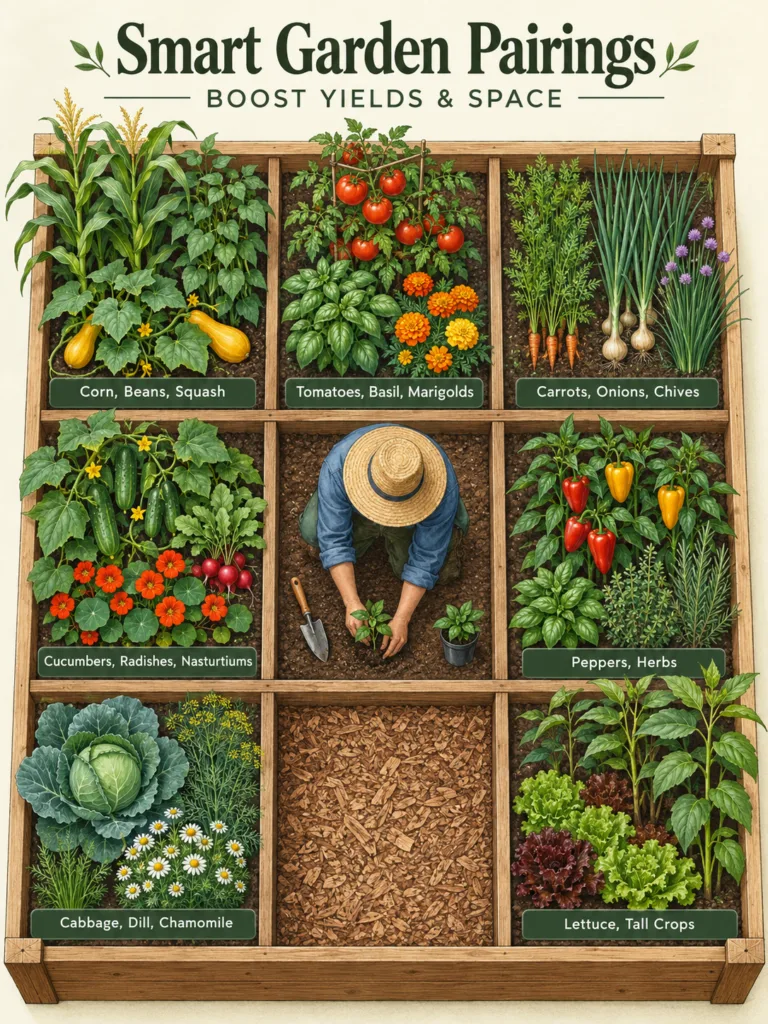
The Power of Plant Partnerships: Understanding Companion Planting
Companion planting is an age-old gardening practice rooted in observation and ecological understanding. It involves placing different species close to each other so they can mutually benefit. These benefits can be diverse:
- Pest Deterrence: Some plants release aromas or compounds that repel harmful insects.
- Beneficial Insect Attraction: Certain flowers and herbs attract pollinators or predatory insects that control pests.
- Nutrient Cycling: Legumes, like beans, fix nitrogen in the soil, making it available to nearby plants.
- Shade and Support: Taller plants can provide necessary shade for heat-sensitive companions, while sturdy plants can offer a natural trellis.
- Soil Improvement: Deep-rooted plants can break up compacted soil, and groundcovers suppress weeds and retain moisture.
- Flavor Enhancement: While often anecdotal, many gardeners believe certain pairings can improve the taste of vegetables.
By mimicking natural plant communities, you create a more resilient and productive garden environment.
Smart Pairings for a Bountiful Harvest
Let’s explore some exceptional plant partnerships that can elevate your garden’s health and productivity. Remember to always consider your specific climate, local frost dates, and the individual needs of each plant when planning your layout.
1. The Classic Trio: Tomato, Marigold & Basil
This is a superstar combination for good reason. Tomatoes thrive with these aromatic allies.
- Tomato (Solanum lycopersicum): A warm-season favorite, needing full sun (6-8 hours), rich, well-draining soil, and consistent moisture. Indeterminate varieties will require staking or caging.
- Marigold (Tagetes spp.): Annual flowers, often French marigolds (Tagetes patula) or African marigolds (Tagetes erecta), are renowned for deterring nematodes and whiteflies with compounds released from their roots. Their bright blooms also add beauty.
- Basil (Ocimum basilicum): This fragrant herb is said to repel tomato hornworms and flies, and many gardeners believe it enhances the flavor of tomatoes. Harvest basil regularly to encourage bushier growth.
Care Tip: Plant marigolds and basil around the base of your tomato plants. Ensure good air circulation to prevent fungal diseases common in dense foliage.
2. Zesty Protectors: Peppers, Nasturtium & Carrots
This pairing offers both pest protection and soil benefits for your pepper patch.
- Peppers (Capsicum annuum): Warm-season plants requiring full sun, well-draining soil, and consistent watering. They appreciate steady warmth.
- Nasturtium (Tropaeolum majus): These beautiful, edible flowers act as a trap crop, luring aphids away from your peppers. Their peppery leaves and flowers can be added to salads. They prefer full sun to partial shade.
- Carrots (Daucus carota subsp. sativus): Plant carrots nearby, ideally in deeply worked, loose soil. Their root growth can help aerate the soil, benefiting the peppers. Ensure consistent moisture for smooth, straight roots.
Care Tip: Monitor nasturtiums for aphid infestations and prune or remove heavily infested plants to prevent aphids from spreading to your peppers.
3. Ground Cover & Quick Harvest: Zucchini, Radishes & Nasturtium
This combination makes excellent use of space, especially with sprawling zucchini plants.
- Zucchini (Cucurbita pepo): A prolific producer needing full sun and rich, well-draining soil. Give it plenty of space as it can spread significantly.
- Radishes (Raphanus sativus): Quick-growing root vegetables that loosen the soil and can be harvested before zucchini plants fully spread, maximizing early season yields. They prefer cool weather and consistent moisture.
- Nasturtium (Tropaeolum majus): Again, nasturtiums offer pest deterrence for squash and their broad leaves can provide a living mulch, helping to suppress weeds and retain soil moisture for the zucchini.
Care Tip: Plant radishes along the edges of where your zucchini will grow. As zucchini begins to vine out, the radishes will likely be ready for harvest.
4. The Indigenous Wisdom: Corn, Pole Beans & Squash (The Three Sisters)
A time-honored trio from Native American agriculture, this system provides mutual support and improved soil fertility.
- Corn (Zea mays): Provides a natural trellis for climbing beans. Plant in blocks for good pollination.
- Pole Beans (Phaseolus vulgaris): Climb the corn stalks, effectively using vertical space. More importantly, beans are legumes, meaning their roots host nitrogen-fixing bacteria, enriching the soil for the corn and squash.
- Squash (Cucurbita spp.): Spreads along the ground, shading the soil to suppress weeds, retain moisture, and deter pests with its prickly vines.
Care Tip: Plant corn first, allowing it to grow 6-12 inches tall before sowing beans and squash seeds. This ensures the corn is sturdy enough to support the beans.
5. Sweetness with Savory Support: Strawberry, Borage & Chives
Enhance your strawberry patch with these beneficial herbs and flowers.
- Strawberry (Fragaria x ananassa): Perennial in USDA Zones 3-10, needing full sun and well-draining, slightly acidic soil.
- Borage (Borago officinalis): An annual herb that readily self-seeds, borage is an excellent pollinator attractor, especially for bees, which are crucial for strawberry fruit set. It’s also believed to deter tomato hornworms and has deep taproots that bring up minerals.
- Chives (Allium schoenoprasum): A perennial onion relative (USDA Zones 3-9) that repels aphids and spider mites, and is said to improve the flavor of strawberries.
Care Tip: Allow borage to flower to attract pollinators. Harvest chives by snipping leaves from the outer clumps to encourage continuous growth.
6. Brassica Buddies: Cabbage, Dill & Marigold
Protect your vulnerable brassicas from common pests with this aromatic combination.
- Cabbage (Brassica oleracea): A cool-season crop requiring fertile, well-draining soil and consistent moisture. Susceptible to cabbage worms and aphids.
- Dill (Anethum graveolens): This feathery herb attracts beneficial insects like predatory wasps and hoverflies, which prey on cabbage worms and aphids. It also provides a delicate flavor to culinary dishes.
- Marigold (Tagetes spp.): Once again, marigolds offer their pest-repelling root compounds to protect against nematodes and other soil-borne issues, benefiting the cabbage’s root health.
Care Tip: Plant dill close enough to cabbage for beneficial insects to find it, but far enough not to shade out the cabbage’s growth.
7. Cool Crops & Scented Shields: Lettuce, Mint & Carrots
This pairing optimizes space and protects tender greens.
- Lettuce (Lactuca sativa): A cool-season leafy green that appreciates partial shade in warmer climates and consistent moisture to prevent bolting.
- Mint (Mentha spp.): Aromatic mint is known to repel slugs, aphids, and even deer. However, mint is a vigorous spreader and can quickly take over a garden bed.
- Carrots (Daucus carota subsp. sativus): Growing carrots alongside lettuce can help keep the soil loose, and their leaves provide a canopy that helps cool the soil for lettuce.
Warning: Always plant mint in a contained barrier, such as a pot sunk into the ground or a dedicated container, when growing it near other plants. Otherwise, it will aggressively spread and outcompete your vegetables.
Common Mistakes to Avoid in Companion Planting
While companion planting offers many benefits, a few common errors can hinder success:
- Ignoring Sun & Water Needs: Don’t pair a sun-lover with a shade-dweller, or a drought-tolerant plant with a water-guzzler. Always group plants with similar fundamental requirements.
- Overcrowding: Even with beneficial companions, plants still need adequate space for air circulation and root development. Overcrowding leads to poor growth and increased disease risk.
- Neglecting Invasiveness: As with mint, some beneficial plants can be incredibly aggressive. Always research the growth habit of each plant and use barriers or separate containers for vigorous spreaders.
- Blindly Following Lists: While general lists are helpful, observe your own garden. What works in one climate or soil type might not work as effectively in another. Your garden is your best teacher.
Regional & Seasonal Considerations in the U.S.
The success of these pairings also depends heavily on your local climate:
- USDA Zones 3-5 (Northern Climates): Focus on annuals or ensure tender perennials are treated as such. Maximize the short growing season by starting seeds indoors.
- USDA Zones 6-8 (Mid-Latitudes): Enjoy a longer growing season, allowing for succession planting of quick crops like radishes and lettuce. Many herbs and some vegetables can be perennial.
- USDA Zones 9-11 (Southern & Warm Climates): Heat tolerance is key. Provide afternoon shade for cool-season crops. Some ‘annuals’ like tomatoes and peppers can have extended seasons, or even be short-lived perennials, but may suffer in intense summer heat.
Always consult your local extension office for specific planting dates and cultivar recommendations for your area. They can provide invaluable tailored advice.
Cultivate a Thriving, Resilient Garden
Embracing smart garden pairings is more than just a technique; it’s a philosophy that fosters a deeper connection to your plants and the natural world. By understanding how different species interact, you’re not just planting; you’re cultivating a dynamic, self-sustaining ecosystem. These beneficial friendships create a healthier environment for your edibles and ornamentals alike, leading to more robust plants, fewer pest problems, and ultimately, a more satisfying gardening experience. So, roll up your sleeves, grab your trowel, and start experimenting with these clever combinations. Your garden – and your palate – will thank you for it!