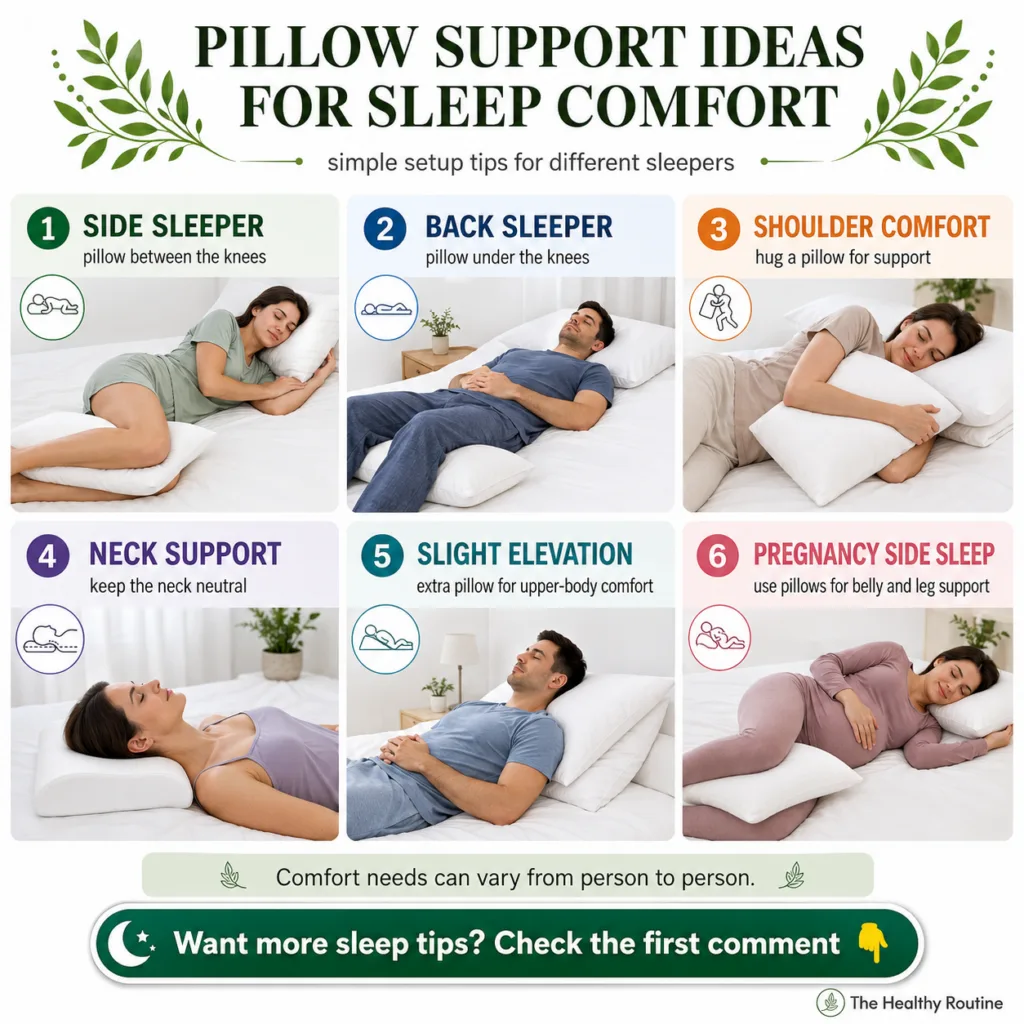
Waking up stiff? Your pillow setup might be the secret to a more restful night! At Glowra Health, we understand that quality sleep is fundamental to overall well-being. That’s why we’re breaking down simple ways to boost your sleep comfort with just a few pillow tweaks. These clever pillow hacks for sleep are designed to support proper spinal alignment, alleviate pressure points, and help you wake up feeling refreshed.
From easing lower back pain for side sleepers to supporting expectant mothers, these practical tips address common sleep challenges. Let’s explore how strategic pillow placement can unlock better sleep and ultimate comfort for every type of sleeper.
Quick Overview
- Main topic: Improving sleep comfort and posture with pillow hacks.
- Best for: Anyone seeking better sleep, reducing discomfort, or improving spinal alignment.
- Number of hacks: 6 practical pillow positioning ideas.
- Prep style: Simple, no-fuss adjustments using common pillows.
- Reader benefit: Enhanced sleep quality, reduced aches, and increased comfort.
1. Side Sleeper Support: Pillow Between Knees

For those who prefer sleeping on their side, this hack is a game-changer. Placing a pillow between your knees helps maintain the natural alignment of your hips and spine, preventing the upper leg from pulling the spine out of position.
Best for: Side sleepers experiencing lower back pain or hip discomfort.
Benefits: Supports hips, aligns spine, reduces lower back pressure, decreases joint strain.
What you’ll need: One extra pillow (medium-firm is ideal).
How to:
- Lie on your side in your preferred position.
- Place the extra pillow securely between your knees.
- Ensure the pillow extends from your knees to your ankles for optimal support.
Pro Tip: A body pillow can also serve this purpose, offering extended support along your entire side.
2. Back Sleeper Comfort: Neck & Knee Support

If you’re a back sleeper, proper support for your neck and the curve of your lower back is crucial. This hack uses two pillows to maintain your spine’s natural curvature and prevent strain.
Best for: Back sleepers, especially those with neck or lower back discomfort.
Benefits: Supports the natural curve of the spine, prevents neck strain, reduces lower back arching.
What you’ll need: Your regular head pillow, a small neck support pillow or rolled towel, and one soft pillow for under your knees.
How to:
- Lie on your back with your head on your regular pillow.
- Place a small, rolled towel or a thin, contoured pillow under the natural curve of your neck for cervical support.
- Gently slide another soft pillow under your knees to slightly elevate them, which flattens your lower back against the mattress.
Pro Tip: Adjust the thickness of the knee pillow until your lower back feels completely relaxed and supported.
3. Soothe Your Shoulders: Pillow for Side Sleepers

Side sleepers often put significant pressure on their shoulders, which can lead to discomfort or numbness. This simple hack provides a soft cushion to relieve that pressure.
Best for: Side sleepers experiencing shoulder pain or discomfort.
Benefits: Relieves pressure on shoulders, prevents arm numbness, improves overall comfort for side sleepers.
What you’ll need: One small, soft pillow or a folded blanket.
How to:
- Lie on your side in your preferred sleeping position.
- Place the small, thin pillow between your upper arm and your chest.
- Adjust its position so that it cushions your shoulder joint without elevating your arm too much.
Pro Tip: Ensure the pillow is thin enough to provide cushioning without creating additional tension in your shoulder or neck.
4. Neck Alignment: Support the Cervical Curve

A well-supported neck is key to preventing morning stiffness and headaches. This hack focuses on providing targeted support to your cervical spine, regardless of your primary sleeping position.
Best for: Anyone prone to neck pain, stiffness, or tension headaches.
Benefits: Maintains proper neck alignment, reduces stiffness, alleviates tension.
What you’ll need: A contoured neck pillow or a small, firm rolled towel.
How to:
- Whether you sleep on your back or side, ensure your main pillow allows your head to rest naturally.
- Position a contoured pillow or rolled towel directly under the natural curve of your neck.
- The goal is to fill the gap between your neck and the mattress/main pillow, keeping your head and spine in a neutral line.
Pro Tip: Experiment with different thicknesses of rolled towels to find the perfect level of support for your unique neck curvature.
5. Gentle Elevation: For Reflux & Breathing

For those who suffer from acid reflux, nasal congestion, or snoring, a slight elevation of the upper body can make a significant difference. Gravity helps keep stomach acid down and opens airways.
Best for: Individuals with acid reflux, snoring issues, or breathing difficulties.
Benefits: Reduces acid reflux symptoms, aids breathing, minimizes snoring, provides comfort for congestion.
What you’ll need: A wedge pillow or 2-3 firm pillows.
How to:
- Place a large wedge pillow or stack 2-3 firm pillows under the head end of your mattress, or directly under your regular pillow.
- Ensure the elevation creates a gentle, gradual slope, rather than just propping up your head at a sharp angle.
- Your torso and head should be elevated from the waist up for best results.
Pro Tip: Invest in a specialized wedge pillow for the most stable and consistent elevation. Look for best wedge pillows for sleep online.
6. Pregnancy Support: Full Body Comfort

Pregnancy brings unique sleep challenges, especially as the belly grows. Strategic pillow use can provide much-needed comfort and support for both mother and baby.
Best for: Pregnant individuals, particularly those in their second and third trimesters.
Benefits: Supports belly and back, aligns hips, reduces pressure on the bladder, enhances overall comfort.
What you’ll need: A full-body pregnancy pillow (C-shaped or U-shaped) or several standard pillows.
How to:
- Lie on your side (often the recommended position during pregnancy).
- Position a full-body pillow to cradle your growing belly and support your back.
- Ensure a portion of the pillow is placed between your knees to maintain hip alignment.
Pro Tip: A good pregnancy pillow can significantly improve sleep quality. Research the best pregnancy pillows available for optimal comfort.
Simple Tips for Best Results
- Choose the Right Pillow: Ensure your main pillow is suitable for your primary sleeping position and head size.
- Replace Regularly: Pillows lose their support over time. Replace them every 1-2 years to maintain optimal comfort and hygiene.
- Listen to Your Body: Experiment with different pillow arrangements to find what works best for your unique needs and comfort.
- Maintain Good Posture Throughout the Day: Good daytime posture contributes to better nighttime alignment.
FAQ
Can I use a regular pillow as a pregnancy pillow?
While a dedicated pregnancy pillow offers the best contoured support, you can strategically use several regular pillows to mimic the support. Place one under your belly, one behind your back, and one between your knees.
How do I know if my pillow is too old or worn out?
If your pillow is lumpy, flat, no longer springs back, or you wake up with neck pain, it’s likely time for a replacement. A simple fold test (fold it in half; if it doesn’t spring back, it’s worn) can also help.
Can proper pillow positioning really help with snoring?
Yes, elevating your head and upper body, as described in the Gentle Elevation hack, can help open airways and reduce snoring for some individuals, especially those whose snoring is related to mild congestion or gravity-induced airway collapse.
Final Thoughts
Achieving a truly restful night’s sleep often comes down to small, impactful adjustments. These pillow hacks for sleep offer simple yet effective ways to transform your comfort and support. By paying attention to your body’s alignment and utilizing pillows strategically, you can alleviate discomfort, enhance spinal health, and wake up feeling more energized and ready to tackle your day. Sweet dreams from Glowra Health!
MEDICAL DISCLAIMER:
The information provided in this article is for general knowledge and informational purposes only, and does not constitute medical advice. Always consult with a qualified healthcare professional before making any decisions about your health or treatment, especially if you have chronic pain, a medical condition, or are pregnant.