Unlock Luscious Hair with Grandma’s Secret!
Have you ever found yourself yearning for the secret to truly luscious, strong, and vibrant hair? Perhaps you’ve tried countless products, only to feel let down by promises that didn’t quite deliver. What if we told you that one of nature’s oldest and most powerful secrets for hair wellness might be hiding in your pantry?
For centuries, women and men around the globe have turned to a humble seed, revered in traditional wellness practices for its remarkable ability to transform hair. It’s a natural marvel, passed down through generations, and it’s time to rediscover its magic.

Why This Matters: Reclaiming Natural Hair Wellness
In a world overflowing with quick fixes and chemical-laden hair products, many of us are seeking a return to nature. We’re looking for solutions that not only promise beauty but also promote genuine health and vitality from within.
The quest for healthy hair isn’t just about aesthetics; it’s about confidence, self-care, and understanding what truly nourishes our bodies. Unfortunately, common misconceptions often lead us down paths of expensive treatments that mask problems rather than solving them. This ancient wisdom, however, offers a holistic approach, tapping into the natural power of plants.
If you’re someone who researches extensively before trusting health information, prefers natural wellness, and wants to age well with strong, beautiful hair, then this topic is definitely for you. Fenugreek seeds have garnered immense popularity recently for a good reason – they offer a sustainable and effective way to support your hair’s natural glory.
Main Educational Content: The Wonder of Fenugreek for Your Hair
What Makes Fenugreek So Special?
Fenugreek, scientifically known as Trigonella foenum-graecum, is more than just a culinary spice. It’s a nutritional powerhouse, especially when it comes to hair health. These small, golden-brown seeds are packed with:
- Proteins: Essential building blocks for hair, helping to strengthen strands and promote growth.
- Iron: Crucial for blood circulation and oxygen transport to hair follicles.
- Nicotinic Acid (Vitamin B3): Known for supporting healthy blood flow and nutrient delivery to the scalp.
- Amino Acids: Fundamental for repairing hair damage and boosting overall hair structure.
- Lecithin: A natural emollient that provides deep conditioning.
Traditional Use: For centuries, fenugreek has been a staple in Ayurvedic and traditional Chinese medicine for its numerous health benefits, including its profound impact on hair. It was traditionally used to combat hair fall, stimulate growth, and improve hair texture.
Modern Understanding: While more large-scale scientific studies are always welcomed, current research and anecdotal evidence suggest that the rich nutrient profile of fenugreek seeds may contribute to stronger hair follicles, improved scalp circulation, and a reduction in hair thinning. The compounds within fenugreek are thought to have anti-inflammatory and antifungal properties, which can help maintain a healthy scalp environment – a cornerstone for robust hair growth.
The Science Behind the Shine
So, how exactly does this humble seed work its magic? Here’s a closer look at its realistic potential benefits:
- Stimulates Hair Growth: The proteins, iron, and nicotinic acid in fenugreek are believed to stimulate hair follicles, encouraging new hair growth and reducing hair fall. Some studies suggest that the phytoestrogens present in fenugreek may also play a role in this process.
- Strengthens Hair: The high protein and amino acid content helps rebuild and strengthen the hair shaft, making it less prone to breakage and split ends.
- Adds Shine and Softness: The mucilage (a gel-like substance that forms when fenugreek seeds are soaked) acts as a natural conditioner, adding incredible softness and a healthy shine to your locks.
- Combats Dandruff and Scalp Issues: Its anti-inflammatory and antifungal properties may help soothe an irritated scalp and keep dandruff at bay, creating a healthier environment for hair to thrive.
Practical Guide: Crafting Your Fenugreek Hair Mask
Ready to unlock this age-old secret? Here’s how you can make and use a simple yet powerful fenugreek hair mask at home:
Making Your Fenugreek Hair Mask
Ingredients:
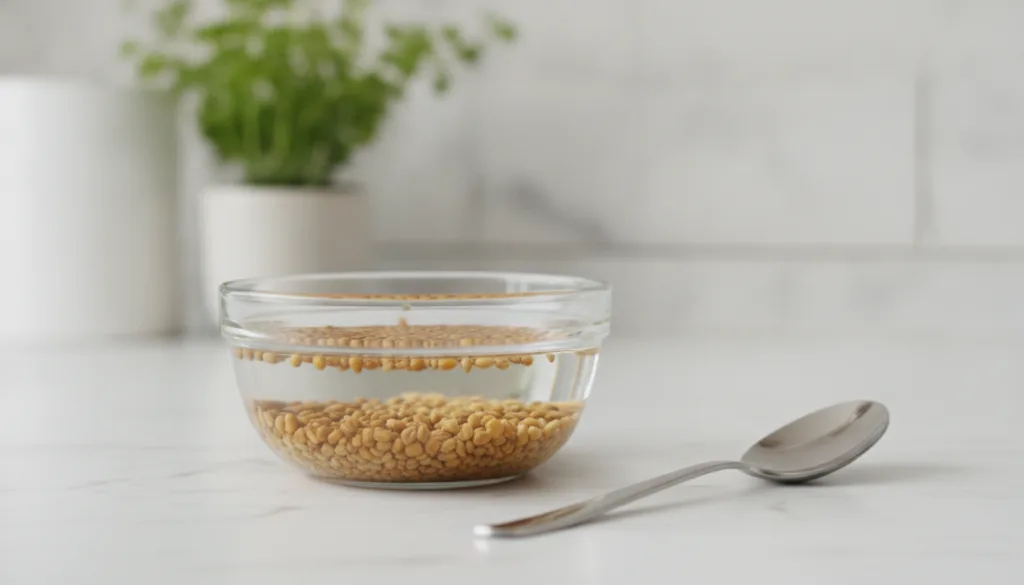
- ½ cup fenugreek seeds
- Water (for soaking and blending)
- Optional additions (for extra nourishment): 1 tablespoon coconut oil, 2 tablespoons plain yogurt, 1 tablespoon aloe vera gel
Preparation:
- Soak: Place the fenugreek seeds in a bowl and cover them with enough water. Let them soak overnight (at least 8-10 hours). They will swell significantly and become soft.
- Blend: Drain the excess water, but reserve a little for blending. Transfer the soaked seeds to a blender. Add just enough of the reserved water (or a bit of fresh water) to form a smooth, thick paste. If adding optional ingredients, blend them in now.
- Consistency: The paste should be smooth and spreadable, similar to a yogurt or conditioner.
How to Use for Best Results
Application:
- Section Hair: Divide your dry or slightly damp hair into sections.
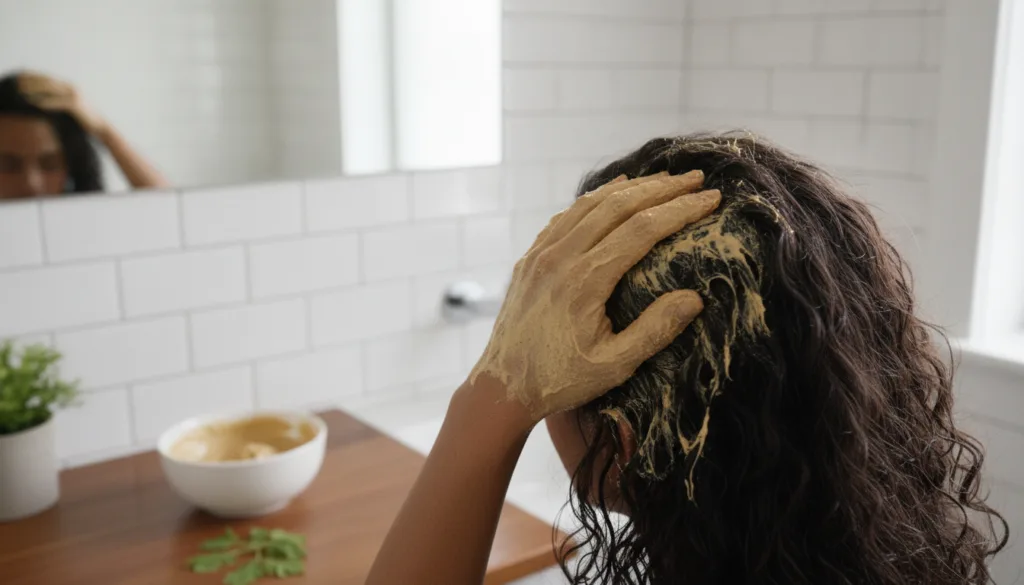
- Apply: Generously apply the fenugreek paste to your scalp first, massaging it in gently. Ensure good coverage, as scalp health is key.
- Extend to Ends: Work the remaining paste down through the length of your hair to the ends.
- Cover: Once applied, cover your hair with a shower cap to prevent it from drying out and to enhance absorption.
- Wait: Leave the mask on for 30-60 minutes.
- Rinse: Rinse thoroughly with lukewarm water. You might need to rinse a few times to remove all the particles. Follow with a mild shampoo and conditioner if desired.
Frequency: For best results, use this mask 1-2 times a week.
Storage: Store any leftover paste in an airtight container in the refrigerator for up to 2-3 days.
Safety & Precautions
While fenugreek is generally safe for topical use, it’s always wise to exercise caution:
- Patch Test: Before applying to your entire scalp, do a patch test on a small area of your skin (e.g., behind your ear or inner arm) to check for any allergic reactions.
- Allergies: If you have allergies to peanuts or chickpeas, you might be sensitive to fenugreek due to cross-reactivity.
- Pregnant or Breastfeeding: If you are pregnant or breastfeeding, please consult with your healthcare professional before using fenugreek topically.
- Existing Medical Conditions: If you have any underlying scalp conditions or existing medical issues, it’s always best to consult your doctor or a dermatologist before trying new remedies.
- Scent: Fenugreek has a distinctive, slightly maple-like scent that some people find strong. It usually fades after rinsing and washing.
Key Takeaways
- Fenugreek seeds are a traditional remedy celebrated for their potential to support hair growth and strength.
- They are rich in proteins, iron, nicotinic acid, and amino acids, vital for hair health.
- Regular use of a fenugreek hair mask may help reduce hair fall, stimulate growth, add shine, and improve scalp health.
- Always perform a patch test before full application.
- Consistency is key – aim for 1-2 applications per week for best results.
FAQ
How long does it take to see results from fenugreek?
While individual results vary, consistent use (1-2 times a week) for 4-6 weeks may start to show noticeable improvements in hair texture, strength, and reduced hair fall. Significant growth may take longer, often 2-3 months or more.
Can fenugreek cause hair loss?
Fenugreek is generally not known to cause hair loss when used topically. In fact, it’s traditionally used to help reduce hair fall. However, improper preparation (e.g., leaving large seed pieces that could tangle hair) or an allergic reaction could potentially lead to issues. Always ensure the paste is smooth and perform a patch test.
Is fenugreek good for all hair types?
Yes, fenugreek is generally beneficial for most hair types, especially those experiencing hair thinning, dryness, or lack of luster. Its conditioning properties can benefit dry, brittle hair, while its scalp-stimulating effects can help oily or normal scalps.
Can I use fenugreek powder instead of seeds?
Yes, you can use fenugreek powder, but ensure it’s pure and finely ground. Mix the powder with warm water to form a smooth paste. Soaking seeds usually yields a more potent mucilage, which provides better conditioning and is often preferred for masks.
Related Reading
If you enjoyed learning about fenugreek, you might also like to explore these related articles:
- The Ayurvedic Secret to Radiant Skin: Neem Oil Benefits
- Boosting Your Immune System Naturally: A Guide to Elderberry
- Transform Your Digestive Health: The Power of Probiotic-Rich Foods
- Natural Solutions for Healthy Aging: Lifestyle Tips for Vitality