Chia seeds have become a superstar in the wellness world, celebrated for their impressive nutritional profile and versatility. But a common question often arises in kitchens everywhere: when it comes to chia seeds, how much is actually enough? Is a small sprinkle sufficient, or do you need more to truly harness their benefits?
Understanding the right amount of chia seeds can make a big difference in how they impact your daily nutrition, satiety, and overall well-being. From aiding digestion to providing a significant boost of omega-3s, fiber, and protein, these tiny powerhouses offer a lot. However, the visual difference between one tablespoon and two tablespoons, especially after they’ve absorbed liquid, is quite striking and can lead to confusion about optimal intake.
In this guide, we’ll break down the real impact of 1 tablespoon versus 2 tablespoons of chia seeds, helping you determine the ideal quantity for your individual health goals and how to seamlessly incorporate them into your diet.
The Visual Truth: 1 Tablespoon vs. 2 Tablespoons of Chia Seeds
One of the most surprising aspects of chia seeds is their incredible ability to absorb liquid and expand. What starts as a small, dry amount can transform into a substantial, gel-like mixture. This expansion is key to understanding why portion sizes matter.
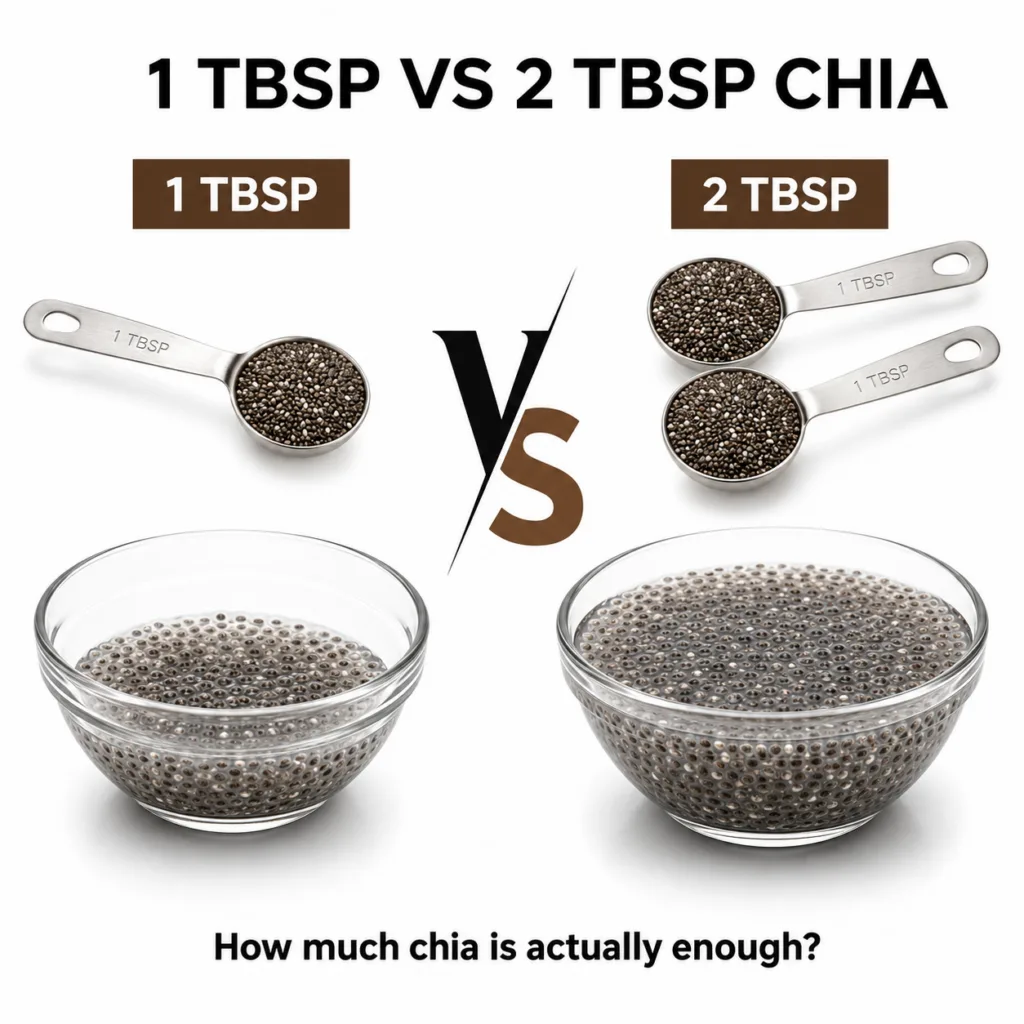 Observe the significant difference in volume between 1 and 2 tablespoons of chia seeds once hydrated.
Visually, 1 tablespoon of dry chia seeds appears quite small. Once mixed with liquid (like water, milk, or a smoothie), it can swell to fill a small ramekin or significantly thicken a beverage. In contrast, 2 tablespoons of dry chia seeds will absorb twice as much liquid, creating a much larger volume of gel. This often results in a pudding-like consistency, making it suitable for more substantial meals or snacks.
This distinct visual difference not only impacts how you perceive your portion but also influences the texture and satiety of the final dish. A single tablespoon might be ideal for a light boost, while two tablespoons can form the base of a truly satisfying meal.
The Nutritional Power of Chia: What Each Scoop Offers
Both 1 and 2 tablespoons of chia seeds pack a nutritional punch, but doubling your serving naturally doubles the benefits. Let’s look at what these quantities typically provide:
1 Tablespoon of Chia Seeds (approx. 15g):
- Calories: Around 70-80 calories
- Fiber: Approximately 5 grams (about 20% of the recommended daily intake)
- Protein: About 2.5-3 grams
- Omega-3 Fatty Acids (ALA): Around 2-3 grams
- Key Minerals: Provides smaller amounts of calcium, magnesium, and phosphorus.
2 Tablespoons of Chia Seeds (approx. 30g):
- Calories: Around 140-160 calories
- Fiber: Approximately 10 grams (about 40% of the recommended daily intake)
- Protein: About 5-6 grams
- Omega-3 Fatty Acids (ALA): Around 4-6 grams
- Key Minerals: Offers significant amounts of calcium (approx. 18% DV), magnesium (approx. 30% DV), and phosphorus.
As you can see, opting for 2 tablespoons significantly boosts your intake of essential nutrients, especially fiber and omega-3s, making it a more substantial contribution to your daily nutritional needs.
Is 1 Tablespoon of Chia Seeds Enough?
For many, 1 tablespoon of chia seeds (about 15g) is a great starting point and can be perfectly sufficient, especially if you’re new to them or simply looking for a light nutritional boost without significant caloric addition. This smaller serving still offers notable benefits:
- Gentle Fiber Boost: With around 5 grams of fiber, it aids in healthy digestion without being overwhelming, reducing the risk of discomfort for those sensitive to high-fiber foods.
- Omega-3 Introduction: Provides a good initial dose of plant-based omega-3 fatty acids (ALA), which may support heart and brain health.
- Subtle Satiety: The fiber and expansion can help you feel a little fuller, making it a good addition to breakfast or a snack to tide you over.
- Versatile Application: Easily blends into smoothies, sprinkled over yogurt or salads, or used as a light thickener in sauces without changing the texture too drastically.
A single tablespoon is ideal for those who want to add a healthful component to their diet without committing to a larger, more filling portion. It’s also excellent for beginners slowly introducing more fiber into their diet.
Why You Might Need 2 Tablespoons of Chia Seeds
If you’re aiming for more significant health impacts, particularly in areas like digestion, satiety, or omega-3 intake, moving up to 2 tablespoons (about 30g) might be your sweet spot. This quantity provides a more substantial contribution to your daily nutrient goals:
- Enhanced Digestive Support: The 10 grams of fiber in 2 tablespoons provides a significant boost, promoting regularity and supporting a healthy gut microbiome. This can be particularly beneficial for those looking for natural ways to improve digestion.
- Greater Satiety and Weight Management: The increased fiber and protein content, combined with the substantial expansion when hydrated, makes 2 tablespoons of chia seeds incredibly filling. This can help curb cravings, reduce overall caloric intake, and support weight management goals. Many use this quantity to create high protein breakfast options.
- Boosted Omega-3 Intake: With 4-6 grams of ALA, 2 tablespoons offer a more potent dose of these essential fatty acids, contributing more significantly to anti-inflammatory processes and cardiovascular health.
- Optimal for Meal Replacement: This larger serving is perfect for creating satisfying meals like chia puddings, overnight oats, or thicker smoothie bowls that can truly serve as a breakfast or substantial snack.
For individuals with specific health goals – such as improving gut health, managing weight, or increasing plant-based omega-3s – 2 tablespoons of chia seeds often provide the more impactful benefits.
Maximizing Your Chia: Easy Ways to Incorporate Them
Whether you choose 1 or 2 tablespoons, incorporating chia seeds into your daily routine is simple. Here are some popular and practical methods:
- Chia Seed Pudding: This is a classic for a reason. Combine chia seeds with milk (dairy or non-dairy) and let it chill overnight.
- Smoothie Booster: Add a tablespoon or two to your morning smoothie for added thickness, fiber, and nutrients.
- Oatmeal & Yogurt Topping: Sprinkle dry or hydrated chia seeds over your breakfast bowl for extra crunch and health benefits. This is a great addition to healthy breakfast ideas.
- Baked Goods: Incorporate them into muffins, breads, or energy bars for a nutrient boost.
- Egg Substitute: A “chia egg” (1 tbsp chia seeds + 3 tbsp water, let sit for 5 minutes) can replace one egg in many baking recipes.
When selecting your chia seeds, look for reputable brands that offer organic best chia seeds to ensure quality and purity.
Simple Chia Seed Pudding Recipe (1 or 2 TBSP Variations)
This recipe provides a flexible base for a nutritious breakfast or snack.
Yields: 1 Serving
Prep time: 5 minutes
Chill time: At least 2 hours or overnight
Ingredients:
- 1-2 tablespoons (15-30g) chia seeds
- 1 cup (240ml) milk of choice (almond, oat, dairy, coconut)
- 1/2 teaspoon vanilla extract (optional)
- 1 teaspoon maple syrup or honey (optional, adjust to taste)
- Toppings: Fresh berries, sliced banana, nuts, granola (optional)
Instructions:
- In a jar or small bowl, combine the chia seeds, milk, and vanilla extract (if using).
- Stir well to ensure there are no clumps and the chia seeds are evenly distributed.
- For a sweeter pudding, stir in maple syrup or honey now.
- Cover the jar or bowl and refrigerate for at least 2 hours, or preferably overnight, until the mixture has thickened to a pudding-like consistency.
- Before serving, give it a good stir. If it’s too thick, add a splash more milk.
- Top with your favorite fruits, nuts, or a drizzle of extra sweetener, if desired.
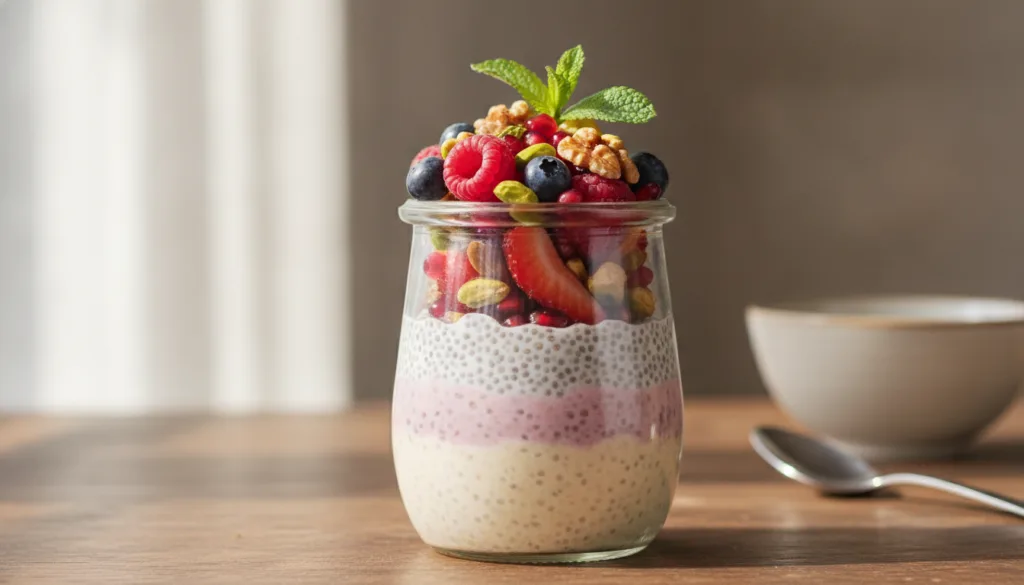 A delicious chia seed pudding can be made with either 1 or 2 tablespoons, depending on your desired consistency and nutritional boost.
Important Considerations: Too Much of a Good Thing?
While chia seeds are incredibly beneficial, it’s important to listen to your body and introduce them gradually, especially if you’re not used to a high-fiber diet. Here are a few considerations:
- Hydration is Key: Due to their high fiber content and water-absorbing capacity, always ensure you’re drinking plenty of water throughout the day when consuming chia seeds. This helps prevent digestive issues like constipation.
- Gradual Introduction: If you’re new to chia seeds, start with 1 tablespoon daily and slowly increase to 2 tablespoons over a week or two. This allows your digestive system to adjust.
- Potential Discomfort: Some individuals may experience bloating, gas, or mild digestive upset if they consume too much chia too quickly, or without adequate hydration.
- Medication Interactions: If you are on blood-thinning medication or have conditions like dysphagia, consult your doctor before significantly increasing your chia seed intake, as they can affect blood consistency and expand in the esophagus if not properly hydrated.
Always mix chia seeds thoroughly with liquid before consuming to avoid them expanding unexpectedly in your throat or digestive tract.
Frequently Asked Questions About Chia Seed Intake
What is the recommended daily intake of chia seeds?
Most health experts recommend 1-2 tablespoons (15-30g) of chia seeds per day for adults to reap their benefits without potential digestive discomfort.
Can I eat dry chia seeds?
While you can eat dry chia seeds, it’s generally not recommended to consume large quantities without liquid. They can absorb moisture from your throat and stomach, potentially causing choking or digestive issues. Always hydrate them thoroughly or consume them with plenty of fluids.
Is there a “best time” to eat chia seeds?
There’s no single best time. Many prefer them in the morning for sustained energy and satiety throughout the day, often in overnight oats or smoothies. Others enjoy them as a mid-day snack or even as part of a light evening meal.
Are all chia seeds the same?
While most chia seeds (typically black or white) have similar nutritional profiles, quality can vary by brand. Look for organic, non-GMO options from reputable sources for the best chia seeds.
Can chia seeds help with weight loss?
Yes, when included as part of a balanced diet, chia seeds can support weight loss due to their high fiber and protein content, which promotes satiety and reduces overall calorie intake. Consuming 2 tablespoons can be particularly effective for feeling full longer.