Imagine a dessert that’s rich, tangy, and utterly satisfying, yet also lighter and packed with wholesome ingredients. Our Creamy Lemon Cheesecake, made with Greek yogurt and cottage cheese, redefines guilt-free indulgence. This recipe transforms a classic favorite into a healthier, brighter treat perfect for any occasion.
Traditional cheesecakes, while delicious, can be heavy. By swapping in protein-rich Greek yogurt and creamy cottage cheese, we achieve an incredibly smooth texture and a delightful tang, all while reducing the calorie count and boosting nutritional value. The zesty lemon brightens every bite, making this cheesecake a refreshing choice for spring, summer, or whenever you crave a taste of sunshine.
Get ready to bake a show-stopping dessert that’s both good for you and incredibly delicious. Let’s dive into making this creamy, dreamy lemon cheesecake!
The Secret to a Lighter, Creamier Cheesecake
The magic behind this healthier cheesecake lies in two superstar dairy ingredients: Greek yogurt and cottage cheese. These aren’t just lighter alternatives; they actually contribute to a superior texture and flavor profile.
- Greek Yogurt: Known for its thick consistency and tangy flavor, Greek yogurt adds incredible creaminess and a protein boost to the cheesecake filling. It helps achieve that luscious texture without relying solely on heavy cream or excessive amounts of cream cheese.
- Cottage Cheese: Often overlooked in desserts, cottage cheese (when pureed until smooth) provides a fantastic creamy base with a mild flavor and significant protein content. It helps create a silky-smooth filling that’s remarkably light yet rich in feel. The pureeing step is crucial to eliminate any curds, ensuring a velvety smooth finish.
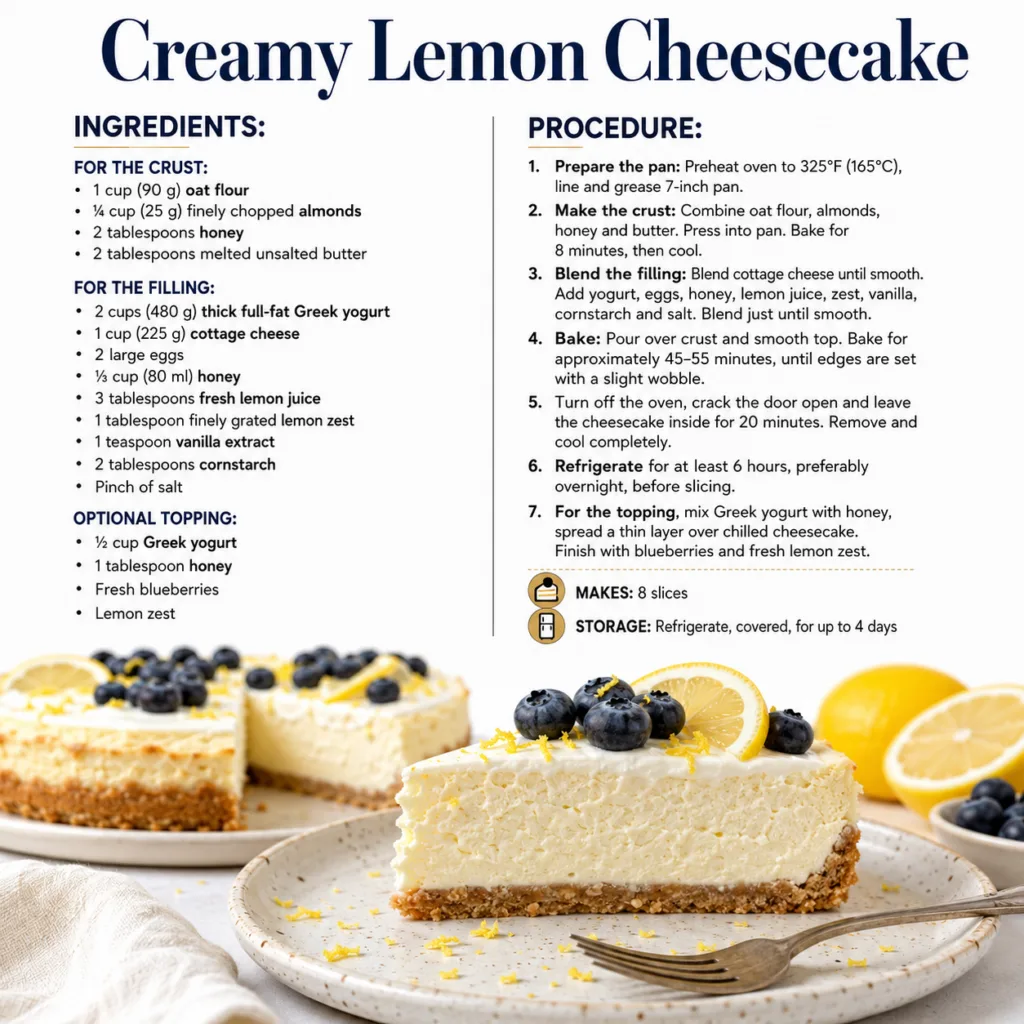
Creamy Lemon Cheesecake Recipe
Here’s everything you’ll need to create this bright and satisfying dessert.
For the Crust
- 1 ½ cups graham cracker crumbs (from about 10-12 full graham cracker sheets)
- ¼ cup granulated sugar
- 6 tablespoons unsalted butter, melted
For the Filling
- 8 ounces (1 block) light cream cheese, softened to room temperature
- 1 cup full-fat plain Greek yogurt
- 1 cup cottage cheese, pureed until completely smooth
- ¾ cup granulated sugar
- 2 large eggs, at room temperature
- ¼ cup fresh lemon juice (from 1-2 lemons)
- 1 tablespoon fresh lemon zest (from 1-2 lemons)
- 1 teaspoon vanilla extract
Optional Topping & Garnish
- ½ cup fresh blueberries
- Thin lemon slices or extra lemon zest
Step-by-Step Procedure: Baking Your Perfect Cheesecake
Follow these detailed steps to bake your perfect creamy lemon cheesecake.
1. Prepare the Crust
- Preheat your oven to 350°F (175°C).
- Lightly grease a 9-inch springform pan.
- In a medium bowl, combine the graham cracker crumbs, ¼ cup granulated sugar, and melted butter. Mix until the crumbs are evenly moistened.
- Press the mixture firmly and evenly into the bottom of the prepared springform pan.
- Bake for 8-10 minutes, or until lightly golden. Remove from oven and let cool slightly while you prepare the filling. Reduce oven temperature to 325°F (160°C).
2. Mix the Filling
- In a large mixing bowl, using an electric mixer, beat the softened light cream cheese until smooth.
- Add the full-fat Greek yogurt and pureed cottage cheese, beating until well combined and smooth.
- Gradually beat in the ¾ cup granulated sugar until fully incorporated.
- Add the eggs, one at a time, beating on low speed just until combined after each addition. Be careful not to overmix, as this can introduce too much air and cause cracks.
- Stir in the fresh lemon juice, lemon zest, and vanilla extract until just combined.
3. Bake to Perfection
- Pour the cheesecake filling over the cooled crust in the springform pan.
- (Optional but recommended for crack-free cheesecake): Place the springform pan inside a larger roasting pan. Carefully pour hot water into the roasting pan until it reaches about halfway up the sides of the springform pan (creating a water bath).
- Bake for 50-60 minutes, or until the edges are set but the center still jiggles slightly when gently shaken.
- Turn off the oven, crack the door open, and leave the cheesecake in the oven for another hour to cool gradually. This helps prevent cracking.
4. Chill and Garnish
- Remove the cheesecake from the oven and water bath (if used). Run a thin knife around the edge of the pan to prevent sticking as it cools and contracts.
- Let cool completely on a wire rack at room temperature.
- Once fully cooled, cover loosely with plastic wrap and refrigerate for at least 4 hours, or preferably overnight, to allow it to set properly.
- Before serving, carefully remove the sides of the springform pan. Garnish with fresh blueberries and thin lemon slices or extra lemon zest.
Tips for the Best Healthy Lemon Cheesecake
Achieve cheesecake perfection with these helpful hints.
Choosing Your Ingredients
- Puree Cottage Cheese: Don’t skip this step! For a truly smooth filling, blend your cottage cheese in a food processor or blender until it’s completely lump-free.
- Room Temperature Ingredients: Ensure your cream cheese and eggs are at room temperature. This helps them incorporate smoothly into the batter, preventing lumps and ensuring a uniform, creamy texture.
- Fresh Lemon: Always use fresh lemon juice and zest. Bottled juice won’t give you the same vibrant, zesty flavor.
- Quality Greek Yogurt: Opt for a good quality, full-fat plain Greek yogurt. The fat content contributes to creaminess and flavor without adding too much extra richness.
Achieving the Perfect Texture
- Don’t Overmix: Overmixing the batter, especially after adding the eggs, can incorporate too much air, leading to cracks in your cheesecake. Mix just until combined.
- Water Bath: Using a water bath (bain-marie) is highly recommended. It provides a moist, even heat, which helps prevent cracks and ensures a creamy, consistent texture throughout.
- Slow Cooling: Allowing the cheesecake to cool gradually in the oven after baking is crucial. Sudden temperature changes are a common cause of cracks.
Serving Suggestions
- This creamy lemon cheesecake is fantastic on its own, but a sprinkle of fresh blueberries or raspberries adds a beautiful pop of color and tartness.
- Consider serving with a light drizzle of a homemade berry compote or a few sprigs of fresh mint.
Frequently Asked Questions About Healthy Cheesecake
Can I use low-fat Greek yogurt or cottage cheese?
While you can, full-fat versions are recommended for the best texture and flavor. Low-fat options may result in a slightly less creamy or more watery filling. If using, you might need to adjust baking time slightly.
How long does this cheesecake last?
Stored properly in an airtight container in the refrigerator, this cheesecake will stay fresh for 4-5 days.
Can I freeze this cheesecake?
Yes! Once the cheesecake is completely chilled and set, you can freeze it. Wrap individual slices or the whole cheesecake (without garnish) tightly in plastic wrap, then in foil. It can be frozen for up to 1 month. Thaw in the refrigerator overnight before serving.
What if my cottage cheese isn’t pureeing smoothly?
Add a tablespoon or two of milk (dairy or non-dairy) to help it blend into a silky-smooth consistency. Ensure you’re using a high-speed blender or food processor.