Have you ever wondered what happens to your food after you eat it, and how quickly it turns into the energy you need? The journey your food takes through your digestive system, and specifically how long it stays in your stomach, has a direct impact on your daily energy levels, satiety, and even your fitness performance. Understanding these approximate digestion times can help you make more informed choices about what and when to eat, optimizing your energy and overall well-being.
Some foods offer a quick burst of energy, passing through relatively fast, while others provide a sustained release, keeping you full and energized for hours. Let’s explore the fascinating world of digestion times and uncover how different foods measure up, as illustrated in our guide.
Quick Overview
- Main topic: Food digestion times
- Best for: Understanding energy release, meal timing, and healthy eating
- Number of items: 6
- Prep style: Informative guide
- Reader benefit: Improved energy levels, better fitness planning, informed food choices
Understanding Your Food’s Journey: Approximate Digestion Times
Our bodies process different foods at varying speeds, influencing everything from how quickly we feel hungry again to how sustained our energy levels are. Here’s a breakdown of common foods and their approximate digestion times, offering insights into their impact on your energy and fitness.
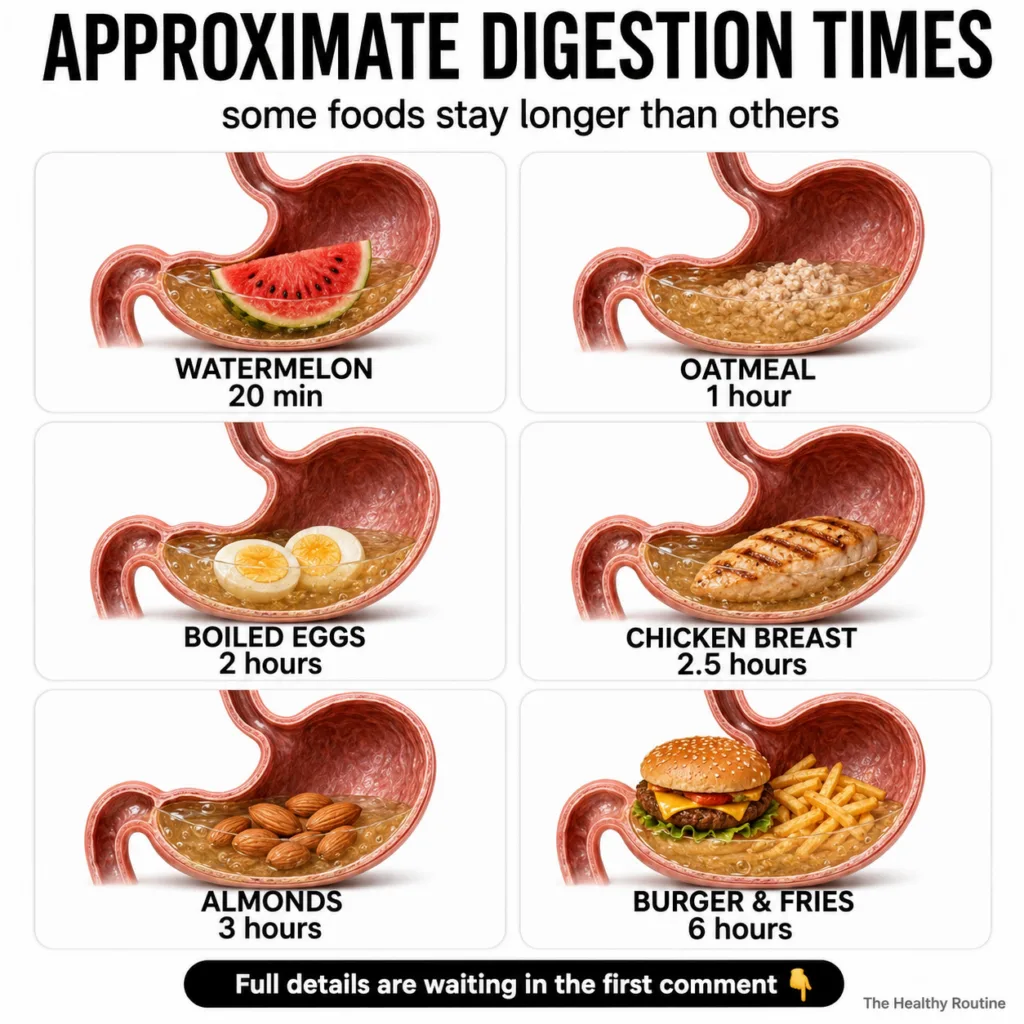
Fast-Digesting Foods: Quick Energy & Hydration
These foods move through your stomach relatively quickly, providing rapid energy or hydration. They are often ideal for pre-workout snacks or when you need a swift pick-me-up.
- Watermelon (20 minutes): As a fruit rich in water, watermelon is incredibly easy for your body to process. It offers a quick surge of natural sugars and hydration, making it a perfect refreshing snack, especially on a hot day or after light activity.
Moderate-Digesting Foods: Balanced Sustenance
Foods in this category offer a more balanced release of energy, suitable for keeping hunger at bay without feeling overly heavy. They are great for regular meals or snacks to maintain steady energy levels.
- Egg (45 minutes): Eggs are a fantastic source of protein and healthy fats. Their digestion time is moderate, providing a good balance of sustained energy and satiety without causing a sudden energy crash.
- Oatmeal (1 hour): Rich in soluble fiber, oatmeal is a champion for sustained energy. It digests at a steady pace, helping to regulate blood sugar levels and keep you feeling full for longer, making it an excellent breakfast choice.
Slower-Digesting Foods: Long-Lasting Satiety & Fuel
These foods take the longest to break down in your stomach, providing prolonged satiety and a continuous supply of energy. They are often denser in calories and macronutrients, making them suitable for heavier meals.
- Almonds (2 hours): These nutrient-dense nuts are packed with healthy fats, protein, and fiber. Their complex composition requires more time to digest, offering a gradual and sustained release of energy, which is why they are great for curbing hunger between meals.
- Burger (4 hours): A classic burger, typically made with ground beef and a bun, contains a mix of protein, fats, and carbohydrates. The combination, especially the fats, slows down digestion considerably, providing a very sustained but potentially heavy feeling.
- Fries (6 hours): Fried foods, like french fries, are high in fat and can be challenging for your digestive system. The significant fat content dramatically prolongs stomach emptying, meaning they stay with you for a considerable amount of time.

Why Digestion Time Matters for Energy & Fitness
Understanding these digestion times is more than just a fun fact; it’s a practical tool for optimizing your health:
- Energy Management: If you need quick energy for a workout, opting for fast-digesting carbs like watermelon can be beneficial. For sustained energy throughout the day, complex carbs and proteins like oatmeal or eggs are excellent.
- Satiety Control: Slower-digesting foods, such as almonds or a balanced meal with protein and healthy fats, keep you feeling full for longer, potentially helping with weight management by reducing frequent snacking.
- Fitness Performance: Timing your meals around your workouts can significantly impact your performance. Fast-digesting foods before a short, intense session, and slower-digesting, nutrient-dense meals for recovery or long-duration activities, can make a difference.
- Digestive Comfort: Being mindful of heavy, slow-digesting foods, especially before bedtime or during periods of stress, can improve digestive comfort and sleep quality.
Simple Tips for Better Digestion and Energy
- Hydrate Regularly: Water is crucial for digestion and nutrient absorption.
- Chew Thoroughly: Proper chewing is the first step in digestion, breaking down food and signaling your body to prepare for the digestive process.
- Balance Your Meals: Combine proteins, healthy fats, and complex carbohydrates to create balanced meals that offer sustained energy.
- Listen to Your Body: Pay attention to how different foods make you feel. Some individuals may digest certain foods faster or slower than average.
- Incorporate Fiber: Foods rich in fiber, like fruits, vegetables, and whole grains, aid digestion and promote gut health.
FAQ
What foods digest the fastest?
Generally, water-rich fruits and simple carbohydrates digest the fastest. Our guide shows watermelon at just 20 minutes.
Why do some foods take longer to digest?
Foods high in fat, protein, and fiber take longer to digest because they require more complex processes and enzymes to break down in the stomach and small intestine.
Can digestion time affect my weight?
Yes, foods that digest slower tend to keep you feeling full for longer, which can help manage appetite and potentially support weight management efforts.
Final Thoughts
Your food’s journey through your digestive system is a critical determinant of your daily energy, overall comfort, and even your fitness potential. By understanding approximate food digestion times, you gain a powerful tool to make smarter eating choices. Whether you’re looking for a quick energy boost or sustained fuel, tuning into your body and the natural rhythm of digestion can significantly enhance your well-being. Start observing how different foods affect you, and empower yourself with this knowledge for a healthier, more energetic life!
MEDICAL DISCLAIMER:
The information provided in this article is for general knowledge and informational purposes only, and does not constitute medical advice. It is essential to consult with a qualified healthcare professional or registered dietitian for any health concerns or before making any dietary changes.