Do you ever feel that uncomfortable fullness, occasional bloating, or a sluggish digestive system? Many people struggle with these common complaints, often reaching for over-the-counter solutions that only offer temporary relief. What if a powerful, natural remedy could be found in an unexpected place, a remedy that’s been cherished for centuries but often overlooked today?
Most people never realize how effective green walnuts can be for digestive wellness because their full potential is only available during a very specific harvest window, making them a seasonal secret. Long before the familiar brown shell hardens, the young, green walnuts contain a unique blend of compounds that offer a surprisingly gentle yet potent boost to your gut health.
What Are Green Walnuts?
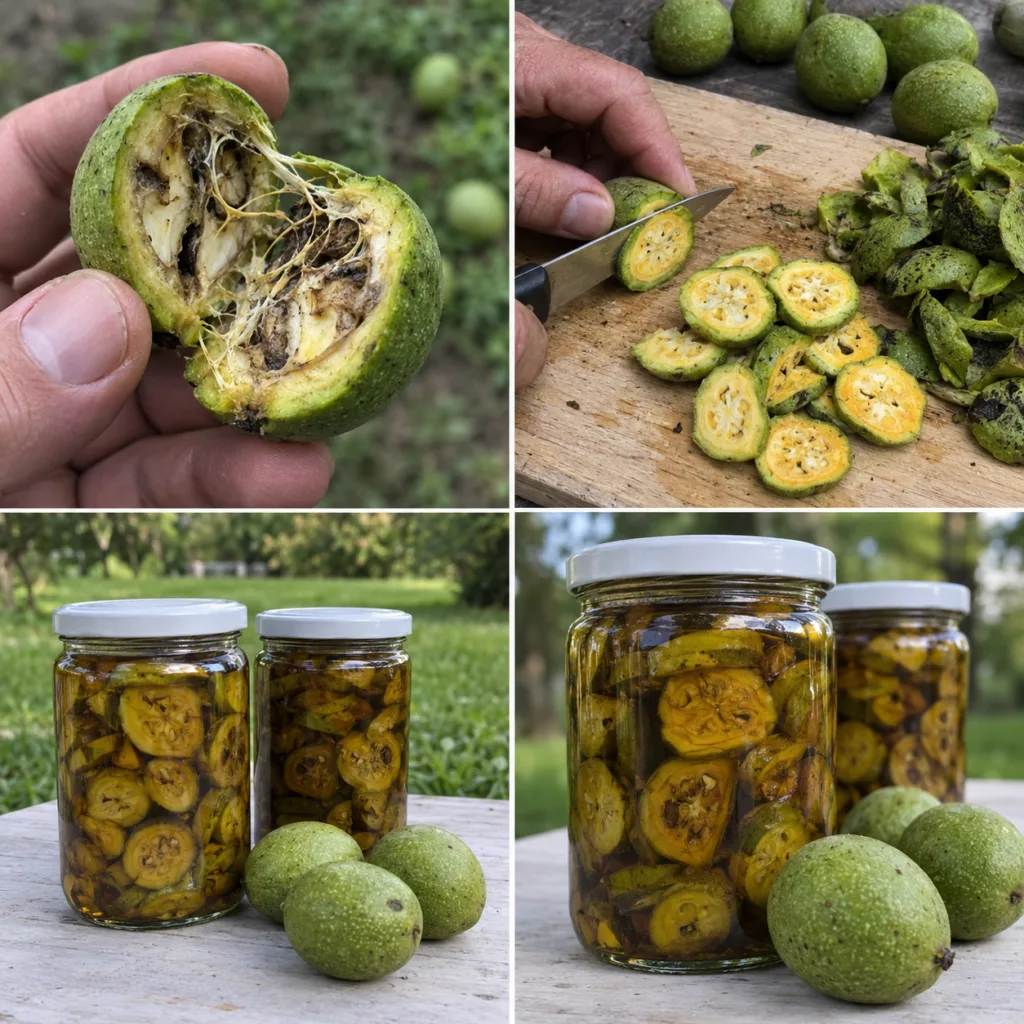
Green walnuts are the immature fruit of the walnut tree, harvested before the inner shell fully develops and hardens. During this brief period, typically in early summer, the entire fruit—including the soft outer hull and undeveloped kernel—can be easily cut. This stage is crucial because the green walnuts are rich in active compounds like tannins, juglone, and various antioxidants that are less concentrated or completely different in mature walnuts. Historically, cultures across Europe have revered green walnuts for their potent bitter qualities, using them in traditional remedies, particularly for supporting digestion and overall vitality.
Unlike the crunchy nuts you snack on, green walnuts are not eaten raw due to their intense bitterness and astringency. Instead, they are transformed through infusion, fermentation, or preservation into tonics, tinctures, or liqueurs. These preparations harness the potent properties of the young fruit, making them bioavailable and useful for a range of wellness applications.
Why Green Walnuts Work: The Science Insight
The remarkable efficacy of green walnuts in digestive wellness stems from their unique phytochemical profile. Key compounds include:
- Juglone: This naphthoquinone is a powerful compound found primarily in green walnuts. It possesses significant antimicrobial properties, which can help balance gut flora by inhibiting the growth of undesirable bacteria and fungi. This rebalancing effect is crucial for reducing bloating, gas, and promoting overall gut comfort.
- Tannins: Abundant in green walnuts, tannins are astringent compounds that can help tone and strengthen the digestive tract lining. They also contribute to the bitter taste, which stimulates the production of digestive enzymes and bile, essential for efficient breakdown of fats and absorption of nutrients.
- Flavonoids and Antioxidants: Green walnuts are packed with various antioxidants that combat oxidative stress and inflammation throughout the body, including the digestive system. Reduced inflammation can alleviate discomfort and support the healing of irritated gut tissues.
- Vitamins and Minerals: While the primary benefit comes from the specific compounds, green walnuts also contain modest amounts of Vitamin C and B vitamins, contributing to general well-being and cellular function.
Together, these compounds make green walnuts a holistic supporter of digestive health, aiding not just symptom relief but also addressing underlying imbalances.
Quick Tip: The Power of Bitters
The pronounced bitter taste of green walnuts is not just a characteristic; it’s a key therapeutic action. Bitters stimulate the ‘bitter receptors’ on the tongue, triggering a cascade of digestive responses. This includes increased saliva, stomach acid, and bile production, all of which prepare your body to efficiently digest food. Incorporating bitters like green walnut preparations before meals can significantly improve digestive efficiency.
Your Green Walnut Tincture Recipe: A Digestive Elixir
Creating your own green walnut tincture is a straightforward process that allows you to harness the full potential of this seasonal treasure. This recipe focuses on a potent alcohol extract, ideal for concentrated use.
Ingredients
- 10-12 medium-sized green walnuts (about 1-1.5 lbs / 500-700g)
- 3 cups (700-750ml) high-proof alcohol (vodka or grain alcohol, 80-100 proof / 40-50% ABV)
- 1-2 clean, airtight glass jars (pint or quart size)
Approximate Measurements
- Walnuts to Alcohol Ratio: Aim for roughly a 1:2 ratio by volume or 1:1.5 by weight for a potent tincture.
- Jar Size: Use jars large enough to hold the chopped walnuts and fully submerge them in alcohol with some headspace.
Step-by-Step Method
- Harvest and Clean: Collect green walnuts when they are still soft enough to be easily pierced with a needle or cut with a knife (usually late June to mid-July, depending on your region). Wear gloves during handling, as green walnuts will stain skin and surfaces brown due to juglone. Wash them thoroughly to remove any dirt or debris.
- Chop the Walnuts: On a sturdy cutting board, carefully chop the green walnuts into quarters or smaller pieces. You should be able to cut through the entire fruit, including the developing nut. The interior will be pale green to yellow.
- Fill the Jar: Place the chopped green walnuts into your clean glass jar(s). Fill the jar about two-thirds to three-quarters full with the walnut pieces.
- Add Alcohol: Pour the high-proof alcohol over the walnuts, ensuring they are completely submerged. Leave about an inch of headspace at the top of the jar.
- Seal and Store: Seal the jar tightly with a lid. Place the jar in a cool, dark place, such as a pantry or cupboard.
- Macerate: Allow the mixture to infuse for a minimum of 6-8 weeks, ideally 3-6 months. Shake the jar gently every few days for the first few weeks, then once a week, to ensure thorough extraction. The liquid will darken significantly over time.
- Strain: After the infusion period, strain the liquid through a fine-mesh sieve lined with cheesecloth. Squeeze the walnut pieces to extract as much liquid as possible. Discard the spent walnut material.
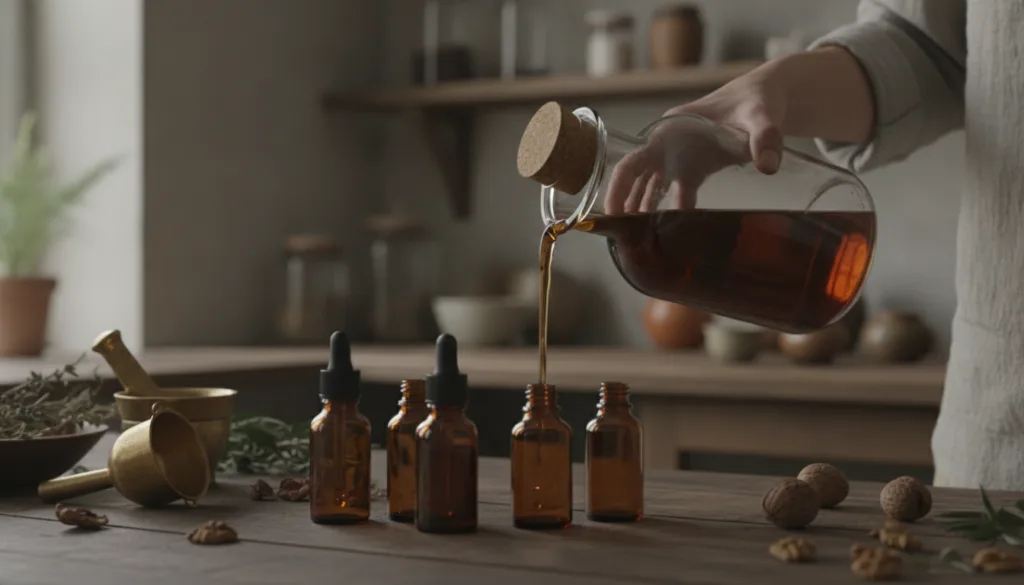
- Bottle: Transfer the finished tincture into dark glass dropper bottles or a clean, airtight amber glass bottle for long-term storage.
How to Use & How Often to Use
Green walnut tincture is potent and should be used sparingly.
- Dosage: Start with 10-20 drops, diluted in a small amount of water or juice. You can gradually increase to 30 drops (approximately 1-2 ml) if needed, but do not exceed this without professional guidance.
- Best Time to Take: For digestive support, take 15-20 minutes before meals. This allows the bitters to stimulate digestive juices before food enters your stomach. For general wellness, it can be taken once daily.
- Frequency: Use 1-3 times daily, before each main meal, for a period of up to 4-6 weeks. Take a break for a week or two before resuming if necessary.
How to Choose Ingredients & Storage
Choosing Your Green Walnuts
- Timing is Everything: Harvest or source green walnuts in late spring to early summer, typically June to mid-July, before the inner shell hardens. A simple test: try to pierce a walnut with a toothpick or a needle; if it goes through easily, it’s ready.
- Source Wisely: Always choose walnuts from trees that have not been sprayed with pesticides or herbicides. Ideally, forage from a trusted, unpolluted source.
- Appearance: Look for firm, unblemished green walnuts without any signs of mold, rot, or insect damage.
Storage
- Tincture: Store your finished green walnut tincture in dark glass bottles in a cool, dark place. Properly stored, it can last for several years (3-5 years or more) due to the preserving action of the alcohol.
- Raw Walnuts: Green walnuts cannot be stored raw for long. They must be processed within a day or two of harvesting to retain their beneficial compounds.
Before You Brew: Fresh vs. Dried
For green walnut remedies, fresh is almost always best. The high water content and specific enzyme activity in fresh green walnuts are key to extracting their unique compounds, especially juglone. Dried green walnuts, while sometimes available, lose a significant amount of their potency and volatile compounds during the drying process, making them less ideal for this specific preparation.
Common Mistakes to Avoid
- Using Mature Walnuts: The most frequent mistake. Once the shell hardens, the beneficial compounds of the green walnut are significantly diminished or altered for this purpose.
- Skipping Gloves: Green walnuts contain juglone, a potent dye that will stain your skin, clothing, and surfaces brown. Always wear gloves during preparation.
- Insufficient Maceration Time: Rushing the infusion process will result in a weaker tincture. Allow at least 6-8 weeks for optimal extraction.
- Not Submerging Walnuts: Ensure all walnut pieces are completely covered by alcohol to prevent mold growth and ensure even extraction.
- Using Low-Proof Alcohol: Alcohol below 80 proof (40% ABV) may not be strong enough to extract all the beneficial compounds effectively or preserve the tincture long-term.
Who Benefits Most?
Green walnut tincture can be particularly beneficial for:
- Individuals experiencing occasional indigestion, bloating, or gas.
- Those looking for natural support for their liver and gallbladder function due to the bitter compounds.
- People seeking to naturally balance their gut microbiome.
- Anyone interested in traditional herbal remedies for digestive health.
Cautions and Who Should Avoid It
While generally safe when used as directed, green walnut preparations are potent. Consider these cautions:
- Pregnancy and Breastfeeding: Avoid use during pregnancy and breastfeeding due to insufficient research on safety.
- Children: Not recommended for young children.
- Allergies: Individuals with known allergies to walnuts or other tree nuts should avoid this remedy.
- Medication Interactions: Consult with a healthcare professional if you are taking any medications, especially blood thinners, antacids, or medications for thyroid conditions, as green walnuts may interact with them.
- Excessive Use: High doses can lead to digestive upset, nausea, or liver stress. Always start with a low dose and listen to your body.
- Alcohol Content: Remember, this is an alcohol-based tincture. If you need to avoid alcohol, this preparation is not suitable.
Quick Summary: Your Green Walnut Remedy Checklist
- Best Preparation: Alcohol tincture or liqueur.
- Best Use-Case: Digestive support, balancing gut flora, stimulating bile flow.
- Storage: Dark glass bottles in a cool, dark place for 3+ years.
- When to Use: 10-30 drops, 15-20 minutes before meals, 1-3 times daily for up to 4-6 weeks.
- What to Avoid: Mature walnuts, low-proof alcohol, skipping gloves, rushing infusion.
- Key Benefit: Natural digestive aid and gut balancer through unique bitter compounds.
Frequently Asked Questions
- Can I use fresh or dried green walnuts? Fresh green walnuts are highly recommended for making tinctures, as they retain the full spectrum of active compounds better than dried ones.
- How long does green walnut tincture last? When stored properly in dark glass bottles in a cool, dark place, green walnut tincture can last for 3 to 5 years, sometimes even longer, thanks to the alcohol acting as a preservative.
- Can I refrigerate the tincture? While not strictly necessary due to the alcohol content, refrigerating can help maintain potency, especially in warm climates. Ensure the bottle is tightly sealed.
- How often should I use it? Typically, 1-3 times daily, 15-20 minutes before meals, for a period of up to 4-6 weeks. It’s often recommended to take a break between cycles.
- What part of the green walnut is best for tincture? The entire green fruit, including the soft outer hull and undeveloped kernel, is used for the tincture.
- Will it stain my teeth? The high tannin and juglone content can temporarily stain teeth if taken undiluted. Always dilute your tincture in a small amount of water or juice.
- Can I make a non-alcoholic version? While possible with apple cider vinegar or glycerin, the extraction of certain compounds (like juglone) is less efficient, and the shelf life will be significantly shorter.
- When is the best time to harvest green walnuts? The ideal time is typically late spring to early summer (June to mid-July in many regions) when the walnuts are still soft enough to be easily cut through.
Conclusion
The humble green walnut, often overlooked, holds a powerful secret for digestive wellness. By understanding its unique properties and following traditional preparation methods, you can craft a potent natural remedy that supports your gut, aids digestion, and brings a touch of ancient wisdom into your modern routine. This seasonal gift from nature offers an unexpected path to feeling restored and relieved, proving that sometimes, the most effective solutions are the ones that have been quietly working for centuries.