Imagine a garden where discarded treasures find new life, adding unique character and vital support for your climbing plants. It’s a vision that’s not only beautiful but also wonderfully achievable! Old window frames, often destined for the landfill, hold incredible potential to become a focal point in your garden. With a little creativity and some basic tools, you can transform these forgotten pieces into a stunning, functional trellis that supports lush vines, vibrant flowers, and even edible crops.
This guide will walk you through the simple steps to build your own window frame trellis and help you choose the perfect climbing plants and companion plantings to bring your vision to life. Get ready to add instant charm and vertical growing space to your outdoor sanctuary without breaking the bank!
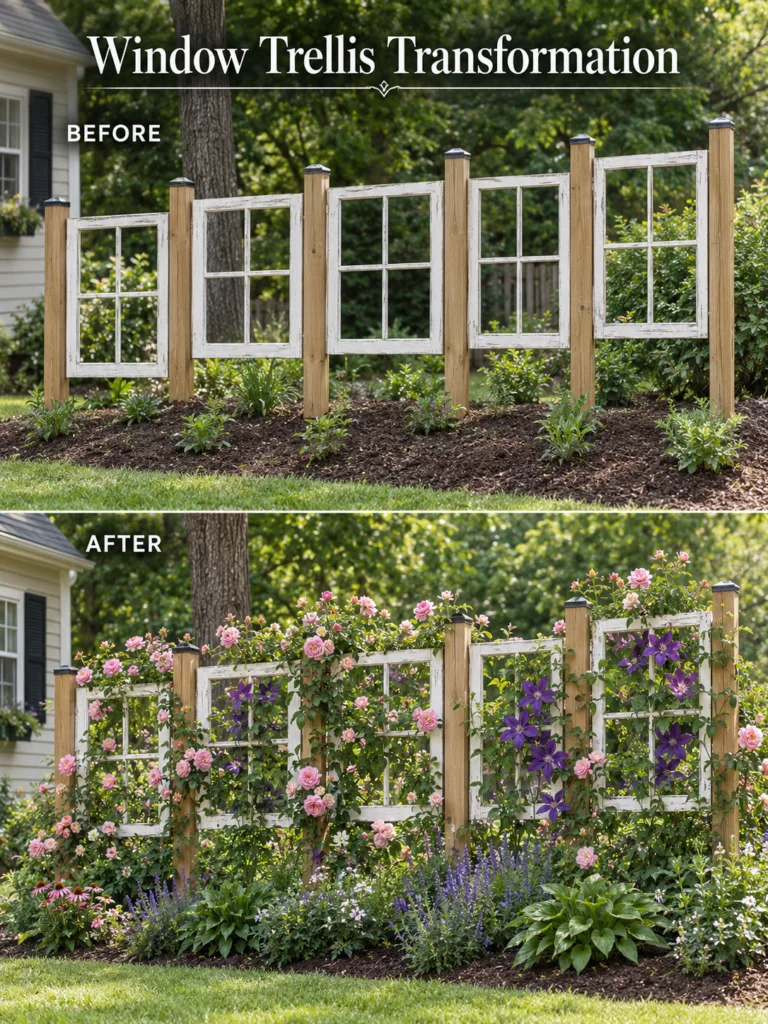
The Magic of Upcycling: Why a Window Trellis?
Upcycling materials in your garden isn’t just a trend; it’s a sustainable practice that injects personality and history into your outdoor spaces. Old window frames offer several advantages as trellises:
- **Unique Aesthetic:** Their architectural detail, especially if the paint is charmingly distressed, adds a touch of rustic elegance or shabby chic character that store-bought trellises often lack.
- **Vertical Growing Space:** They provide ample surface area for climbing plants, maximizing your garden’s footprint, especially in smaller yards.
- **Budget-Friendly:** Sourcing old window frames from salvage yards, antique shops, or even curb alerts is often far more economical than purchasing new trellises.
- **Environmental Benefit:** You’re diverting waste from landfills and giving materials a second life.
Planning Your Window Frame Trellis: Step-by-Step
Gathering Your Materials
Before you start, collect everything you’ll need:
- **Old Window Frames:** Choose frames that are sturdy. If they have glass panes, you’ll need to remove them for safety and to allow plants to weave through. Wear gloves and eye protection when removing glass, and dispose of it carefully.
- **Wooden Posts:** Pressure-treated 4×4 or 6×6 lumber is ideal for stability and weather resistance. The length will depend on how tall you want your trellis and how deep you need to sink the posts.
- **Post Hole Digger or Shovel:** For installing the support posts.
- **Quick-Setting Concrete Mix:** To secure the posts firmly in the ground.
- **Drill and Exterior Screws:** For attaching the window frames to the posts.
- **Level:** To ensure your frames are straight.
- **Measuring Tape and Pencil:** For accurate placement.
- **Sandpaper and Exterior Paint/Sealant (Optional):** If you want to clean up or seal the frames.
Site Selection and Preparation
Consider the sun exposure in your chosen location. Most climbing flowers thrive in full sun (6+ hours daily). Ensure the soil is well-draining and enriched with compost. Mark out the area where your trellis will stand, allowing enough space for the plants to spread.
Constructing Your Trellis
- **Install Posts:** Dig holes for your wooden posts, typically 1/3 the length of the post should be below ground for stability (e.g., for a 6-foot-tall trellis, sink 2 feet). Place posts in holes, ensuring they are plumb with a level. Mix quick-setting concrete according to package directions and pour it around the base of the posts. Allow it to cure completely, usually 24-48 hours.
- **Prepare Frames:** Remove any glass from the window frames. Lightly sand any rough edges or peeling paint. If you wish to preserve the frames or change their color, apply a coat of exterior-grade paint or sealant.
- **Attach Frames:** Once posts are secure, position your window frames. You can arrange them horizontally, vertically, or in a staggered pattern, as long as they provide a stable climbing structure. Using your drill and exterior screws, securely attach each window frame to the wooden posts. Ensure the connections are strong enough to support the weight of mature, heavily foliated plants.
Planting for Vertical Beauty
Once your trellis is built, the real fun begins: planting! Choose climbers that are well-suited to your local climate and light conditions. Here are some of the stars that will thrive on your new window frame trellis, along with suggestions for complementary ground-level plants:
Climbing Companions: Plants for Your New Trellis
Climbing Roses (Rosa spp.)
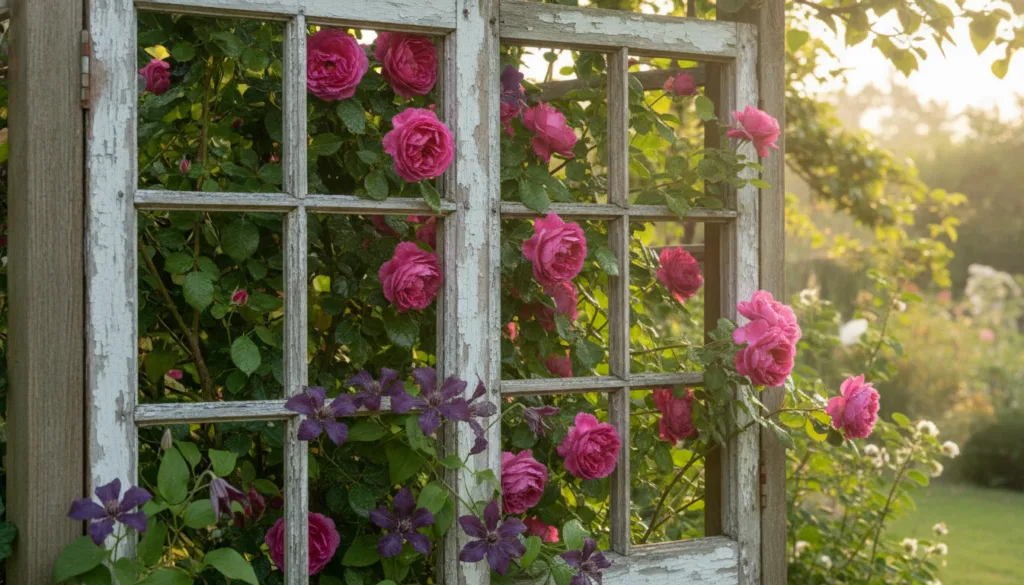
The image beautifully showcases pink climbing roses, a classic choice for any trellis. Their elegant blooms and often fragrant flowers create a romantic, timeless appeal.
- **Hardiness:** USDA Zones 4-9, depending on the cultivar.
- **Plant type:** Deciduous perennial shrub/vine.
- **Exposure:** Full sun (at least 6 hours).
- **Growth Habit:** Can reach 6-20 feet or more, depending on variety.
- **Care Tip:** Roses are ‘scramblers’ rather than true climbers with tendrils. You’ll need to gently tie their canes to your trellis as they grow to guide them. Prune after their main flush of blooms to encourage new growth and flowering.
- **Warning:** Watch for common rose pests like aphids and diseases like black spot or powdery mildew. Good air circulation around the plant helps prevent fungal issues.
Clematis (Clematis spp.)
The vibrant purple flowers of clematis seen in the ‘AFTER’ image provide a striking contrast to the pink roses. Clematis are renowned for their spectacular blooms and ability to weave beautifully through support structures.
- **Hardiness:** USDA Zones 4-9, varying by species and cultivar.
- **Plant type:** Deciduous perennial vine.
- **Exposure:** Full sun to partial shade; often referred to as ‘feet in the shade, head in the sun,’ meaning they prefer cool, moist roots and sunny foliage.
- **Growth Habit:** Ranges from 3 feet to over 30 feet, depending on the type (Group 1, 2, or 3 pruning categories).
- **Care Tip:** Clematis climb by wrapping their leaf petioles (leaf stems) around thin supports. The slender bars of a window frame are perfect. Ensure consistent moisture, especially during dry spells, and apply a thick layer of mulch to keep roots cool.
- **Warning:** Clematis have specific pruning requirements based on their flowering time. Research your specific cultivar’s pruning group for optimal blooms.
Ground-Level Beauty: Complementary Underplantings
To complete the look, consider plants at the base of your trellis that offer contrasting textures, colors, and heights, as demonstrated in the image:
Hostas (Hosta spp.)
Their lush, broad leaves create a wonderful foundation, especially in shadier spots near the trellis base or where they can receive some protection from direct afternoon sun.
- **Hardiness:** USDA Zones 3-9.
- **Plant type:** Herbaceous perennial.
- **Exposure:** Partial to full shade. Some newer varieties tolerate more sun, but prefer morning sun and afternoon shade.
- **Care Tip:** Hostas are generally low-maintenance, requiring consistent moisture and protection from slugs and snails, which can chew holes in their leaves.
Salvia (Salvia spp.)
The lavender-blue spikes of salvia add vertical interest and attract pollinators. Many varieties offer long blooming seasons.
- **Hardiness:** USDA Zones 4-9 for many common perennial varieties (e.g., Salvia nemorosa), though some are tender perennials or annuals.
- **Plant type:** Perennial, annual, or biennial herb/shrub.
- **Exposure:** Full sun.
- **Care Tip:** Deadhead spent flower spikes regularly to encourage continuous blooming. They are drought-tolerant once established but appreciate regular watering during dry periods.
Coneflowers (Echinacea purpurea)
Pink coneflowers provide cheerful, daisy-like blooms that are pollinator magnets and blend beautifully with both roses and clematis.
- **Hardiness:** USDA Zones 3-9.
- **Plant type:** Herbaceous perennial.
- **Exposure:** Full sun to partial shade.
- **Care Tip:** Coneflowers are hardy and drought-tolerant once established. Leaving some spent seed heads in fall can provide food for birds.
Other Ground-Level Fillers
For the smaller white flowering plants, consider ‘Snowcap’ Shasta Daisies (Leucanthemum x superbum) for their classic white blooms, or various perennial Geraniums (Cranesbill Geraniums) which offer delicate flowers and attractive foliage.
Essential Care for Your Trellis Garden
Sunlight and Soil
Most flowering climbing plants and their companions thrive in full sun (6-8 hours daily). Ensure your soil is rich in organic matter, well-draining, and has a slightly acidic to neutral pH (6.0-7.0) for most of these plants. Before planting, amend heavy clay soils with compost or well-rotted manure, or add coir and perlite to sandy soils to improve water retention.
Watering Wisely
Newly planted climbers need consistent moisture to establish. Water deeply at the base of the plants, encouraging roots to grow downwards. Once established, monitor soil moisture by sticking your finger about an inch or two into the soil; if it feels dry, it’s time to water. Mulching around the base of your plants will help retain soil moisture, regulate soil temperature, and suppress weeds.
Pruning and Training
Regular pruning is key to a healthy and floriferous trellis garden. For climbing roses, train their flexible canes horizontally along the trellis as they grow, as this encourages more side shoots and flowers. Remove any dead, diseased, or crossing branches. For clematis, understand your specific variety’s pruning group to ensure you prune at the correct time for maximum bloom.
Pest and Disease Watch
Healthy plants are more resilient. Regularly inspect your plants for signs of pests like aphids, spider mites, or Japanese beetles, and diseases such as powdery mildew or black spot. Address issues promptly with appropriate organic solutions like insecticidal soap or neem oil, and improve air circulation by spacing plants adequately and pruning when necessary.
Avoiding Common Trellis Gardening Mistakes
- **Underestimating Support:** Climbing plants, especially roses, can become heavy. Ensure your posts are sunk deep and your window frames are securely attached.
- **Wrong Plant, Wrong Place:** Choose climbers whose mature size and light requirements match your trellis and location. A vigorous vine like ‘Wisteria’ could overwhelm a window frame trellis quickly, while more delicate options like ‘Sweet Pea’ might be too sparse.
- **Neglecting Training:** Don’t just let climbers grow wild. Gently guide and tie their tendrils or canes to the trellis as they develop to ensure even coverage and strong attachment.
- **Poor Soil Preparation:** Healthy soil is the foundation of a thriving garden. Don’t skip amending your soil before planting.
Regional Considerations for Your Trellis Garden
The beauty of a trellis garden is adaptable, but your plant choices will vary across the United States due to climate differences:
- **Zones 3-5 (Northern US):** Focus on extremely hardy climbing roses, Group 3 clematis, and ensure underplantings like hostas and coneflowers are reliably perennial. Consider planting in spring after all danger of frost has passed.
- **Zones 6-8 (Mid-Atlantic, Midwest, Pacific Northwest):** Most climbing roses, clematis, salvias, and coneflowers thrive here. You have a wider range of choices and longer growing seasons. Spring or fall planting is generally suitable.
- **Zones 9-11 (Southern US, Southwest, Coastal California):** While roses and clematis still do well, consider heat-tolerant varieties. Explore other climbers like Bougainvillea, Jasmine, or Mandevilla (tropical perennials often grown as annuals elsewhere) if they suit your style. Provide consistent water during hot summers.
Always check your local last and first frost dates and consult your USDA Cooperative Extension Service for tailored plant recommendations and advice specific to your microclimate.
Cultivate Beauty and Sustainability
Transforming old window frames into a garden trellis is more than just a DIY project; it’s an act of sustainable creativity that brings unparalleled charm to your landscape. This living art piece will not only provide structural support for your beloved climbers but also serve as a testament to your resourcefulness and passion for gardening. So, gather those forgotten frames, prepare your soil, and get ready to watch your garden flourish with vertical splendor. Your garden will thank you, and you’ll find immense joy in nurturing beauty from the discarded!