Many of us cherish figs for their sweet, luscious fruit, a delight in countless culinary creations. However, beyond the fruit’s well-known appeal, lies a lesser-known secret hidden within the fig tree itself: its milky sap. This potent white liquid, often overlooked, has been revered in traditional practices for centuries, offering a fascinating glimpse into ancient natural remedies.
Why is this natural liquid so unexpectedly helpful? Often, the most profound solutions are found in the simplest, most natural sources around us, if only we know where to look and how to harness them safely. Most people never realize this works because they typically only focus on the delicious, ripe fruit, missing the powerful, milky substance within the unripe figs and stems, a substance traditionally honored for its unique properties.
Ingredients
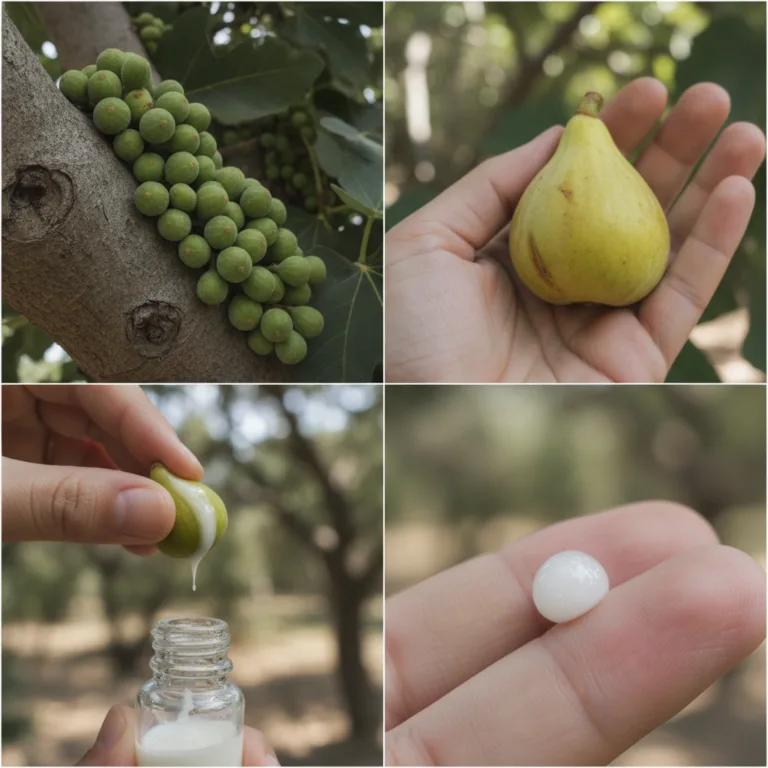
The primary ‘ingredient’ for this traditional application is the milky sap, also known as latex, derived directly from unripe figs or the stems of the fig tree (Ficus carica). It’s not a compound you measure with spoons or cups, but rather a substance carefully collected as it emerges.
- Unripe Figs or Fig Stems: Select young, green, unripe figs or fresh, healthy fig stems. These parts of the plant typically yield the most abundant sap.
How to Prepare
The preparation involves a simple, yet careful, extraction process to gather the fig latex.
- Identify Source: Locate unripe figs on the tree or fresh, sturdy fig stems.
- Gentle Incision: Gently break off a stem or lightly cut the base of an unripe fig from its branch. Immediately, a white, milky sap will begin to exude.
- Collect Carefully: Allow the sap to drip into a clean, small container, such as a glass bottle or a small bowl. The milky flow is usually quite slow, so patience is key. Avoid direct contact with skin and eyes during collection.
- No Brewing/Boiling: This process does not involve brewing, boiling, or infusing. The sap is used in its raw, freshly collected state for traditional applications.
How to Use + Best Time to Take
Traditionally, fig latex has been applied topically for certain external purposes. It is crucial to remember this is for external use only and to proceed with caution due to its potency.
- For Minor Skin Surface Applications: Using a cotton swab or the tip of a clean finger, carefully apply a tiny drop of the fresh milky sap directly to the area of concern on the skin.
- Best Time to Apply: It can be applied at any time of day, but perhaps best after a thorough cleansing of the skin, allowing it to remain undisturbed. A patch test on a small, inconspicuous area of skin 24 hours prior to wider application is highly recommended to check for sensitivity.
Why It Works (Science Insight)
The intriguing properties of fig latex are attributed to its unique biochemical composition. While scientific research is ongoing to fully understand all its mechanisms, several components are thought to play a role:
- Proteolytic Enzymes: Fig latex is rich in proteolytic enzymes, primarily ficin. These enzymes are known for their ability to break down proteins. In traditional applications, this property is believed to contribute to its action on various skin surface conditions.
- Phenolic Compounds and Flavonoids: Like many plant extracts, fig latex contains a variety of phenolic compounds and flavonoids, which are recognized for their antioxidant properties. These compounds help to protect cells from oxidative stress.
- Alkaloids and Triterpenoids: Other compounds such as alkaloids and triterpenoids are also present, which have been explored for various biological activities in botanical research.
The synergy of these natural compounds contributes to the traditional belief in fig latex’s efficacy for topical uses, especially concerning skin health and addressing surface irregularities.
Who Benefits Most
Individuals exploring traditional, natural topical remedies for common, minor skin surface concerns may find the historical applications of fig latex intriguing. This could include those:
- Seeking traditional botanical support for skin appearance.
- Interested in ancient knowledge about plant-derived substances.
- Open to cautious experimentation with natural ingredients for external skin care, after careful patch testing.
Quick Notes / Safety / Simple Adjustments
While fig latex holds a place in traditional remedies, its potent nature demands respect and caution.
- External Use Only: Fig latex is strictly for external topical application. It should never be ingested.
- Patch Test is Essential: Always perform a patch test on a small, insensitive area of skin at least 24 hours before wider application. Discontinue use immediately if irritation, redness, or discomfort occurs.
- Avoid Sensitive Areas: Keep away from eyes, mucous membranes, and broken or highly sensitive skin.
- Potential for Photosensitivity: Some individuals may experience increased skin sensitivity to sunlight after applying fig latex. It is advisable to avoid prolonged sun exposure on treated areas, or to use it at night.
- Dilution: For very sensitive skin, or to reduce potency, some traditional practices suggest diluting the fresh sap with a carrier oil (like olive oil or coconut oil) or aloe vera gel before application. Start with a very small amount of sap to a larger amount of carrier.
- Consult a Professional: If you have pre-existing skin conditions, allergies, or are uncertain, consult with a qualified health practitioner or herbalist before using fig latex.
- Storage: Fresh fig latex is most potent. It does not store well for extended periods and should ideally be used shortly after collection.