Did you know your daily dietary choices significantly impact your bone and joint health? Opting for foods like yogurt is a fantastic step! It’s rich in calcium, a powerhouse nutrient crucial for keeping your bones strong and joints moving smoothly. A daily serving can make a real difference in how you feel and perform. Understanding what to embrace and what to limit is key to supporting your skeletal system and maintaining joint flexibility as you age.
This guide, inspired by expert recommendations, breaks down the essential food choices that can help you build and maintain strong bones and healthy joints. From nutrient-dense greens to beneficial proteins, and important items to reduce, we’ll cover how simple changes in your diet can lead to significant improvements in your overall wellness.
Quick Overview
- Main topic: Dietary choices for bone and joint health
- Best for: Anyone looking to improve skeletal and joint wellness
- Number of recipes: 0 (informational guide)
- Prep style: Daily food choices and habits
- Reader benefit: Clear guidance on foods to support or limit for stronger bones and joints
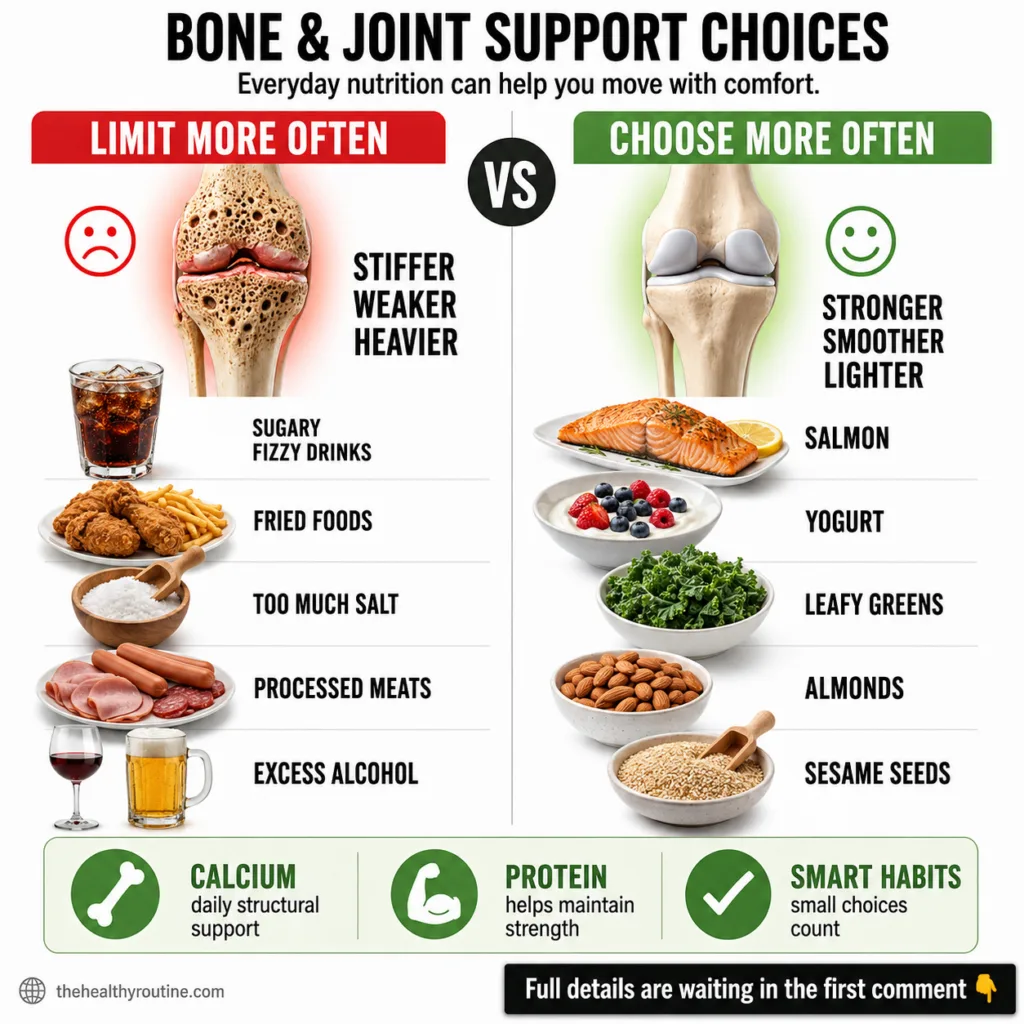
Foods to Limit for Bone & Joint Health
Certain dietary choices can contribute to inflammation and may hinder your body’s ability to maintain bone density and joint integrity. Reducing your intake of these items can be a proactive step towards better skeletal health.
- Soda: High in phosphoric acid, regular consumption of soda can interfere with calcium absorption, weakening bones over time.
- Processed Snacks: Often loaded with unhealthy fats, sugar, and sodium, these snacks can promote systemic inflammation, negatively impacting joint health.
- Red Meat: While a source of protein, excessive consumption of red meat, especially processed varieties, has been linked to increased inflammation and acidity, which may affect bone health.
- Excessive Alcohol: Alcohol can interfere with the absorption of calcium and vitamin D, both essential for strong bones. It can also disrupt bone formation and lead to weaker bones.
- Sugary Drinks: Beyond soda, other sugary beverages contribute to inflammation and can lead to weight gain, putting extra stress on your joints.
Foods to Choose for Stronger Bones & Joints
Incorporating these nutrient-dense foods into your daily diet provides the building blocks your body needs to maintain strong bones and flexible joints. These choices offer essential vitamins, minerals, and anti-inflammatory compounds.
- Leafy Greens: Spinach, kale, and collard greens are excellent sources of Vitamin K, calcium, and magnesium, all crucial for bone health.
- Salmon: Rich in Omega-3 fatty acids and Vitamin D, salmon helps reduce inflammation and supports calcium absorption, benefiting both bones and joints.
- Nuts & Seeds: Almonds, walnuts, chia seeds, and flaxseeds provide magnesium, calcium, and healthy fats, contributing to bone density and reducing inflammation.
- Yogurt: A powerhouse of calcium and Vitamin D (when fortified), yogurt is fundamental for strong bones and can also provide beneficial probiotics for overall health.
- Berries: Blueberries, strawberries, and raspberries are packed with antioxidants, which help combat inflammation and protect joint tissues from damage.
The Essential Nutrients: Calcium, Protein, and Smart Habits
Beyond specific foods, understanding the role of key nutrients and adopting consistent healthy habits is paramount for long-term bone and joint well-being.
- CALCIUM: Daily Structural Support
Calcium is the primary mineral that makes up your bones and teeth. Regular intake through dairy, leafy greens, and fortified foods ensures your body has the raw material for daily bone maintenance and repair. - PROTEIN: Helps Maintain Strength
Protein isn’t just for muscles; it’s a critical component of bone matrix and cartilage. Adequate protein intake supports bone strength and helps maintain the integrity of joint tissues. - SMART HABITS: Small Choices Count
It’s not about drastic overhauls but consistent, small changes. Regularly choosing nutrient-rich foods, staying hydrated, and engaging in weight-bearing exercises are all smart habits that collectively contribute to robust bone and joint health.
Simple Tips for Best Results
- Diversify Your Diet: Don’t rely on just one or two foods. A wide variety of fruits, vegetables, lean proteins, and healthy fats ensures you get a full spectrum of nutrients.
- Stay Hydrated: Water is essential for joint lubrication and overall cellular function.
- Consider Supplementation (Consult a Professional): If you have dietary restrictions or specific needs, discuss with a healthcare provider whether calcium, vitamin D, or omega-3 supplements are right for you.
- Incorporate Weight-Bearing Exercise: Activities like walking, jogging, and strength training help stimulate bone growth and strengthen surrounding muscles that support joints.
- Maintain a Healthy Weight: Excess body weight puts additional stress on your joints, particularly knees and hips.
FAQ
What are the best foods for bone density?
Foods rich in calcium like yogurt, leafy greens, and fortified plant milks are crucial. Vitamin D, found in salmon and fortified foods, is also essential for calcium absorption. Magnesium from nuts and seeds, and Vitamin K from greens, also play important roles.
Can diet help with joint pain?
While diet alone can’t cure joint pain, an anti-inflammatory diet rich in Omega-3s (salmon, flaxseeds), antioxidants (berries, colorful vegetables), and lean proteins can help reduce inflammation and support joint health, potentially alleviating some discomfort.
How much calcium and vitamin D do I need daily?
Daily requirements vary by age and other factors, but generally, adults need around 1,000-1,200 mg of calcium and 600-800 IU of Vitamin D. It’s best to consult a healthcare professional for personalized recommendations.
Final Thoughts
Prioritizing your bone and joint health through conscious dietary choices is one of the most impactful steps you can take for long-term well-being. By focusing on nutrient-rich foods that support strong bones and healthy joints, and limiting those that may hinder them, you empower your body to stay active and resilient. Remember, consistency in your daily eating habits and lifestyle choices is key to building an osteo-strong future.
MEDICAL DISCLAIMER:
This article provides general information and is not a substitute for professional medical advice. Always consult with a qualified healthcare professional before making any significant changes to your diet, especially if you have existing health conditions or are taking medication.