Mastering Wild Fruit Foraging: A Guide to Safe Identification and Preparation
There’s a unique satisfaction that comes with discovering edible treasures in the wild, connecting us deeply to nature’s cycles and abundance. Foraging for wild fruits offers a delightful way to explore local ecosystems and enjoy fresh, flavorful harvests. However, this ancient practice comes with a crucial responsibility: knowing exactly what you’re picking and how to prepare it safely. The world of wild edibles is full of delicious possibilities, but it also harbors look-alikes and plants that require specific handling. This guide will walk you through identifying, harvesting, and preparing twelve common wild fruits, empowering you to forage with confidence and care.
The Golden Rule of Foraging: Certainty Through Identification
Before you even think about tasting, the most important rule of foraging is absolute certainty in your identification. Never consume a wild plant unless you are 100% sure of what it is. This means cross-referencing with multiple reliable sources – field guides, experienced local foragers, university extension resources, and online databases. Pay attention to every detail: leaf shape, stem color, flower structure, growth habit, habitat, and scent. If there’s any doubt, leave it be. It’s always better to be safe than sorry when it comes to wild edibles.
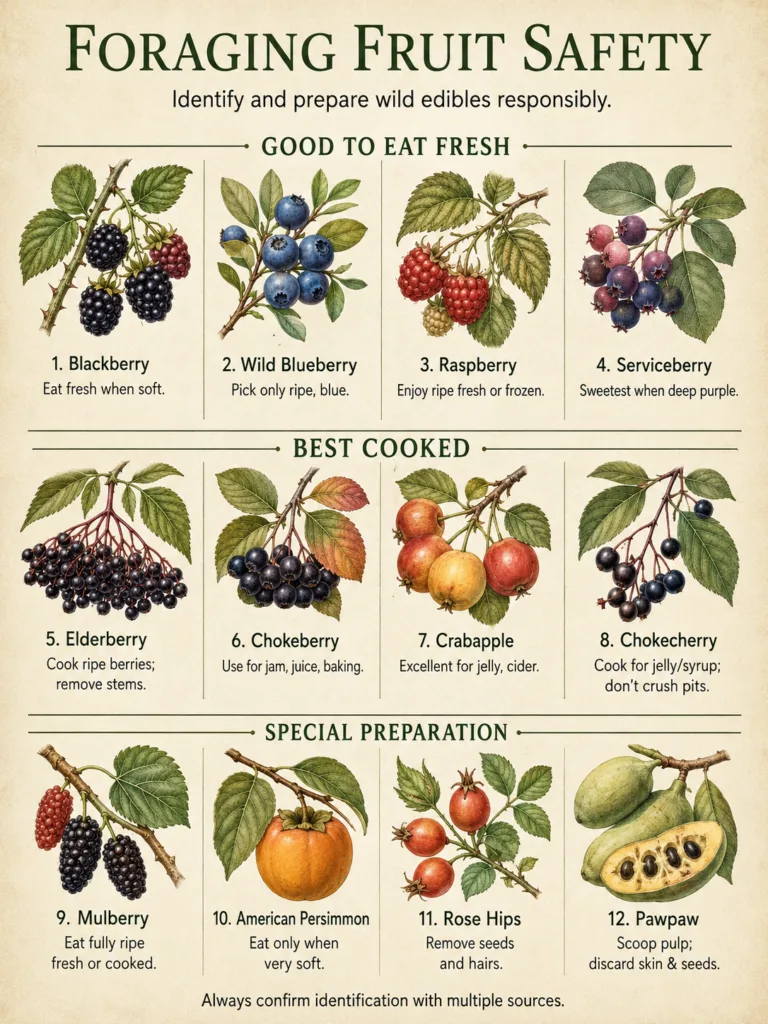
Good to Eat Fresh: Delicious Finds Straight from the Branch
Some of nature’s sweetest treats are ready to enjoy right after picking (and a good wash!). These fruits are generally safe to consume raw when fully ripe, offering a burst of natural flavor.
Blackberries (Rubus spp.)
These classic summer berries are a joy to find. Blackberries typically grow on thorny canes in disturbed areas, forest edges, and fields. They are members of the rose family (Rosaceae). Wild blackberries are perennial shrubs or vines.
- Identification: Clusters of dark, plump berries that easily detach from their receptacle (the white core) when ripe. Leaves are usually compound with 3-5 leaflets, often toothed.
- Harvesting: Pick when the berries are deep black and soft to the touch. Unripe red berries are tart and firm.
- Safety Tip: Always confirm identification and forage away from roadsides or areas that might have been sprayed with chemicals.
- Practical Tip: Harvest in late summer through early fall.
Wild Blueberries (Vaccinium spp.)
Often smaller and more intensely flavored than cultivated varieties, wild blueberries are a true delight. They prefer acidic, well-drained soils, often found in woodlands, clearings, and bogs. These are typically low-growing perennial shrubs.
- Identification: Small, round berries, varying in color from light blue to deep indigo with a dusty bloom. The calyx (remnant of the flower) forms a distinctive five-pointed star shape at the bottom of the berry.
- Harvesting: Harvest when the berries are fully dark blue or purple throughout.
- Safety Tip: Be cautious of similar-looking berries like huckleberries, which are also edible, but also ensure you’re not mistaking them for potentially toxic look-alikes such as deadly nightshade (though their growth habit and fruit structure are quite different).
- Practical Tip: Often found in areas with plenty of sunlight and well-drained, acidic soil.
Raspberries (Rubus spp.)
Like their blackberry cousins, raspberries offer a sweet reward. They grow on thorny canes and are easily distinguished by how they detach when ripe.
- Identification: Red (or sometimes black/purple) berries that are hollow in the center once picked, leaving the white core on the plant.
- Harvesting: Pick when the berries are fully colored and easily detach from the plant with a gentle tug.
- Safety Tip: Handle carefully to avoid thorns. Ensure full ripeness for best flavor.
- Practical Tip: Enjoy fresh, or freeze for later use in jams, pies, or smoothies.
Serviceberry (Amelanchier spp.)
Also known as Juneberry, Saskatoons, or Shadbush, serviceberries are early summer treats from a small tree or large shrub. They are native to North America.
- Identification: Small, round berries that transition from green to red to a deep blue or purple when ripe, resembling blueberries but typically growing on a treelike plant.
- Harvesting: Harvest when the fruits are dark blue/purple and soft.
- Safety Tip: Generally easy to identify and safe. The small seeds contain trace amounts of cyanogenic compounds, but are safe to consume in typical quantities.
- Practical Tip: Birds love them, so you might have competition for these delicious early summer fruits.
Best Cooked: Transforming Wild Berries into Culinary Delights
Some wild fruits contain compounds that can cause stomach upset or have an unpalatable texture when raw. Cooking them breaks down these compounds, improves flavor, and makes them safe and delicious to eat.
Elderberry (Sambucus canadensis)
Elderberries are renowned for their immune-boosting properties and distinctive flavor, but proper preparation is vital.
- Identification: Clusters of small, dark purple to black berries on reddish stems. The plants are large perennial shrubs.
- Safety Tip: Crucially, ripe elderberries must be cooked thoroughly before consumption. Raw berries, leaves, stems, bark, and roots contain cyanogenic glycosides that can cause nausea, vomiting, and diarrhea. Always remove all stems and green parts.
- Practical Tip: Excellent for jams, jellies, pies, and elderberry syrup. Collect in late summer when fully ripe.
Chokeberry (Aronia melanocarpa)
Often called