Unlock Your Garden’s Potential with Kitchen Waste!
Are you looking for a sustainable way to nourish your garden while reducing household waste? Look no further than your kitchen scraps! Transforming everyday kitchen waste into nutrient-rich fertilizer is a fantastic way to give your plants a boost, improve soil health, and embrace an eco-friendly gardening lifestyle. It’s easier than you think and incredibly rewarding!
Why Use Kitchen Scraps for Fertilizer?
Using kitchen waste for your garden isn’t just a trend; it’s a smart, sustainable practice with numerous benefits:
- Reduces Waste: Divert food scraps from landfills, significantly lowering your household’s environmental footprint.
- Nutrient-Rich: Kitchen scraps are packed with essential nutrients like nitrogen, phosphorus, and potassium, as well as vital micronutrients that chemical fertilizers often lack.
- Cost-Effective: Save money on store-bought fertilizers by making your own for free!
- Improves Soil Health: Organic matter from kitchen waste enriches the soil structure, enhances water retention, and fosters a healthy microbial ecosystem.
- Eco-Friendly: Avoid the production and transportation of synthetic fertilizers, contributing to a healthier planet.
Common Kitchen Scraps You Can Use (and What They Offer)
Many everyday items from your kitchen can be gold for your garden:
- Fruit and Vegetable Peels/Scraps: (e.g., banana peels, apple cores, potato skins) – Rich in potassium, calcium, and trace minerals. Great for overall plant health and fruit development.
- Coffee Grounds: Add nitrogen, magnesium, and potassium to the soil. They can also slightly acidify the soil, which is beneficial for acid-loving plants like blueberries and roses.
- Eggshells: An excellent source of calcium, crucial for strong cell walls and preventing blossom end rot in tomatoes and peppers.
- Tea Leaves (loose or bags): Provide nitrogen and beneficial tannins.
- Expired Spices/Herbs: Can add a variety of minerals and organic matter.
What to Avoid: Generally, avoid meat, dairy, oily foods, and diseased plants, as these can attract pests, create foul odors, or introduce pathogens.
How to Make Your Own Kitchen Scraps Fertilizer
There are several easy ways to turn your kitchen waste into garden goodness:
1. Direct Application (for certain scraps)
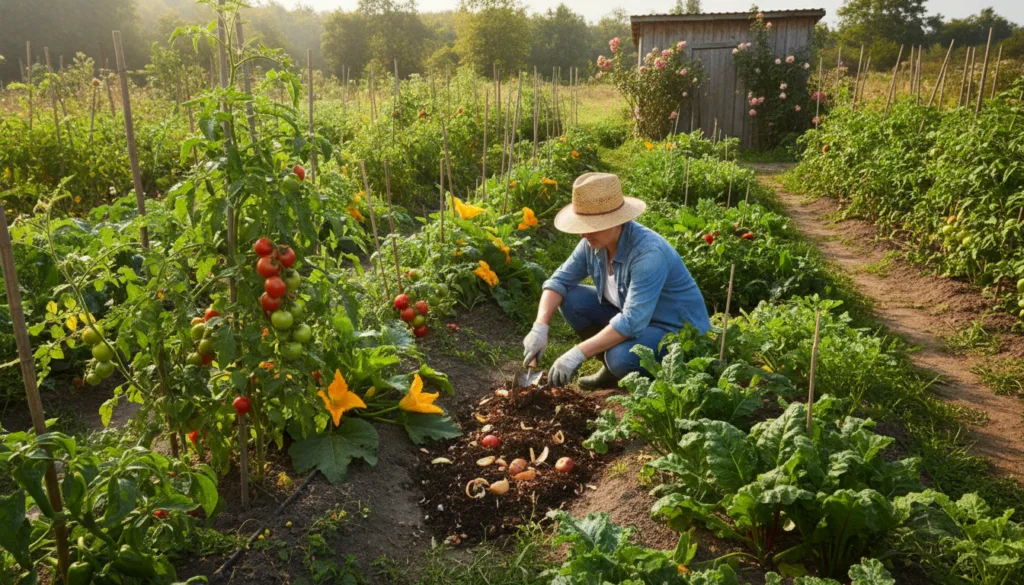
- Eggshells: Wash, dry, and crush eggshells into a fine powder. Sprinkle them around the base of plants, especially tomatoes, or mix into the soil when planting.
- Coffee Grounds & Tea Leaves: Sprinkle fresh or used grounds/leaves directly around plants. Work them lightly into the topsoil to prevent them from compacting or molding.
- Banana Peels: Cut into small pieces and bury them a few inches deep near the base of potassium-hungry plants like roses, peppers, or tomatoes.
2. Homemade Compost
Composting is the classic method for converting a wide range of kitchen scraps into rich, dark humus. If you have a compost bin or pile, simply add your fruit and vegetable scraps, coffee grounds, eggshells, and tea leaves. Remember to balance