The world of nutrition is constantly evolving, but some discussions, like which food choice reigns supreme, seem to persist forever. These 5 food debates often leave us pondering the best option for our health and palate. From the dairy aisle to your dinner plate, making informed choices is key to a successful wellness journey.
This article will explore five classic food dilemmas that frequently spark conversation among health enthusiasts and everyday eaters alike. We’ll dive into the nuances of each, helping you understand the pros and cons so you can confidently pick your side in these ongoing nutritional discussions.
Get ready to uncover the facts behind butter versus margarine, whole milk against skim, white rice compared to brown, the fresh versus frozen vegetable showdown, and the eternal clash between sugar and artificial sweeteners. Let’s explore these debates together!
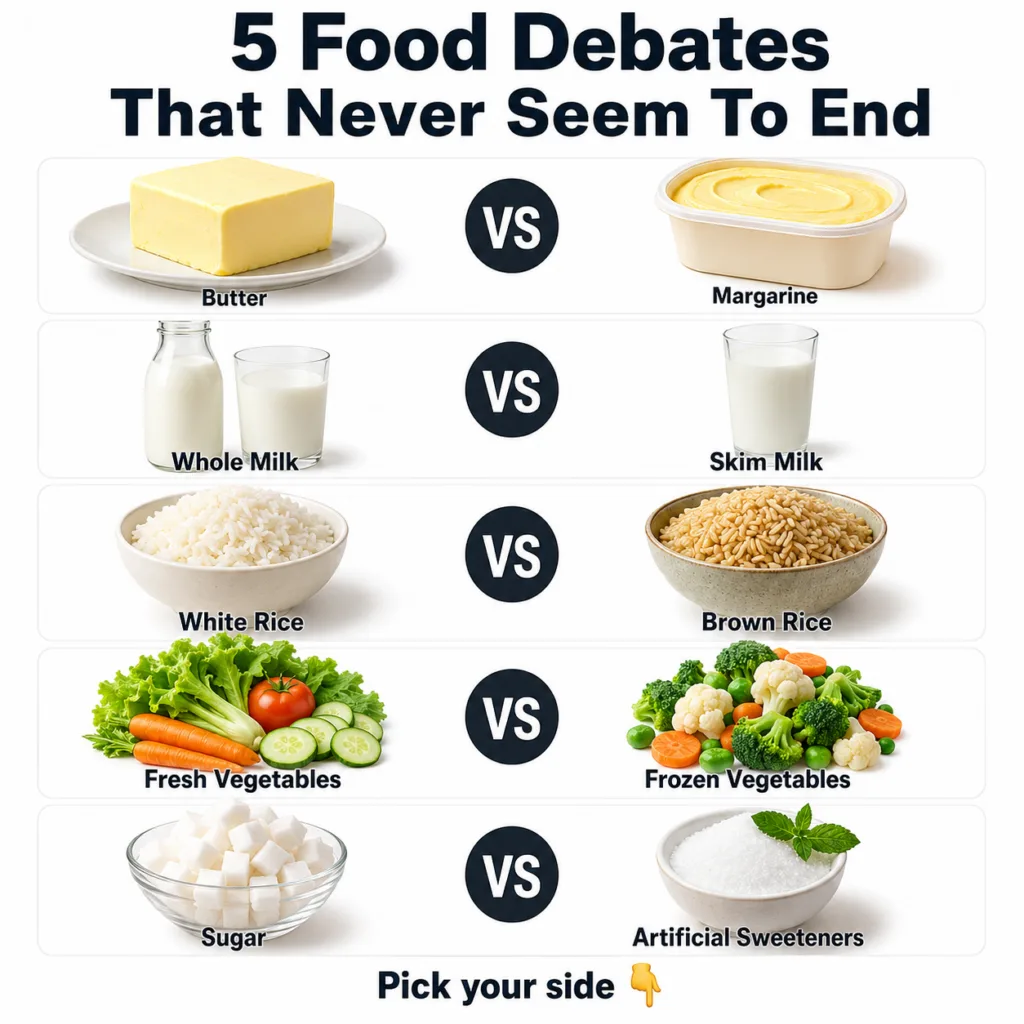
1. Butter vs. Margarine: The Spreading Debate
This classic kitchen conundrum pits a natural dairy product against a processed spread. For decades, the choice between butter and margarine has been a point of contention, primarily revolving around fat content and its impact on heart health.
Butter: A Natural Dairy Delight
Butter is traditionally made from churning cream, resulting in a product rich in saturated fat. Historically, saturated fat was heavily demonized, but modern science suggests that its role in heart disease is more complex and depends on the overall diet. Butter also contains small amounts of fat-soluble vitamins (A, E, D, K2) and beneficial fatty acids like butyrate and conjugated linoleic acid (CLA).
- Pros: Natural, rich flavor, contains fat-soluble vitamins, some beneficial fatty acids.
- Cons: High in saturated fat, higher cholesterol (though dietary cholesterol’s impact on blood cholesterol is debated).
Margarine: The Plant-Based Alternative
Margarine is made from vegetable oils, which are typically rich in unsaturated fats (mono- and polyunsaturated). The main concern with older margarines was the presence of trans fats, formed during the hydrogenation process to make liquid oils solid. However, most modern margarines have eliminated or significantly reduced trans fats and are often fortified with vitamins. Some even contain plant sterols to help lower cholesterol.
- Pros: Often lower in saturated fat, high in beneficial unsaturated fats, many varieties are trans-fat-free, may contain plant sterols.
- Cons: Highly processed, some varieties may still contain unhealthy additives or palm oil.
Which Side to Pick?
The best choice often depends on the specific margarine product and your individual dietary needs. If choosing margarine, look for varieties made with liquid vegetable oils (like olive, canola, or sunflower oil) and explicitly state ‘no trans fats.’ For butter, enjoy it in moderation as part of a balanced diet. Ultimately, focusing on overall fat intake and quality from all sources is more important than fixating on one spread.
2. Whole Milk vs. Skim Milk: Dairy Choices
The dairy aisle offers another perennial debate: whole milk with its creamy richness, or skim milk, praised for its lower fat content. This choice often comes down to personal preference, calorie intake, and nutrient absorption.
Whole Milk: Full-Fat Goodness
Whole milk contains around 3.25% milk fat, which contributes to its rich flavor and creamy texture. This fat also helps with the absorption of fat-soluble vitamins like A, D, E, and K, which are naturally present or fortified in milk. The fat content also provides a sense of satiety.
- Pros: Rich flavor and texture, aids absorption of fat-soluble vitamins, more satiating.
- Cons: Higher in calories and saturated fat compared to skim milk.
Skim Milk: The Leaner Option
Skim milk, or fat-free milk, has virtually all the fat removed, making it significantly lower in calories and saturated fat. It retains the same amount of protein, calcium, and vitamin D (when fortified) as whole milk, making it a nutrient-dense option without the added fat.
- Pros: Low in calories and saturated fat, good source of protein and calcium.
- Cons: Less flavor and thinner texture, may not be as satiating, some fat-soluble vitamins may be less absorbed without fat.
Which Side to Pick?
For individuals managing calorie intake or trying to reduce saturated fat, skim milk can be a good choice. However, for growing children or those who prefer the taste and satiety, whole milk can fit into a healthy diet. The key is moderation and considering your overall dietary pattern. If you’re looking for a good source of protein and calcium, both options deliver.
3. White Rice vs. Brown Rice: The Grain Gauntlet
Rice is a staple food for billions worldwide, but the choice between its white and brown forms sparks a significant debate about nutrition. This debate centers on processing, fiber content, and nutrient density.
White Rice: Refined and Easy to Digest
White rice is brown rice that has undergone processing to remove the bran and germ, leaving only the starchy endosperm. This removal gives it a softer texture, faster cooking time, and longer shelf life. However, it also strips away most of the fiber, B vitamins, and minerals. White rice often has a higher glycemic index compared to brown rice.
- Pros: Easier to digest, faster cooking time, milder flavor, longer shelf life.
- Cons: Lower in fiber, vitamins, and minerals; higher glycemic index.
Brown Rice: Whole Grain Powerhouse
Brown rice is a whole grain, meaning it retains the bran, germ, and endosperm. The bran provides fiber and antioxidants, while the germ contains B vitamins, minerals (like magnesium and selenium), and healthy fats. This makes brown rice a more nutrient-dense option, contributing to better digestive health and more stable blood sugar levels due to its fiber content.
- Pros: High in fiber, rich in vitamins and minerals, lower glycemic index, promotes satiety.
- Cons: Longer cooking time, chewier texture, shorter shelf life, contains phytic acid which can inhibit some nutrient absorption (though minimal impact in a balanced diet).
Which Side to Pick?
For most people, brown rice is the nutritionally superior choice due to its higher fiber and nutrient content, making it a great option for a heart-healthy and gut-friendly diet. However, white rice can still be part of a balanced diet, especially for those with digestive sensitivities or who need quick energy. Mixing the two or alternating can also be a practical approach. Consider exploring different types of whole grains like quinoa or farro for even more variety.
4. Fresh Vegetables vs. Frozen Vegetables: The Produce Predicament
When it comes to getting your daily dose of greens, the choice between fresh and frozen vegetables often comes down to convenience, cost, and a common misconception about nutritional value. Are fresh veggies always better?
Fresh Vegetables: Vibrant and Versatile
Fresh vegetables are often prized for their vibrant colors, crisp textures, and immediate availability. They offer a wide variety of culinary uses and are a cornerstone of healthy eating. However, nutrient content in fresh produce can diminish over time, especially if vegetables sit in transit or on store shelves for extended periods, or are stored incorrectly at home.
- Pros: Peak flavor and texture when in season, wide variety, no processing.
- Cons: Shorter shelf life, can lose nutrients over time, seasonality limits choices, often more expensive out of season.
Frozen Vegetables: Convenient and Nutrient-Packed
Frozen vegetables are often picked at their peak ripeness, when nutrient levels are highest, and then flash-frozen shortly after harvest. This process effectively locks in vitamins, minerals, and antioxidants, often preserving their nutritional value better than fresh produce that has traveled long distances. They are also incredibly convenient and reduce food waste.
- Pros: Nutrients locked in at peak ripeness, year-round availability, convenient, less food waste, often more affordable.
- Cons: Texture can be softer after thawing, may contain added salt or sauces (check labels).
Which Side to Pick?
Both fresh and frozen vegetables are excellent choices and contribute significantly to a healthy diet. The