Cultivating Joy: 10 Easy-Care Perennials for a Vibrant, Low-Maintenance Garden
Are you dreaming of a garden that springs to life with color and beauty each season, without the yearly hassle of replanting? Imagine stepping outside to a lush landscape where your favorite flowers reliably return, stronger and more vibrant than before. Perennials offer this enduring magic, transforming your outdoor space into a sanctuary of continuous bloom and foliage. They are the backbone of a resilient garden, providing long-term beauty and structure with significantly less effort than annuals.
Choosing the right perennials is key to a thriving, low-maintenance garden. We’ve handpicked ten exceptional varieties known for their striking beauty, adaptability, and minimal care requirements. These plants are perfect for both seasoned gardeners and beginners, promising years of delight. Let’s explore these garden heroes and learn how to invite them into your landscape.
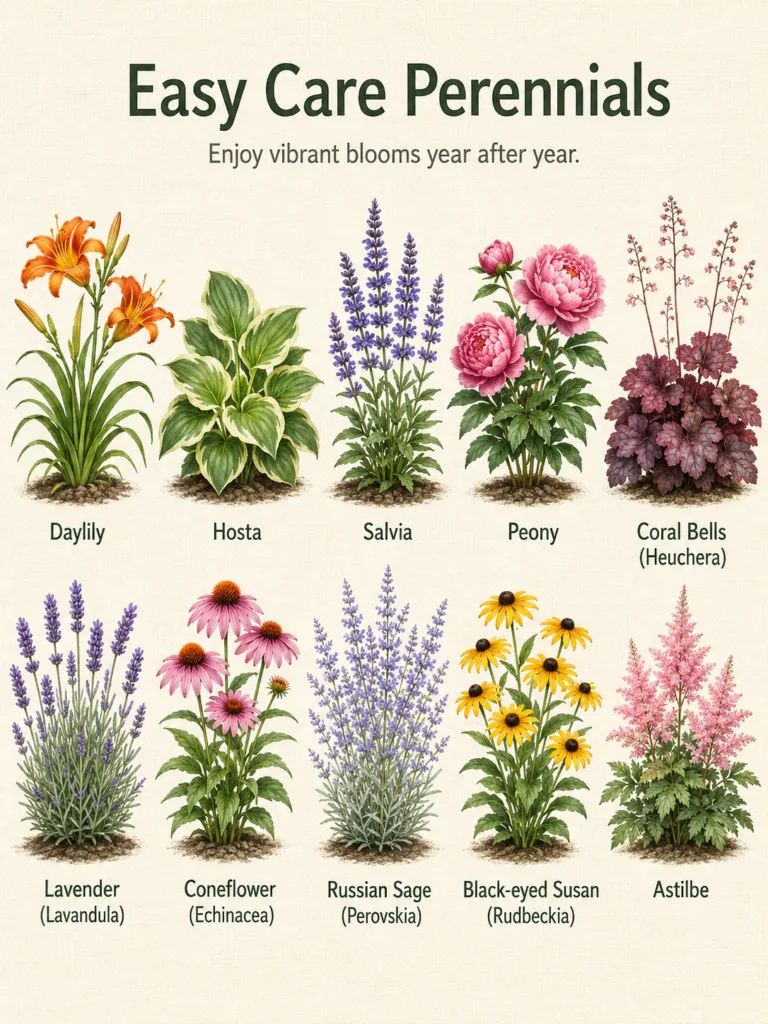
Understanding the Magic of Perennials
Unlike annuals, which complete their life cycle in one growing season, perennials live for more than two years. Many return for decades, growing larger and more robust over time. This means less work for you, as you won’t need to replant them every spring. Perennials establish deeper root systems, making them more resilient to drought once established and often more tolerant of varying soil conditions. By selecting species suited to your local USDA hardiness zone, you ensure they can withstand winter cold and return reliably.
Your Top 10 Easy-Care Perennial Stars
1. Daylily (Hemerocallis)
Daylilies are a classic garden favorite, celebrated for their trumpet-shaped blooms that come in an astonishing array of colors, from vibrant yellows and oranges to deep reds and purples. Though each flower lasts only a day, the plants produce a continuous succession of new blooms over several weeks, often reblooming in late summer.
- Hardiness: USDA Zones 3-9
- Plant type: Herbaceous perennial
- Exposure: Full sun to partial shade (at least 6 hours of sun for best flowering)
- Height: 1-4 feet, depending on cultivar
- Spread: 1-3 feet
Care Tip: Daylilies are incredibly tough and adaptable. They tolerate a wide range of soils but thrive in well-drained, fertile soil. Deadheading spent blooms can encourage more flowering, especially in reblooming varieties.
2. Hosta (Hosta)
Prized for their lush foliage, Hostas are the queens of the shade garden. Their leaves come in an incredible variety of sizes, shapes, and colors, including shades of green, blue, yellow, and variegations with white or cream. While their lavender or white flowers are lovely, it’s the architectural beauty of their leaves that truly shines.
- Hardiness: USDA Zones 3-9
- Plant type: Herbaceous perennial
- Exposure: Partial to full shade (some variegated types can handle more sun if moisture is consistent)
- Height: 6 inches to 3 feet, depending on cultivar
- Spread: 1-6 feet
Care Tip: Hostas prefer consistently moist, well-drained soil rich in organic matter. Protect them from slugs and snails, which can quickly chew holes in their attractive leaves. Consider placing copper tape around beds or using organic slug bait.
3. Salvia (Salvia nemorosa and similar species)
Many ornamental Salvias, particularly ‘May Night’ or ‘Caradonna,’ are fantastic garden performers, offering spikes of vibrant purple, blue, or pink flowers that attract hummingbirds and butterflies. They are drought-tolerant once established and provide long-lasting color from late spring into summer, often with repeat blooms.
- Hardiness: USDA Zones 4-9
- Plant type: Herbaceous perennial
- Exposure: Full sun
- Height: 18-30 inches
- Spread: 1-2 feet
Care Tip: Shear back spent flower stalks after the first flush of blooms to encourage a second, smaller bloom cycle. Good air circulation prevents powdery mildew in humid climates.
4. Peony (Paeonia lactiflora)
Known for their spectacular, often fragrant, large blooms, Peonies are truly regal garden inhabitants. They can live for decades, even generations, becoming cherished heirlooms. Their flowers appear in late spring to early summer in shades of pink, red, white, and yellow.
- Hardiness: USDA Zones 3-8
- Plant type: Herbaceous perennial
- Exposure: Full sun
- Height: 2-4 feet
- Spread: 2-3 feet
Care Tip: Plant peony roots (or