If you enjoy viral DIY beauty recipes, this Vitamin E + Baby Oil Night Cream is another simple skincare trend that looks surprisingly luxurious once everything is mixed together.
The video calls it a “Korean Anti-Aging Cream” and claims that a 56-year-old woman can look 26 after using three ingredients every night for 30 days. That makes a powerful social-media hook, but it shouldn’t be taken literally. No homemade cream can reverse 30 years of facial aging in a month.
What this mixture may offer is much simpler: an extra-rich occlusive moisturizing treatment that can make dry skin temporarily look softer, smoother, and more supple.
🌿 What Does the Video Use?
The three components shown appear to be:
- A thick white cream or moisturizing base
- Baby oil
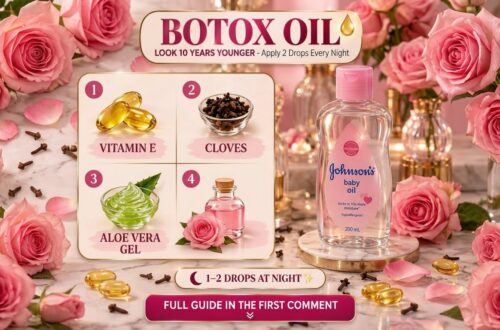
- Vitamin E 400 IU softgel capsules
The Vitamin E capsules are opened and their oily contents are mixed directly into the cream.
Everything is stirred until it becomes a smooth, glossy white moisturizer.
Because the exact identity of the white cream isn’t clearly established from the video alone, use a plain fragrance-free moisturizer you already tolerate rather than guessing.
✨ Why This Combination Looks So Creamy
Each component contributes something different to the texture.
The moisturizer provides the cream base.
Baby oil adds additional emollience and makes the mixture feel richer and more slippery.
Vitamin E from the softgel adds another oily component.
Together they create the thick, silky texture demonstrated toward the end of the video:
Creamy → Glossy → Rich → Easily Spreadable
💚 What Is Vitamin E?
Vitamin E is a fat-soluble antioxidant used in many commercial skincare formulations.
You’ll commonly see tocopherol or related Vitamin E compounds listed in cosmetic ingredient lists.
But there’s an important distinction between a professionally formulated Vitamin E skincare product and opening an oral supplement capsule directly onto your skin.
Supplement capsules aren’t necessarily designed or tested as facial cosmetics.
💧 Why Add Baby Oil?
Baby oil is typically used to help reduce moisture loss and leave skin feeling soft.
Adding a tiny amount to a moisturizer can create a richer, more occlusive texture.
This may be particularly noticeable on very dry skin.
However, check the ingredient list. Many baby oils contain fragrance, which may not suit sensitive facial skin.
You don’t actually need baby oil to have an effective moisturizing routine.
🥣 A More Conservative Version
Rather than mixing an entire jar as shown in the video, prepare only enough for one application.
Try:
- 1 teaspoon fragrance-free moisturizer
- 1 drop of a facial oil you already tolerate
If you specifically want to experiment with Vitamin E, a cosmetic product formulated for facial use is preferable to guessing with supplement capsules.
Keeping the mixture simple also makes it easier to identify the cause if irritation occurs.
🥄 Step 1 – Start With Your Moisturizer
Place approximately 1 teaspoon of your regular moisturizer into a clean dish.
Choose something you’ve already used successfully.
DIY experiments aren’t the best time to introduce three completely unfamiliar ingredients simultaneously.
💧 Step 2 – Add a Tiny Amount of Oil
Add only a drop or two of an oil suitable for your skin.
The goal isn’t to turn the moisturizer into an oily liquid.
You simply want to increase its richness slightly.
💚 Step 3 – What About the Vitamin E Capsule?
The video clearly shows a Vitamin E 400 IU softgel being placed into the cream.
Rather than automatically copying this step, remember that oral supplement products are manufactured primarily for ingestion, not necessarily topical facial application.
If Vitamin E is something you want in your routine, using a properly formulated cosmetic containing tocopherol is the more predictable approach.
🌀 Step 4 – Mix Until Smooth
Stir the ingredients thoroughly.
The finished mixture should remain creamy rather than separating into obvious layers of oil.
The video produces an especially satisfying texture:
Thick + Silky + Glossy + Smooth
You don’t need to keep adding oil to reproduce that appearance.
🧪 Step 5 – Patch Test
Before applying a new mixture over your entire face, patch test it.
Apply a small amount to a limited area and watch for:
- Burning
- Itching
- Persistent redness
- Swelling
- Rash
- Breakouts or irritation
Stop using the mixture if your skin reacts.
🌙 Step 6 – Use It as a Night Treatment
If your skin tolerates the ingredients, nighttime is the most logical time for such a rich mixture.
A simple routine could be:
Cleanse → Regular Skincare → Thin Layer of Moisturizing Cream
You don’t need to cover your face with a heavy mask.
A thin layer is usually enough.
🤏 How Much Should You Apply?
Start small.
For most people, a pea-sized amount distributed over dry areas is plenty.
More product doesn’t necessarily provide more benefit.
An excessively thick layer can simply feel greasy and uncomfortable.
✨ What Can You Realistically Expect?
The most plausible short-term effect is improved moisturization.
Well-moisturized skin may temporarily appear:
Softer → Smoother → Plumper → More Radiant
Dryness-related fine lines can also become less noticeable when the outer skin is properly hydrated.
That’s a reasonable cosmetic result.
❌ Can It Really Make 56 Look 26?
No.
That claim is an exaggeration.
Visible facial aging is influenced by complex changes involving:
- Collagen
- Elastin
- Pigmentation
- Skin thickness
- Facial fat
- Bone structure
- Muscle activity
- Genetics
- Cumulative UV exposure
A moisturizing mixture cannot reverse all of those processes in 30 days.
🇰🇷 Is This Really a “Korean Anti-Aging Cream”?
Calling something Korean doesn’t automatically make it part of evidence-based Korean skincare.
Korean beauty routines often emphasize hydration, gentle layering, barrier care, and sun protection, but there isn’t one universal homemade “Korean anti-aging cream.”
It’s better to treat the phrase in the video as a viral marketing label rather than proof of the recipe’s origin or effectiveness.
☀️ The Anti-Aging Step You Shouldn’t Skip
If your goal is maintaining youthful-looking skin, daily UV protection deserves far more attention than most viral DIY mixtures.
A practical routine could be:
Morning:
Gentle Cleanser → Moisturizer → Broad-Spectrum SPF 30+
Evening:
Gentle Cleanser → Moisturizer → Optional Richer Moisture Layer
That foundation matters.
💡 Don’t Make the Whole Jar
The video mixes the ingredients directly into a full container.
At home, it’s more sensible to:
Take out one application → Mix separately → Use immediately
This prevents you from permanently changing the original formulation of your moisturizer.
Commercial creams are carefully balanced systems. Adding oils or capsule contents can alter their texture, stability, and preservation.
🧼 Keep DIY Skincare Clean
Always use clean hands and utensils.
Avoid repeatedly dipping used spoons or fingers into products.
And don’t add water or random liquids to homemade mixtures that you plan to store.
Commercial cosmetics contain preservation systems for a reason.
⚠️ Who Should Be More Careful?
Consider skipping experimental DIY mixtures if you have:
- Very sensitive skin
- Active acne
- Rosacea
- Eczema
- Dermatitis
- Broken or irritated skin
- Known fragrance sensitivity
Vitamin E itself can also cause contact dermatitis in some people.
Patch testing matters.
🌿 A Simpler Alternative
You may not need to mix anything.
For dry mature skin, try:
Gentle Cleanser → Fragrance-Free Moisturizer → Thin Occlusive Layer on Dry Areas
Sometimes improving consistency with a simple routine produces a better experience than constantly introducing new DIY recipes.
🌙 Final Thoughts
This viral Vitamin E + Baby Oil “Korean Anti-Aging Cream” is visually satisfying and creates a beautifully rich cream, but the realistic benefit is much less dramatic than the video’s headline.
Think:
Moisturizer + Emollient/Occlusive Ingredients → Better Moisture Retention → Softer, Smoother-Looking Skin
Not:
“56 Years Old → 26 Years Old in 30 Days.”
If you want to experiment with the concept, keep the batch tiny, avoid unidentified ingredients, patch test first, and don’t assume that more Vitamin E or oil means better results.
And for long-term skin care, don’t forget the basics: gentle cleansing, consistent moisturization, and daily sunscreen. ✨
Would you try this overnight beauty cream? Comment “VITAMIN E” below and save this guide for later! 💚👇