As we age, the health of our bones and joints plays a critical role in our mobility, independence, and overall quality of life. Yet, many of us overlook the profound impact our daily choices have on these vital structures. Maintaining optimal bone and joint balance isn’t just about avoiding injury; it’s about proactively building and preserving strength, flexibility, and resilience from within.
This guide, inspired by the principles of Simple Growth, delves into straightforward food and lifestyle adjustments that can make a significant difference. By understanding what to prioritize and what to limit, you can lay a strong foundation for a healthier, more active future. Get ready to discover how simple dietary tweaks and consistent movement can support your skeletal system naturally.
Nourish for Strength: Foods to Choose More Often
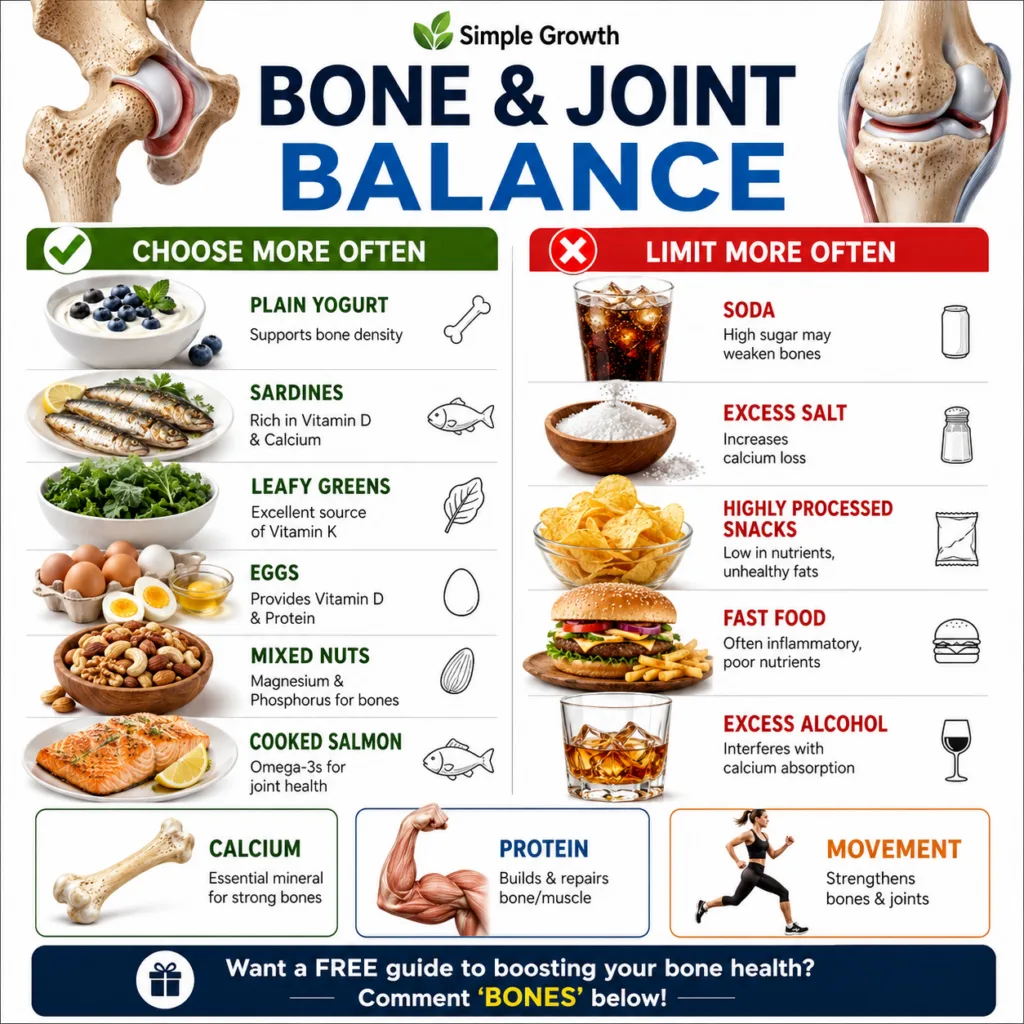
Your diet is a powerful tool for supporting robust bones and flexible joints. Integrating nutrient-dense foods into your daily routine can provide the essential vitamins and minerals your skeletal system craves. Here are the key players to prioritize:
Creamy Support: Plain Yogurt
Plain yogurt is a fantastic source of calcium and vitamin D (if fortified), two cornerstone nutrients for bone health. The probiotics found in yogurt may also aid in nutrient absorption, indirectly benefiting your overall wellness. Opt for plain varieties to avoid added sugars, which can contribute to inflammation.
- Calcium Boost: Essential for bone density.
- Probiotic Benefits: May enhance nutrient absorption.
- Protein Content: Supports muscle and tissue repair around joints.
Consider plain Greek yogurt for an even higher protein punch, perfect for a high-protein breakfast or snack.
Ocean’s Bounty: Sardines & Cooked Salmon
These fatty fish are powerhouses of omega-3 fatty acids, known for their anti-inflammatory properties, which can be particularly beneficial for joint health. They are also excellent sources of vitamin D and calcium (especially sardines, eaten with their soft bones), crucial for strong bones.
- Omega-3s: Help reduce inflammation in joints.
- Vitamin D: Aids calcium absorption.
- Calcium: Directly strengthens bones.
Integrating these fish into your diet a few times a week can significantly contribute to both bone and joint well-being.
Green Power: Leafy Greens
Kale, spinach, collard greens, and other leafy greens are packed with vitamin K, which plays a vital role in bone metabolism. They also provide magnesium and calcium, offering a plant-based boost to your skeletal system.
- Vitamin K: Supports bone mineralization.
- Magnesium: Important for bone structure.
- Calcium: Contributes to bone density.
Make leafy greens a staple in your salads, smoothies, and cooked meals to reap their comprehensive benefits.
Everyday Essential: Eggs
Eggs are an accessible and versatile source of protein, which is fundamental for building and repairing bone and muscle tissue. They also contain vitamin D (in the yolk), further supporting calcium absorption and bone health.
- High-Quality Protein: Essential for bone and muscle repair.
- Vitamin D: Aids in calcium utilization.
Including eggs in your daily diet, whether for breakfast or as part of a meal, is an easy way to support your bones and joints.
Crunchy Goodness: Mixed Nuts
Mixed nuts provide a medley of minerals crucial for bone health, including magnesium, phosphorus, and manganese. They also offer healthy fats and protein, contributing to overall well-being and reducing inflammation.
- Magnesium, Phosphorus, Manganese: Key minerals for bone structure.
- Healthy Fats: Support overall health and may reduce inflammation.
A handful of mixed nuts makes a convenient and nutritious snack that can help fortify your bones.
Protect Your Frame: Foods & Habits to Limit
Just as certain foods enhance bone and joint health, others can undermine it. Reducing your intake of these items can help minimize inflammation and preserve the integrity of your skeletal system.
Fizz & Harm: Soda
Regular consumption of soda, especially those high in phosphoric acid, has been linked to lower bone density. The high sugar content can also contribute to inflammation and overall poor health, indirectly impacting joints.
- Phosphoric Acid: May interfere with calcium absorption.
- High Sugar: Can promote inflammation.
Opt for water, herbal tea, or naturally flavored sparkling water instead.
The Salty Truth: Excess Salt
A diet high in sodium can lead to increased calcium excretion through urine, meaning less calcium is available for your bones. While salt is necessary in moderation, excessive intake can be detrimental.
- Calcium Loss: High sodium can lead to more calcium being flushed from the body.
Be mindful of hidden salt in processed foods and choose fresh, whole ingredients whenever possible.
Convenience vs. Health: Highly Processed Snacks & Fast Food
These foods are typically high in unhealthy fats, sugar, and sodium, and low in essential nutrients. Their regular consumption can lead to systemic inflammation and nutrient deficiencies, both of which negatively impact bone and joint health.
- Inflammatory Ingredients: Contribute to joint pain and overall poor health.
- Nutrient Deficient: Lack the vitamins and minerals needed for strong bones.
Prioritize whole foods and prepare meals at home to control ingredients.
Moderation is Key: Excess Alcohol
While moderate alcohol consumption may have some benefits, excessive intake can interfere with calcium absorption and vitamin D activation, both critical for bone health. It can also increase the risk of falls, leading to fractures.
- Nutrient Interference: Hinders calcium and vitamin D metabolism.
- Increased Risk of Falls: Poses a direct threat to bone integrity.
If you choose to drink, do so in moderation.
The Pillars of Bone & Joint Health: Beyond Diet
Dietary choices are fundamental, but bone and joint health also relies heavily on three other crucial elements:
Calcium: The Building Block
Calcium is the most abundant mineral in your body and is absolutely essential for building and maintaining strong bones. It also plays a role in muscle function and nerve transmission.
- Bone Density: The primary mineral component of bones.
- Sources: Dairy products (yogurt, milk, cheese), leafy greens, fortified plant milks, sardines.
Ensure adequate intake through diet or, if advised by a healthcare professional, through supplements.
Protein: Repair & Rebuild
Protein isn’t just for muscles; it’s a vital component of bone matrix, providing the framework upon which calcium and other minerals are deposited. Adequate protein intake is crucial for bone formation and repair, as well as maintaining the muscle mass that supports your joints.
- Bone Structure: Provides the organic matrix of bone.
- Muscle Support: Helps maintain strength around joints.
- Sources: Lean meats, poultry, fish, eggs, dairy, legumes, nuts, seeds.
Movement: Strengthen & Flex
Physical activity, especially weight-bearing and resistance exercises, stimulates bone growth and increases bone density. Regular movement also lubricates joints, strengthens surrounding muscles, and improves flexibility, reducing the risk of stiffness and injury.
- Weight-Bearing Exercises: Walking, jogging, dancing, hiking.
- Resistance Training: Lifting weights, using resistance bands, bodyweight exercises.
- Flexibility & Balance: Yoga, Pilates, tai chi.
Aim for a balanced exercise routine that includes a variety of movements to support both bone and joint health.

Your Daily Path to Stronger Bones and Joints
Achieving optimal bone and joint balance is a continuous journey, not a destination. By making conscious, consistent choices in your diet and lifestyle, you can significantly impact your long-term skeletal health. Remember, it’s about integrating these simple habits into your daily routine, fostering a proactive approach to your well-being.
Small changes, such as swapping soda for water, adding more leafy greens to your meals, and incorporating daily movement, can accumulate into significant benefits over time. Empower yourself with these choices, and embrace a life of stronger bones, more flexible joints, and lasting vitality.