Elevate Your Garden: Build a Beautiful DIY Trellis for Stunning Climbing Plants
Imagine a garden where every surface isn’t just flat, but alive with a vertical dance of foliage and flowers. Climbing plants bring a unique dimension to any outdoor space, adding privacy, shade, and breathtaking beauty. Yet, these botanical acrobats need a little help to reach their full potential. That’s where a well-chosen trellis comes in—and the most charming ones are often those you craft yourself.
Building your own trellis from natural materials like branches and scrap wood is not only a rewarding DIY project but also an opportunity to infuse your garden with a truly rustic and personal touch. It’s a sustainable choice that transforms readily available resources into functional art, providing essential support for your favorite vining plants, from elegant clematis to productive pole beans. Let’s explore how you can create a sturdy, beautiful support system that will make your garden climb to new heights.
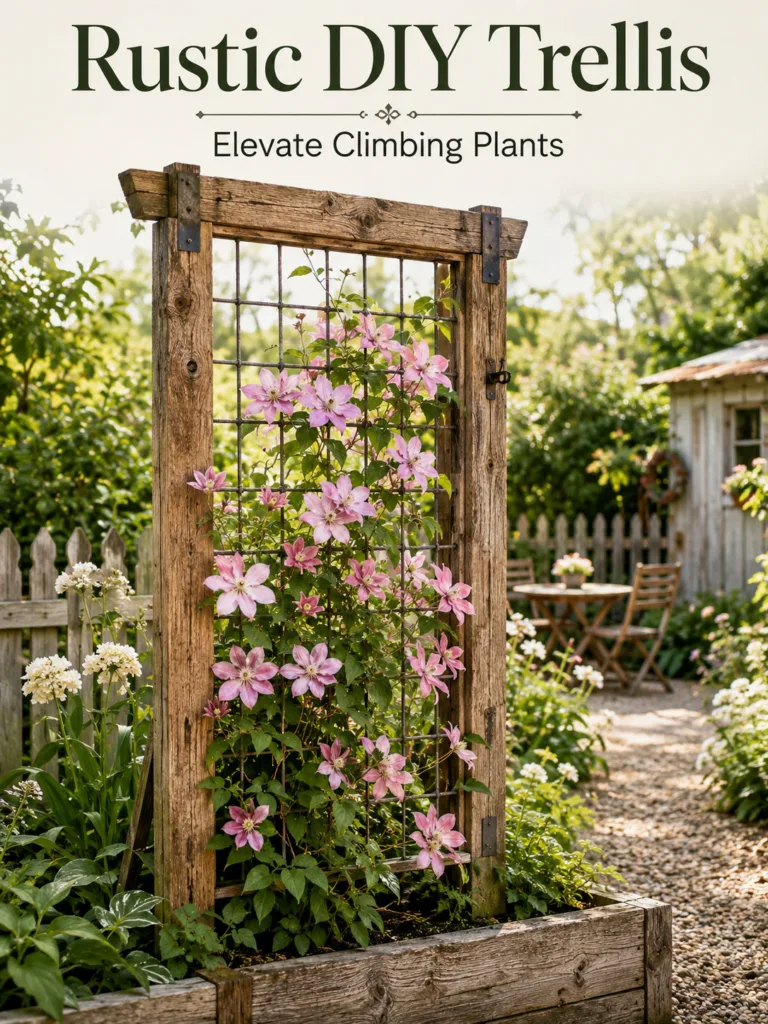
The Art of Vertical Gardening: Why Trellises Matter
Vertical gardening is more than just a trend; it’s a smart strategy for maximizing space and enhancing garden aesthetics. Trellises, arbors, and pergolas lift plants off the ground, offering numerous benefits:
- Space Efficiency: Perfect for small gardens or urban balconies, vertical structures allow you to grow more in less horizontal space.
- Improved Plant Health: Elevating plants enhances airflow around foliage, reducing humidity and the risk of fungal diseases. It also keeps fruits and vegetables off damp soil, preventing rot.
- Easier Harvesting: No more bending over! Fruits and flowers are often more accessible when grown vertically.
- Aesthetic Appeal: A well-designed trellis covered in lush growth creates living walls, privacy screens, and focal points that add architectural interest and charm to your landscape.
- Pest Management: Keeping plants off the ground can sometimes deter ground-dwelling pests.
Crafting Your Own Rustic Trellis
Building a trellis doesn’t require advanced carpentry skills. The beauty of a rustic design lies in its organic, less-than-perfect nature. Here’s a guide to getting started with natural materials:
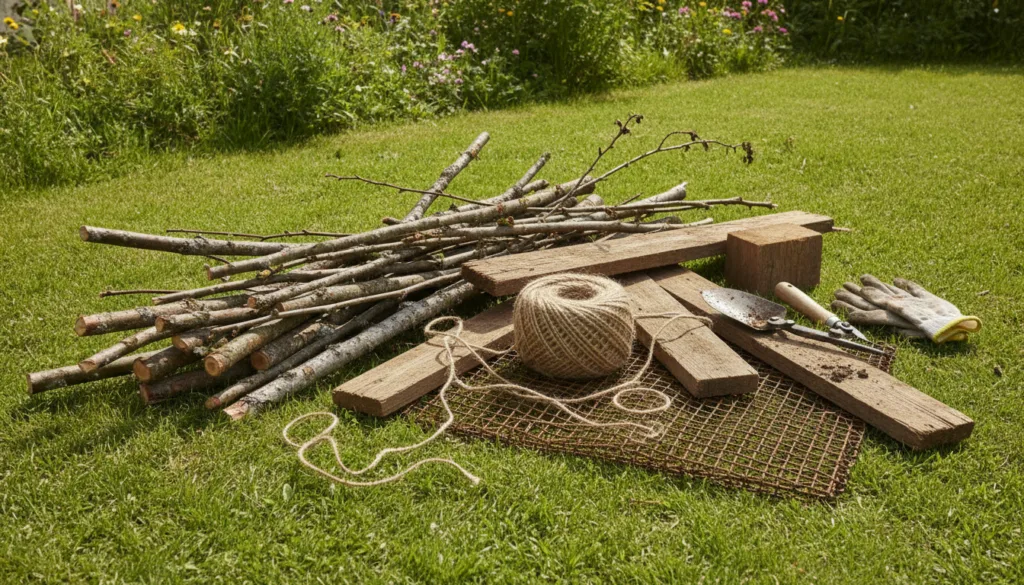
Gathering Your Materials
- Sturdy Uprights: Look for branches, small logs, or thick bamboo poles (1-3 inches in diameter) that are at least 6-8 feet long. Weathered scrap wood fence posts can also work beautifully.
- Horizontal Supports/Grid Material: Thinner branches, willow whips, sturdy twine, or even an old metal grid (like a piece of cattle panel or concrete reinforcing mesh) can be used to create the climbing surface.
- Fasteners: Weatherproof screws, nails, strong jute twine, or galvanized wire.
- Tools: Saw, drill, hammer, wire cutters (if using metal mesh), measuring tape, level.
Basic Construction Steps
- Design Your Frame: Decide on the overall shape and size. A simple A-frame, a flat rectangular panel, or a teepee structure are common and effective. For a flat panel, you’ll need two strong vertical posts and several horizontal cross-pieces.
- Assemble the Main Frame: Securely attach your vertical posts. If using wooden posts, you can sink them directly into the ground (at least 18-24 inches deep for stability) or attach them to a sturdy base like a raised garden bed. Use screws or nails to connect horizontal branches or wood pieces, forming a sturdy outer frame.
- Add Climbing Support: This is where your plant will grab on. For a rustic look, weave thinner branches horizontally or diagonally between your main posts. Alternatively, attach a metal grid to the wooden frame using U-nails or wire. Ensure the openings are suitable for your plant’s tendrils or stems to twine through.
- Ensure Stability: A trellis needs to withstand wind and the weight of a mature plant. If it’s a standalone structure, consider bracing it. For trellises attached to a wall or fence, secure them firmly, leaving a few inches of space for airflow behind the plant.
- Placement: Choose a spot that provides adequate sunlight for your chosen plant and is accessible for watering and pruning.
Spotlight Plant: Clematis, The Queen of Vines
The stunning clematis (Clematis spp.) is a classic choice for trellises, gracing gardens with an incredible diversity of flower shapes, sizes, and colors. Often called the ‘Queen of Vines,’ clematis are known for their spectacular blooms.
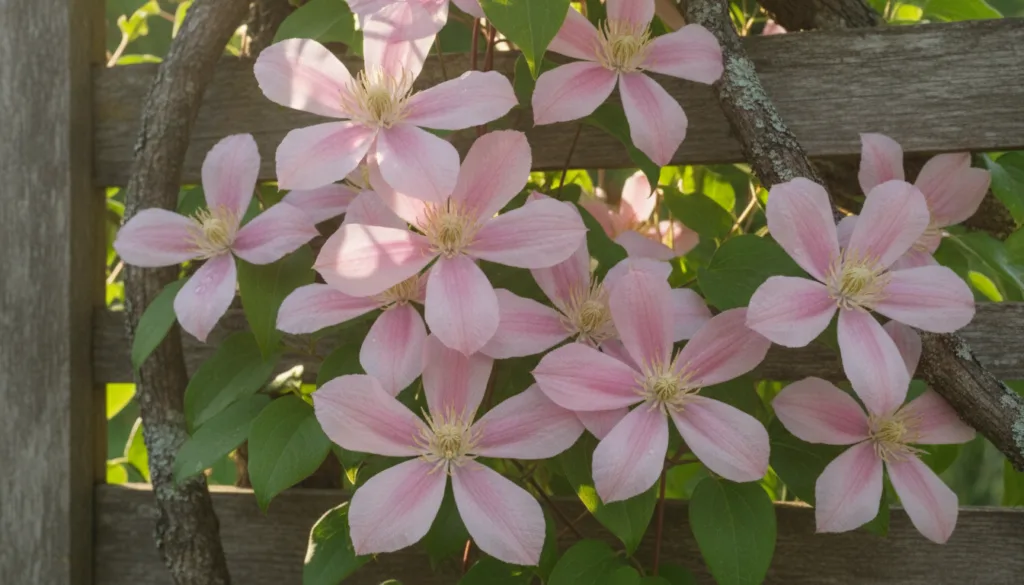
Clematis Growing Guide
With thousands of cultivars, clematis offer blooms from early spring through fall. Understanding their needs will help yours thrive.
- Hardiness: USDA Zones 4-9 for most common varieties, though some can tolerate colder or warmer zones. Always check the specific cultivar.
- Plant Type: Deciduous woody vine (most common).
- Exposure: Often thrive with their ‘heads in the sun and feet in the shade.’ This means at least 6 hours of direct sun for the foliage and blooms, but cool, moist soil for the roots. Mulching heavily around the base helps keep roots cool.
- Soil: Rich, well-drained, consistently moist, and slightly alkaline soil (pH 6.0-7.0). Amend heavy clay or sandy soils with compost.
- Watering: Regular, deep watering is crucial, especially during dry spells and in their first few years of establishment.
- Height & Spread: Highly variable, from compact 5-foot varieties to vigorous vines reaching 30 feet or more.
- Growth Habit: Twining vine, using leaf petioles to wrap around slender supports. Your trellis should have pieces no thicker than a pencil.
- Value: Ornamental, providing spectacular flowers and vertical interest.
- Bloom Period: Depends on the pruning group, ranging from early spring to late fall.
- Propagation: Softwood cuttings in late spring/early summer are most common.
- Spacing & Support: Plant about 2-3 feet from other plants or structures, allowing room for growth. Ensure your trellis is sturdy and tall enough for the mature size of your chosen variety.
- Pruning: This is key! Clematis are divided into three pruning groups based on when they bloom:
- Group 1 (Early Spring Bloomers): Bloom on old wood. Prune lightly after flowering to remove dead or weak growth.
- Group 2 (Repeat Bloomers): Bloom on old and new wood. Prune lightly in late winter/early spring, removing dead tips. After the first flush of flowers, lightly prune again.
- Group 3 (Late Season Bloomers): Bloom only on new wood. Cut back hard to 12-18 inches from the ground in late winter/early spring.
- Practical Care Tip: Keep the root zone consistently moist and cool. A layer of mulch, or planting a small, shade-casting perennial at its base, can achieve this.
- Warning: Clematis wilt, a fungal disease, can be a problem, especially for large-flowered varieties. Good air circulation and proper planting depth (burying the crown a few inches below soil level) can help prevent it.
Other Climbing Beauties for Your Trellis
While clematis is a star, many other plants can benefit from your handmade trellis:
- Climbing Roses: Provide classic elegance and often repeat blooms. Choose varieties suited for trellising.
- Morning Glories (Ipomoea purpurea): Fast-growing annuals with beautiful trumpet-shaped flowers.
- Honeysuckle (Lonicera sempervirens): Fragrant and attractive to hummingbirds.
- Passionflower (Passiflora spp.): Exotic flowers and often edible fruits in warmer zones.
- Edible Vines: Pole beans, cucumbers, indeterminate tomatoes, small melons, and gourds all thrive on vertical support, saving space and improving harvest quality.
Common Trellis & Plant Care Mistakes to Avoid
Even experienced gardeners can stumble. Here’s how to sidestep common pitfalls:
- Flimsy Support: A common mistake is underestimating the weight of a mature climbing plant. A trellis must be robust enough to support its full size, especially after a heavy rain or strong winds.
- Incorrect Spacing: Planting too close to the trellis or other plants can restrict airflow and lead to disease. Give your vines room to grow and breathe.
- Ignoring Pruning Needs: For many climbing plants, especially clematis and roses, correct pruning is vital for abundant blooms and healthy growth. Learn your plant’s specific pruning group.
- Inconsistent Watering: Climbing plants, especially those in full sun, often have extensive root systems and can be very thirsty. Regular, deep watering is essential.
- Not Training Young Vines: Many climbers, particularly clematis, need gentle guidance in their early stages to find and wrap around the trellis supports.
- Poor Soil Preparation: Just like any plant, climbers need nutrient-rich, well-draining soil to establish strong roots and support vigorous top growth.
Regional & Seasonal Trellis Care
Gardening advice always needs a local touch. Here’s how to tailor your trellis care:
- USDA Zones 3-5 (Cold Climates): Choose exceptionally hardy clematis varieties or treat less hardy ones as annuals. Ensure your trellis is well-anchored to withstand winter winds and snow loads.
- USDA Zones 6-8 (Temperate Climates): Most climbing plants thrive here. Focus on consistent watering during summer dry spells and appropriate pruning for ongoing blooms.
- USDA Zones 9-11 (Warm Climates): Pay extra attention to keeping clematis roots cool and moist. Provide some afternoon shade if summer sun is intense. Ensure your trellis materials can withstand intense sun and heat without degrading quickly.
Regardless of your region, remember to consult your local extension office for specific planting dates and cultivar recommendations. Your spring and fall frost dates will dictate when it’s safe to plant new vines and when to prepare established ones for winter dormancy.
Bring Your Garden to New Heights
Creating a beautiful, functional trellis for your garden is a deeply satisfying project that enhances both the utility and beauty of your outdoor space. Whether you choose the ethereal blooms of clematis or the bounty of an edible vine, providing strong, artistic support transforms your garden into a dynamic, living work of art.
Don’t just grow outward; grow upward! Gather your materials, plan your design, and enjoy the process of building a structure that will bring vertical charm and abundant life to your garden for years to come. Your climbing plants (and your eyes) will thank you.