Unlock Comfrey’s Secret: The Unexpected Soothing Power of Allantoin You Wish You Knew Sooner
Many of us experience everyday skin woes, from minor irritations and dryness to the occasional rough patch that just won’t calm down. In our quest for gentle yet effective relief, we often overlook nature’s profound offerings, seeking solutions in complex formulations. But what if a forgotten botanical, cherished for centuries, held a key ingredient that could help bring comfort to troubled skin?
This is where the ancient wisdom surrounding comfrey, and its remarkable compound, Allantoin, re-emerges. Its quiet power, once a staple in traditional wellness practices, has been valued across generations for its nurturing properties. Most people never realize this works because the profound benefits of traditional plants often get overshadowed by modern alternatives, leading their simple, natural efficacy to be forgotten.
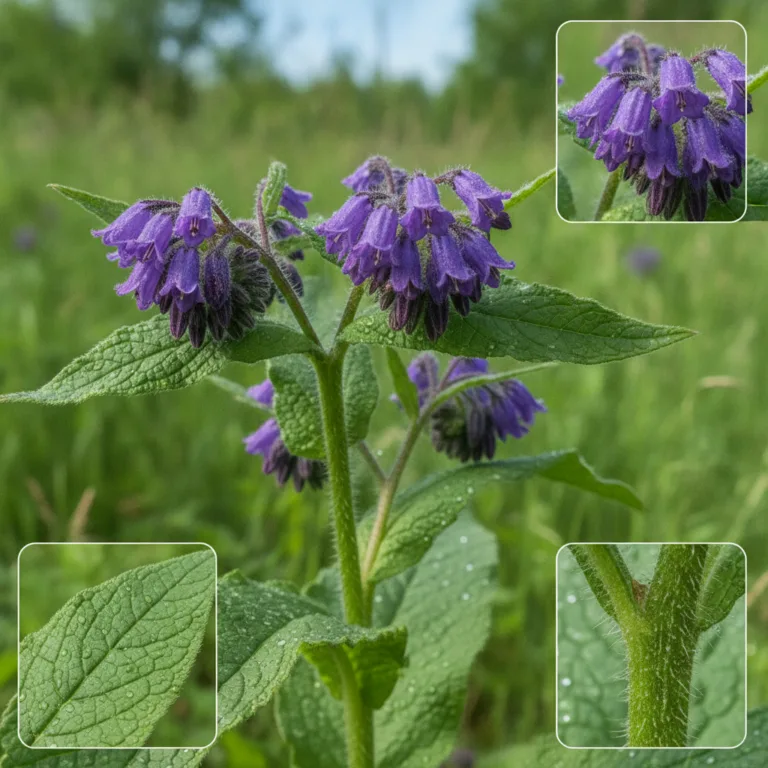
Ingredients
- Fresh or Dried Comfrey Leaves (Symphytum officinale) – approximately 1/2 cup for fresh, 1/4 cup for dried
- Warm Water (for poultice) or Carrier Oil (like olive or almond oil for infused oil)
For external applications focusing on skin soothing, the primary ‘ingredient’ is the comfrey plant itself, particularly its leaves and roots, where Allantoin is abundant. The preparation method will determine additional simple components.
How to Prepare
For a Simple Comfrey Poultice (External Use Only)
- If using fresh leaves, gently wash them to remove any dirt.
- Chop the fresh leaves finely or crush dried leaves to a coarse powder.
- Mix the chopped leaves with a small amount of warm water, just enough to form a moist paste. The consistency should be spreadable but not watery.
- Brewing/infusing time: The preparation is immediate; there’s no long infusion needed for the poultice itself.
For a Comfrey Infused Oil (External Use Only)
- Fill a clean, dry jar loosely with dried comfrey leaves (and/or roots, if available).
- Cover the plant material completely with your chosen carrier oil, ensuring no air bubbles are trapped.
- Seal the jar tightly and place it in a cool, dark place for 4-6 weeks, shaking gently every few days. Alternatively, a gentle heat infusion (using a double boiler for 2-4 hours) can expedite the process.
- After infusion, strain the oil through cheesecloth, squeezing out all the oil from the plant material. Store the infused oil in a dark glass bottle.
How to Use + Best Time to Take
Comfrey Poultice
Apply the prepared poultice directly to the desired skin area, ensuring it’s intact and unbroken. Cover with a clean cloth or bandage. Leave on for 30 minutes to an hour, then gently rinse off with warm water. This can be done once or twice a day, as needed, for temporary comfort.
Comfrey Infused Oil
Gently massage a small amount of the infused oil onto the clean, unbroken skin area. It is particularly beneficial after bathing when skin is still slightly damp, or before bed to allow for overnight absorption. Use as needed to support skin suppleness and hydration.
Why It Works (Science Insight)
The remarkable efficacy of comfrey, particularly in traditional external applications, is largely attributed to a compound called Allantoin. Allantoin is a natural organic compound known for its ability to promote cell proliferation, meaning it helps the body produce new, healthy cells. This characteristic makes it a valuable component for skin care, as it can contribute to the renewal of the outer layers of the skin.
Beyond cell support, Allantoin is also recognized for its emollient properties, helping to soften and smooth the skin, and its ability to soothe minor irritations. It acts as a protective barrier, reducing moisture loss and offering a comforting sensation. Comfrey also contains mucilage, which contributes to its soothing texture, and tannins, which have mild astringent properties that can help tone the skin. Together, these compounds found in comfrey work synergistically to support the skin’s natural regeneration and maintain its healthy appearance.
Who Benefits Most
- Individuals experiencing minor skin dryness or rough patches.
- Those seeking natural methods for maintaining skin health and elasticity.
- People interested in traditional herbal approaches for general skin comfort and care.
- Anyone looking for supportive applications for minor skin irritations, always ensuring skin is unbroken.
Quick Notes / Safety / Simple Adjustments
Important Caution: Comfrey contains pyrrolizidine alkaloids (PAs), which can be harmful if ingested or absorbed through broken skin. For this reason, comfrey preparations, including those containing Allantoin from comfrey, are strictly for EXTERNAL USE ONLY on unbroken skin. Never ingest comfrey or apply it to open wounds, cuts, or abraded skin. Always perform a patch test on a small, discreet area of skin before widespread application to check for any sensitivities.
Always source comfrey from reputable growers or suppliers to ensure quality. If you have underlying health conditions, are pregnant or nursing, or are taking medication, consult with a qualified health professional before using any herbal remedies. Listen to your body and discontinue use if any adverse reactions occur.