Visualizing 2800 Calories: A Guide to Portion Sizes and Nutrient Density
Have you ever wondered what 2800 calories actually looks like on a plate? The answer might surprise you! Depending on your food choices, 2800 calories can appear drastically different, affecting everything from your satiety to your overall nutrient intake. Understanding this visual difference is crucial for anyone looking to make informed decisions about their diet and achieve a balanced, healthy lifestyle.
At Wellness Daily, we believe in empowering you with knowledge. Today, we’re diving into the fascinating world of calorie visualization, exploring how food choices impact not just calorie count but also nutrient density and satisfaction.
The Calorie Conundrum: More Than Just a Number
Calories are a unit of energy that our bodies need to function. While often viewed as the enemy of weight loss, they are essential for survival, fueling everything from breathing to intense exercise. However, not all calories are created equal. The source of your calories profoundly impacts your health, energy levels, and satiety.
What are ‘Empty Calories’?
Empty calories typically refer to foods that provide a lot of energy (calories) but offer very little in terms of vitamins, minerals, fiber, or other beneficial nutrients. Think sugary drinks, many fast foods, and processed snacks. These foods can quickly add up in calories without making you feel full or providing your body with the building blocks it needs.
Whole Foods vs. Processed Foods: A Visual Showdown
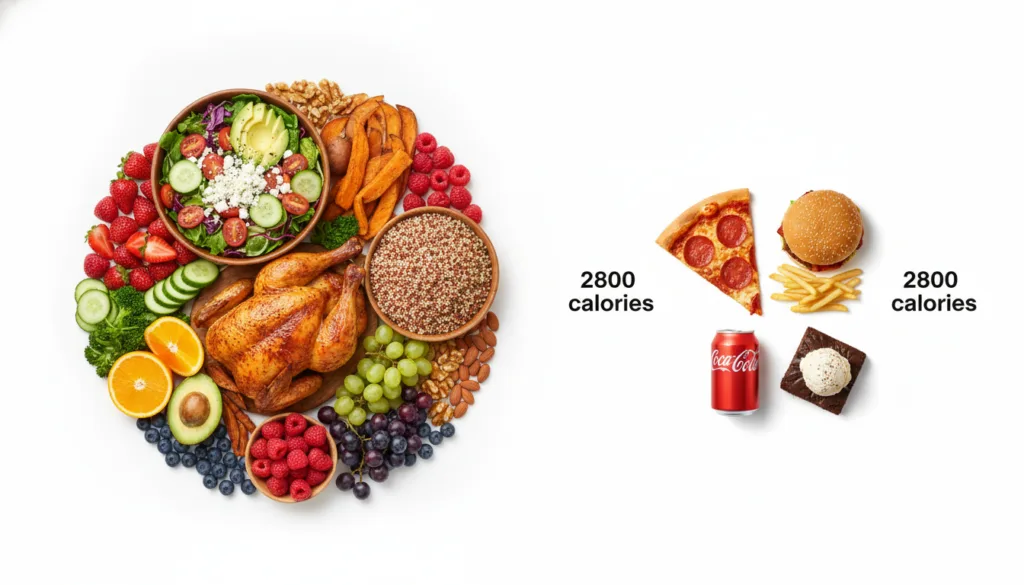
Let’s imagine two scenarios to reach 2800 calories:
- Scenario 1: Nutrient-Dense Whole Foods
To consume 2800 calories from whole, unprocessed foods, you’d likely eat a substantial amount. This could include a large breakfast of oatmeal with berries and nuts, a generous lunch of grilled chicken salad with whole-grain bread, a hearty snack of fruit and yogurt, and a dinner featuring lean fish with a large serving of vegetables and brown rice. Visually, this would fill your plate and likely provide a feeling of fullness and sustained energy throughout the day. - Scenario 2: Calorie-Dense Processed Foods
Reaching 2800 calories with processed foods could look very different. A few slices of pizza, a large soda, a bag of chips, and a pastry might quickly total 2800 calories. Notice how much less food volume this represents compared to the whole foods scenario. While convenient, this approach often leaves you feeling less satisfied, leading to cravings and energy crashes, despite hitting the same calorie target.
Understanding Nutrient Density
The key takeaway from this comparison is the concept of nutrient density. Nutrient-dense foods are those that provide a high amount of vitamins, minerals, and other beneficial compounds relative to their calorie content. Examples include:
- Fruits and vegetables
- Lean proteins (chicken, fish, beans, lentils)
- Whole grains (oats, quinoa, brown rice)
- Nuts and seeds
These foods not only nourish your body but also contribute to satiety due to their fiber and water content, helping you feel fuller for longer. Conversely, calorie-dense foods, which are often low in nutrients, tend to be highly processed and contain added sugars, unhealthy fats, and refined grains.
The Role of Portion Sizes
Even with healthy foods, portion sizes matter when you’re aiming for a specific calorie target. It’s easy to accidentally overconsume even healthy fats like avocado or nuts if you’re not mindful of portions. Here are some practical tips:
- Use smaller plates: This can trick your brain into thinking you have a larger portion.
- Read nutrition labels: Pay attention to serving sizes and how many servings you’re actually consuming.
- Practice mindful eating: Slow down, savor your food, and pay attention to your body’s hunger and fullness cues.
- Balance your plate: Aim for half your plate to be non-starchy vegetables, a quarter lean protein, and a quarter whole grains.
Making Smart Choices for Your Health Goals
Understanding how 2800 calories can visually differ is a powerful tool for making healthier dietary choices. It highlights that focusing solely on calorie numbers without considering the source of those calories can be misleading. Prioritizing nutrient-dense foods not only helps you meet your energy needs but also supports overall health and well-being.
Practical Tips for Everyday Eating:
- Prioritize Whole Foods: Build your meals around fruits, vegetables, lean proteins, and whole grains.
- Limit Processed Items: Reduce your intake of sugary drinks, fast food, and highly processed snacks.
- Cook at Home: Preparing your own meals gives you control over ingredients and portion sizes.
- Stay Hydrated: Drinking water can sometimes be mistaken for hunger, and it’s essential for overall health.
- Seek Balance: It’s okay to enjoy treats in moderation; the goal is overall dietary balance.
Conclusion
Visualizing 2800 calories is a vivid reminder that the quality of your calories is just as important as the quantity. By focusing on nutrient-dense foods and mindful portion control, you can fuel your body effectively, feel satisfied, and support your long-term health goals. Embrace the power of informed food choices and transform your understanding of what truly nourishes you.
Disclaimer: The information provided in this article is for educational purposes only and is not intended as a substitute for professional medical advice, diagnosis, or treatment. Always seek the advice of your physician or other qualified health provider with any questions you may have regarding a medical condition.