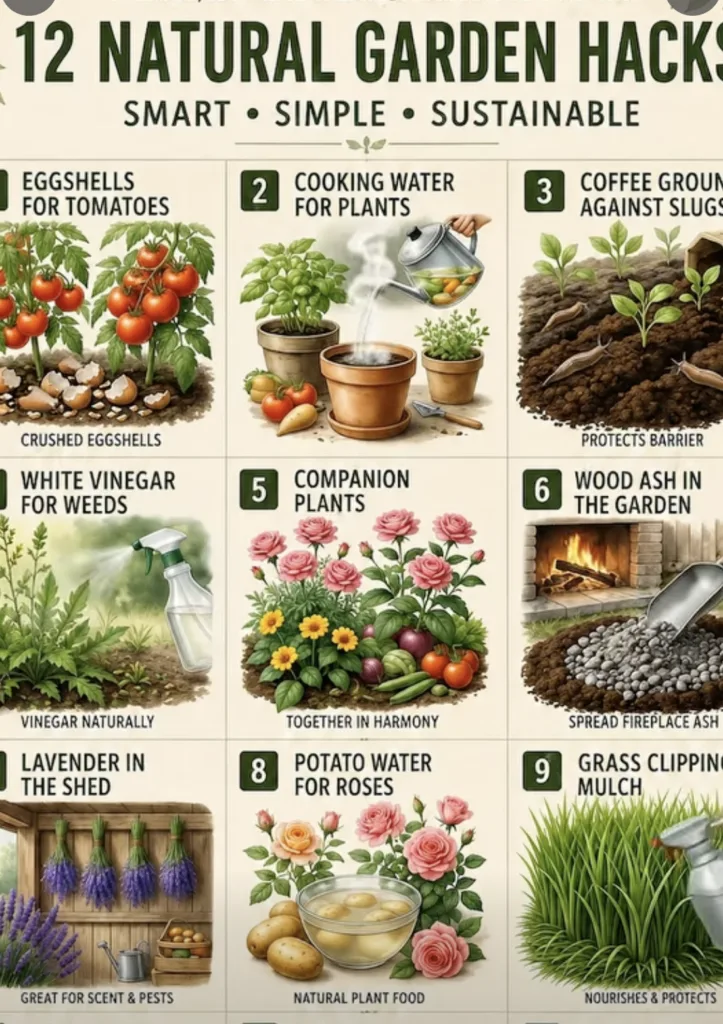
Gardening doesn’t always have to mean buying more products. Some of the most useful garden materials may already be in your kitchen, fireplace, or compost pile.
From crushed eggshells and grass clippings to companion planting and homemade sprays, these simple ideas can help you reuse everyday materials while creating a more sustainable garden.
Here are 12 natural garden hacks worth knowing.
1. Add Crushed Eggshells to Your Garden
Eggshells contain calcium carbonate and can be a useful addition to compost or garden soil over time.
Wash and dry the shells, crush them into small pieces, and mix them into compost or soil.
Keep in mind that eggshells break down slowly, so they are better viewed as a long-term soil amendment rather than an instant fertilizer.
2. Reuse Unsalted Cooking Water
Water left over from cooking vegetables can sometimes be reused in the garden.
Allow it to cool completely before pouring it around your plants.
Always make sure the water contains no salt, oil, or seasoning, as these ingredients can damage plants or soil.
3. Use Coffee Grounds in Compost
Used coffee grounds are rich in organic matter and can be a great addition to your compost pile.
Mix them with dry materials such as leaves, cardboard, or shredded paper.
Coffee grounds are also sometimes suggested as a slug deterrent, but results can vary. Composting them is generally a more reliable way to put them to work in the garden.
4. Use White Vinegar Carefully Around Weeds
Household vinegar can damage the leaves of unwanted plants, which is why some gardeners use it on weeds growing in cracks or pathways.
However, vinegar can also harm desirable plants.
Avoid spraying it directly in garden beds unless you can keep it away from the plants you want to protect.
5. Try Companion Planting
Companion planting means growing different plants near each other in ways that may improve garden diversity, attract beneficial insects, or make better use of space.
Flowers such as marigolds and herbs can be planted near vegetables to add color and attract pollinators.
A diverse garden is often healthier and more resilient than one filled with a single type of plant.
6. Use Wood Ash Only When Appropriate
Clean wood ash contains minerals such as potassium and calcium and can raise soil pH.
That means it should not be added everywhere.
Avoid using wood ash around acid-loving plants, and never use ash from painted, treated, or manufactured wood.
If possible, test your soil before adding significant amounts.
7. Keep Lavender Around Garden Areas
Lavender is loved for its fragrance and beautiful flowers.
Bundles of dried lavender can also be hung in garden sheds, patios, or storage areas for their pleasant scent.
In the garden, lavender flowers can attract pollinators such as bees.
8. Reuse Plain Potato Water
Water used to boil potatoes can be reused after it has completely cooled, as long as no salt, butter, or seasoning was added.
Use it occasionally as part of your normal watering routine rather than as a replacement for proper plant nutrition.
9. Turn Grass Clippings Into Mulch
Fresh grass clippings can make an inexpensive mulch for vegetable beds and garden paths.
Apply a thin layer and allow clippings to dry slightly so they do not form a thick, slimy mat.
Grass mulch can help reduce moisture loss and suppress some weeds.
Avoid using grass that has recently been treated with herbicides.
10. Make a Garlic and Chili Garden Spray
Garlic and chili are commonly used in homemade garden sprays.
They may help discourage certain pests, but homemade sprays should always be tested carefully because strong mixtures can damage leaves.
Test the spray on a small section of the plant first and avoid applying it during the hottest part of the day.
11. Compost Banana Peels
Banana peels contain organic material and nutrients, including potassium.
Rather than placing whole peels directly around roses, chop them into small pieces and add them to your compost.
Once fully decomposed, the compost can be spread around roses and other garden plants.
12. Work With Nature
Perhaps the best gardening hack is also the simplest: create conditions where plants can thrive naturally.
Focus on:
- Healthy soil
- Compost
- Proper watering
- Good drainage
- Suitable sunlight
- Mulching
- Plant diversity
- Beneficial insects
Healthy plants grown in the right conditions generally need fewer interventions.
Final Thoughts
Natural gardening is not about trying every homemade trick you see online. It is about making thoughtful use of available materials while understanding what your plants and soil actually need.
Start small. Compost your kitchen scraps, reuse safe cooking water, mulch your soil, grow a variety of plants, and observe how your garden responds.
Over time, these simple habits can help you create a greener, more sustainable garden with less waste.
🌿 Save these 12 garden hacks for your next gardening day and share your favorite natural gardening tip in the comments!