In the quest for a healthier lifestyle, incorporating nutrient-dense ingredients is key. But what if a small amount of an ingredient could transform dramatically, offering diverse benefits and culinary applications? Today, we’re diving into the fascinating world of superfoods like chia seeds, flaxseeds, oats, and basil seeds. These tiny powerhouses, when introduced to liquid, undergo unique transformations, offering distinct textures, uses, and nutritional advantages. Understanding their individual behaviors can unlock a world of delicious and healthy possibilities for your daily meals, proving that the same amount can indeed offer different behaviors and more choices for a healthier you.
From thickening puddings to creating creamy breakfasts and refreshing drinks, these versatile ingredients are more than just additions—they’re culinary game-changers. Let’s explore how each one works its magic and how you can best incorporate them into your diet.
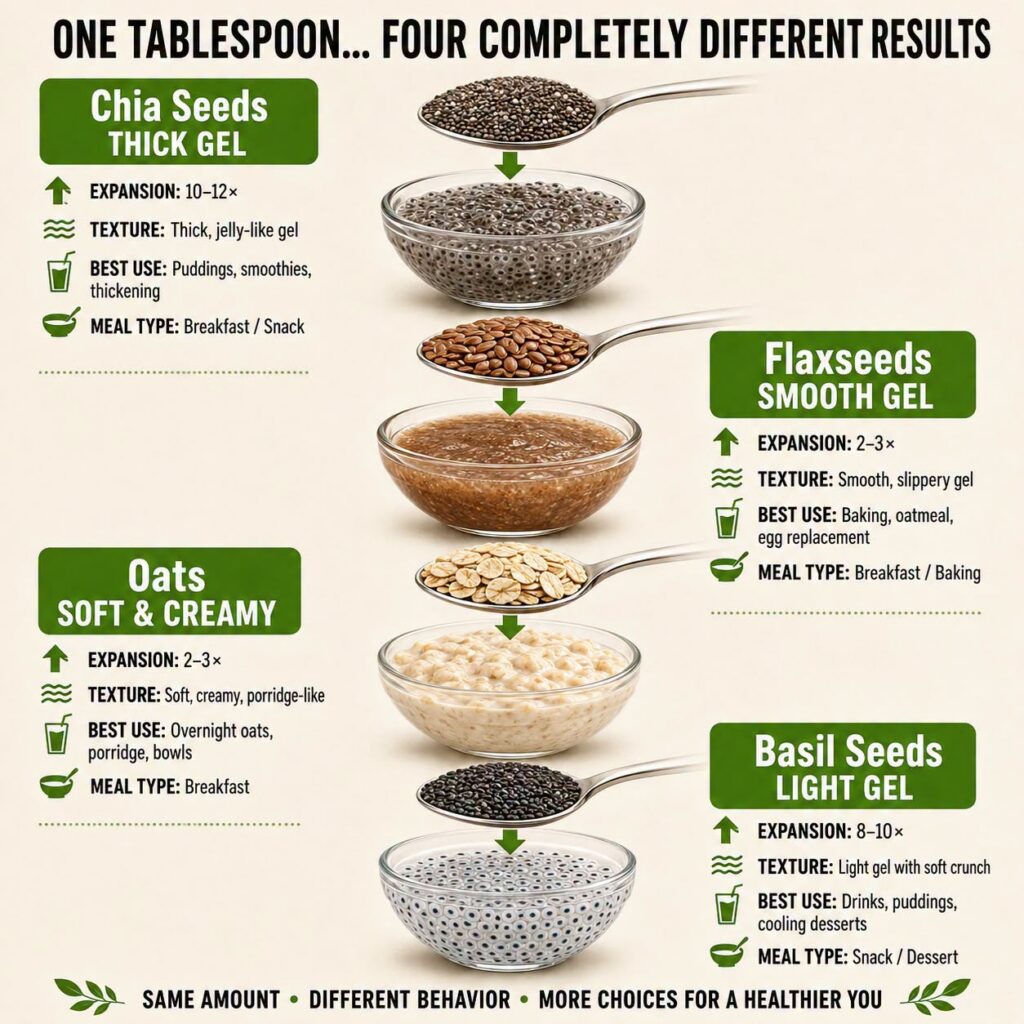 Discover the unique transformations of these powerful pantry staples.
Understanding the Magic: What Happens When You Add Water?
Many plant-based foods, especially seeds, possess an incredible ability to absorb liquid and change their structure. This phenomenon is often due to soluble fiber, which forms a gel-like substance when hydrated. This gelling property not only aids in digestion but also offers practical benefits in cooking, allowing these ingredients to act as natural thickeners, binders, or bases for creamy dishes. While they all interact with water, their individual compositions dictate the specific texture and consistency they achieve.
Chia Seeds: The Thickening Powerhouse
Chia seeds are renowned for their impressive ability to absorb liquid, swelling up to 10-12 times their weight. When hydrated, a tablespoon of chia seeds forms a thick, jelly-like gel. This high expansion and unique texture make them incredibly versatile in the kitchen.
- Texture: Thick, jelly-like gel.
- Expansion: Very high, creating a substantial volume from a small amount.
- Best Uses: Ideal for creating chia puddings, thickening smoothies, or adding body to sauces. They can also be used as a binding agent in recipes.
- Meal Types: Perfect for breakfast bowls, healthy desserts, or nutrient-rich snacks.
Flaxseeds: Your Baking & Binding Ally
Flaxseeds, particularly when ground, also form a gel when mixed with liquid, though their texture is distinct from chia seeds. A tablespoon of flaxseeds, once hydrated, creates a smoother, more slippery gel, making it an excellent alternative in specific culinary applications.
- Texture: Smoother, slippery gel.
- Expansion: Moderate, forming a cohesive mixture.
- Best Uses: Often used as an egg replacer in vegan baking (known as a ‘flax egg’), a binder in veggie burgers, or an emulsifier in dressings.
- Meal Types: A staple in baked goods like muffins and breads, and can be added to smoothies for extra fiber and omega-3s.
Oats: The Creamy Comfort Staple
Oats, a beloved breakfast classic, transform into a wonderfully soft and creamy consistency when cooked or soaked. While they don’t form a distinct gel like chia or flax, their ability to absorb liquid creates a comforting, hearty texture.
- Texture: Soft and creamy.
- Expansion: Significant, creating a satisfying volume for meals.
- Best Uses: The foundation for overnight oats, warm porridges, and oatmeal bowls. They also work well as a base for energy bars.
- Meal Types: Primarily a versatile breakfast ingredient, but also suitable for healthy snacks and even savory dishes.
Basil Seeds: The Refreshing Crunch
Basil seeds (or Sabja seeds) are less common in Western cuisine but are a popular ingredient in many Asian and Middle Eastern refreshing drinks and desserts. When soaked, a tablespoon of basil seeds quickly forms a light gel with a unique characteristic: a distinct white halo around each seed.
- Texture: Light gel with a soft crunch.
- Expansion: Moderate, creating individual gel-coated seeds.
- Best Uses: Primarily used in cooling beverages like falooda, lemonades, or infused water, and in light, traditional desserts.
- Meal Types: Ideal for refreshing drinks and unique dessert experiences.
Same Amount, Different Behavior: Choosing Your Superfood
The beauty of these four ingredients lies in their distinct personalities. While all contribute to a healthier diet, your choice depends on the desired texture, culinary application, and nutritional focus:
- For Thickening & Puddings: Chia seeds are your top choice for their superior gelling ability.
- For Baking & Binding: Ground flaxseeds excel as a plant-based egg substitute and binder.
- For Creamy & Hearty Breakfasts: Oats provide that classic comforting texture.
- For Refreshing Drinks & Light Desserts: Basil seeds offer a unique texture and a cooling sensation.
Tips for Incorporating These Superfoods
- Start Small: If new to these, begin with a teaspoon or tablespoon and gradually increase your intake.
- Hydrate Properly: Always ensure seeds are fully hydrated before consuming to aid digestion and achieve the desired texture.
- Experiment: Don’t be afraid to try them in different recipes. Add chia to your yogurt, flax to your smoothie, oats to your baking, or basil seeds to your fruit juice.
- Meal Prep: Prepare overnight oats or chia puddings in advance for quick and easy healthy breakfasts.
Frequently Asked Questions
Can I eat chia seeds and flaxseeds raw?
Yes, you can eat both chia and flaxseeds raw. However, for flaxseeds, grinding them before consumption helps your body absorb their nutrients, particularly the beneficial omega-3 fatty acids. Whole flaxseeds may pass through the digestive system largely undigested.
How long do soaked seeds last?
Once hydrated, chia and basil seeds can typically be stored in an airtight container in the refrigerator for 3-5 days. Overnight oats also last similarly. Always check for any off-smell or discoloration before consuming.
Are basil seeds the same as chia seeds?
While both form a gel, basil seeds and chia seeds are different. Basil seeds swell much faster than chia seeds and have a distinct white halo around them. Their texture and culinary uses also differ, with basil seeds being more popular in cooling drinks and specific traditional desserts.
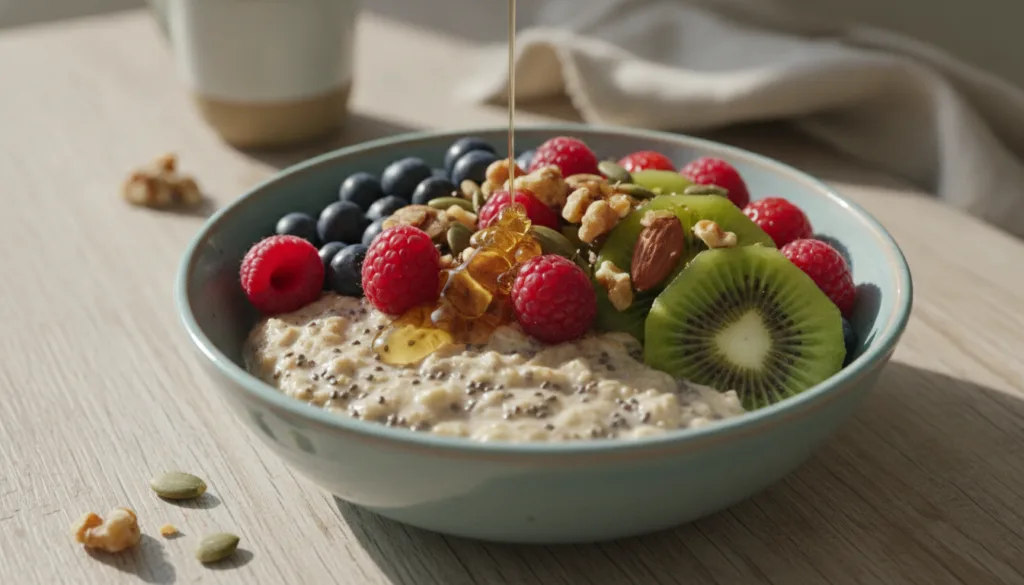 Create delicious and nutritious meals with these versatile ingredients.