Imagine a spring garden bursting with vibrant color, a fragrant oasis after the long winter months. While spring feels a lifetime away during the heat of August, this often-overlooked month is actually a secret weapon for gardeners eager to get a head start. By sowing certain flower seeds now, you’re not just planting; you’re investing in a breathtaking display of blooms that will emerge as soon as the first whispers of spring arrive. These cool-season beauties need the autumn to establish their roots and the winter chill to prepare for an early, spectacular show. Get ready to transform your garden with these ten remarkable flowers, each offering its own unique charm and guaranteed to make your spring unforgettable.
The Magic of August Sowing for Early Spring Color
Many popular spring annuals and biennials thrive when their seeds are sown in late summer or early fall. This timing allows them to germinate in warm soil, establish a strong root system before winter’s chill, and then benefit from a period of cold stratification. Cold stratification is a natural process where seeds are exposed to cool, moist conditions, signaling to them that winter has passed and it’s time to sprout vigorously when spring arrives. This head start means bigger, stronger plants and earlier, more abundant blooms compared to spring-sown seeds.
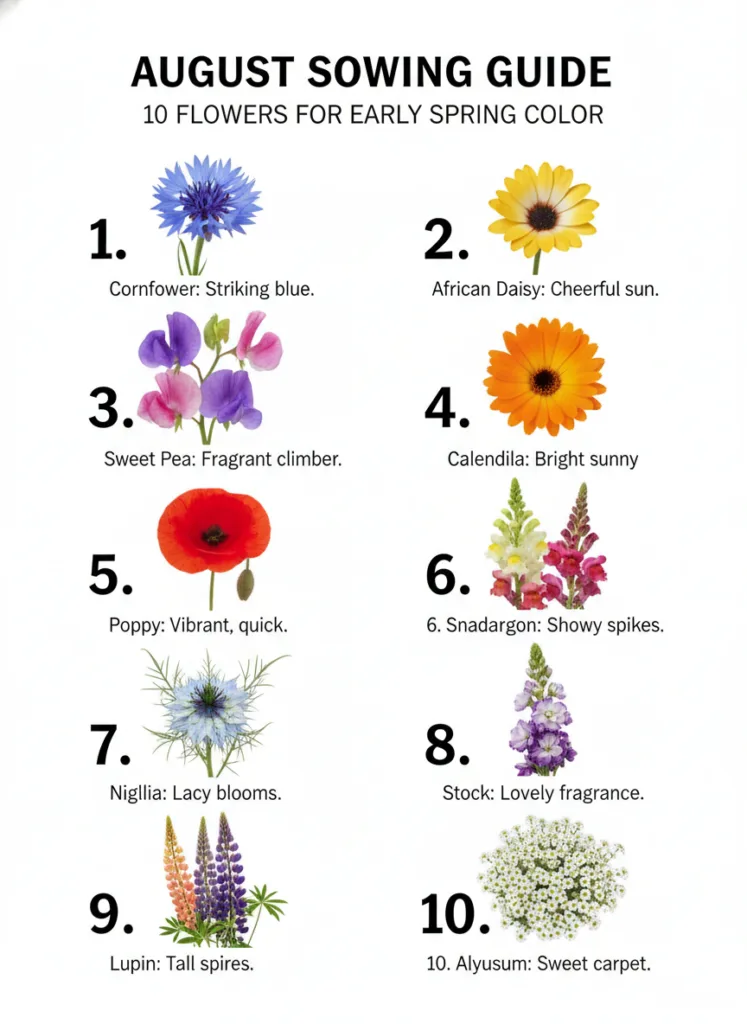
Your August Sowing Guide: 10 Flowers for a Glorious Spring
Here are ten fantastic flowers to sow in August, each bringing its own special touch to your early spring garden:
1. Forget-Me-Not (Myosotis sylvatica )
These charming little true-blue flowers create a soft, ethereal carpet beneath taller spring bulbs. Forget-me-nots are cherished for their delicate appearance and their ability to naturalize beautifully in the garden.
- Hardiness: Zones 3–8 as a biennial or short-lived perennial, often self-seeds to appear annual.
- Plant type: Biennial/short-lived perennial
- Exposure: Partial shade to full sun
- Height: 6-12 inches
- Spread: 6-9 inches
Care Tip: As the name suggests, ‘self-seeds readily’, so place them where you don’t mind them spreading. If you want to control their spread, deadhead spent flowers before they set seed. They prefer consistently moist, well-draining soil.
2. English Daisy (Bellis perennis )
With their cheerful, button-like flowers in shades of white, pink, and red, English daisies are a classic choice for cottage gardens and containers. They add a sweet, innocent charm wherever they grow.
- Hardiness: Zones 4–8 as a perennial, often grown as a biennial or annual in hotter climates.
- Plant type: Perennial (often biennial)
- Exposure: Full sun to partial shade
- Height: 4-8 inches
- Spread: 6-12 inches
Care Tip: English daisies are indeed ‘great in pots’ or as a groundcover. Ensure good drainage and consistent moisture, especially during dry spells. Deadheading will encourage more blooms.
3. Sweet William (Dianthus barbatus )
Known for their dense clusters of vibrantly colored, often bi-colored flowers, Sweet Williams bring a delightful, spicy-clove scent to the spring garden. They are excellent in borders and bouquets.
- Hardiness: Zones 3–9 as a biennial or short-lived perennial.
- Plant type: Biennial/short-lived perennial
- Exposure: Full sun to partial shade
- Height: 12-24 inches
- Spread: 6-12 inches
Care Tip: To enjoy their ‘fragrant blooms’ for longer, provide well-draining, slightly alkaline soil. Deadhead regularly to encourage continuous flowering. Since they are biennials, they will grow foliage in their first year and bloom in their second.
4. Pansy (Viola x wittrockiana )
Pansies are a gardener’s favorite for their ‘bright and cheerful’ faces and wide array of colors and patterns. They tolerate cooler temperatures well, making them perfect for early spring containers and beds.
- Hardiness: Zones 4–8 as a short-lived perennial, widely grown as an annual.
- Plant type: Annual/short-lived perennial
- Exposure: Full sun to partial shade
- Height: 6-9 inches
- Spread: 6-12 inches
Care Tip: For the best display, plant in rich, well-draining soil. Pansies appreciate consistent moisture but dislike soggy roots. Pinch off spent blooms to encourage more flowers and keep plants tidy.
5. Calendula (Calendula officinalis )
Also known as Pot Marigold, Calendula boasts sunny orange and yellow blooms that brighten any garden space. They are incredibly versatile and have a long bloom season.
- Hardiness: Zones 2–11 as an annual, may self-seed.
- Plant type: Annual
- Exposure: Full sun to partial shade
- Height: 12-24 inches
- Spread: 12-18 inches
Care Tip: Known for their ‘edible petals’, Calendula flowers can add a splash of color to salads. Sow seeds directly into well-drained soil in a sunny spot. Lightly cover the seeds and keep moist until germination. Succession plant every few weeks for continuous blooms.
6. Viola (Viola cornuta and related species)
Smaller and often more cold-hardy than pansies, violas offer an abundance of ‘small and delicate’ flowers. They are excellent for edging, rock gardens, and filling in containers with their charming blooms.
- Hardiness: Zones 4–9 as a perennial, often grown as an annual.
- Plant type: Perennial (often grown as annual)
- Exposure: Full sun to partial shade
- Height: 4-8 inches
- Spread: 6-12 inches
Care Tip: Violas perform best in cool weather. August sowing allows them to establish before spring heat. Provide well-draining soil and regular watering. They are quite resilient and often self-seed.
7. Poppy (Papaver rhoeas or Papaver nudicaule )
Poppies, such as the common field poppy or Icelandic poppy, offer large, silken petals in a stunning range of colors. They bring a touch of wild elegance and grace to the garden with their delicate blooms.
- Hardiness: Varies by species. Common Poppy (
Papaver rhoeas ) is annual across all zones. Icelandic Poppy (Papaver nudicaule ) is perennial in zones 2-7. - Plant type: Annual (e.g., *P. rhoeas*) or short-lived perennial (e.g., *P. nudicaule*)
- Exposure: Full sun
- Height: 1-3 feet
- Spread: 6-12 inches
Care Tip: Poppies are indeed ‘easy to grow’ from seed when direct-sown. They prefer full sun and well-drained soil. Do not cover the tiny seeds too deeply; light is often needed for germination. Thin seedlings to appropriate spacing to prevent overcrowding.
8. Nigella (Nigella damascena , Love-in-a-Mist)
This ethereal flower features delicate, feathery foliage that surrounds intricate blue, white, or pink blooms. Nigella is as famous for its unique flowers as it is for its ‘intriguing seed pods’ that follow, which are excellent for dried arrangements.
- Hardiness: Zones 2–11 as an annual.
- Plant type: Annual
- Exposure: Full sun
- Height: 18-24 inches
- Spread: 6-12 inches
Care Tip: Sow seeds directly where you want them to grow, as Nigella dislikes transplanting. Lightly cover the seeds. It thrives in average, well-drained soil. Allow some seed pods to mature on the plant for a second wave of blooms or for drying.
9. Larkspur (Consolida ajacis )
Often mistaken for delphiniums, annual larkspur offers spires of densely packed flowers in shades of blue, pink, purple, and white. These ‘tall and stately’ blooms add vertical interest and are fantastic in cutting gardens.
- Hardiness: Zones 2–11 as an annual, often self-seeds.
- Plant type: Annual
- Exposure: Full sun
- Height: 2-4 feet
- Spread: 6-12 inches
Care Tip: Like many annuals, larkspur benefits from direct sowing in August. They prefer rich, well-draining soil and full sun. Provide support for taller varieties to prevent them from flopping over in wind or rain.
10. Cornflower (Centaurea cyanus , Bachelor’s Button)
The Cornflower, or Bachelor’s Button, is a ‘classic cottage flower’ with intense blue, pink, white, or purple blooms. Easy to grow and pollinator-friendly, they are perfect for informal gardens and cutting.
- Hardiness: Zones 2–11 as an annual, often self-seeds.
- Plant type: Annual
- Exposure: Full sun
- Height: 1-3 feet
- Spread: 6-12 inches
Care Tip: Sow seeds directly into well-drained soil. Lightly cover seeds. Once established, cornflowers are quite drought tolerant. Deadhead spent blooms to encourage more flowering, or let some go to seed for next year’s volunteers.
Practical Tips for August Sowing Success
To ensure your August-sown seeds thrive, consider these foundational gardening practices:
Soil Preparation is Key
Before sowing, prepare your garden beds by loosening the soil to a depth of 6-8 inches. Incorporate a layer of compost to improve drainage and provide essential nutrients. Good drainage is crucial, as young seedlings can suffer in waterlogged conditions, especially heading into winter.
Seed Depth and Spacing
Pay close attention to the specific seed packet instructions for planting depth. Generally, a good rule of thumb is to plant seeds at a depth two to three times their diameter. For very fine seeds, like poppies, simply scatter them on the soil surface and gently press them in, as they often need light to germinate. Proper spacing is important for air circulation and plant health, so thin seedlings to their recommended distance once they have a few true leaves.
Consistent Moisture
After sowing, gently water the area to settle the seeds. Keep the soil consistently moist, but not soggy, until germination occurs. A fine mist sprayer or a watering can with a rose attachment can prevent disturbing the seeds. Once seedlings are established, they may be more tolerant of slight drying, but consistent moisture through the fall will help them build strong root systems.
Protecting Young Plants Through Winter
In colder USDA zones (zones 3-5), consider a light layer of straw or horticultural fleece over your young seedlings once freezing temperatures become consistent. This light mulch can provide insulation, preventing soil heaving that can dislodge delicate roots. Remove it in early spring as temperatures rise.
Common Mistakes to Avoid
- Sowing Too Late: If you wait until late September or October in many northern climates, the soil may be too cold for optimal germination and root establishment before winter sets in.
- Sowing Too Deeply: Many flower seeds are tiny and need light to germinate. Burying them too deep can prevent them from sprouting.
- Inconsistent Watering: Seeds need consistent moisture to germinate. Letting the soil dry out completely can stop germination or kill young sprouts.
- Not Thinning Seedlings: Overcrowding leads to weak plants, reduced airflow, and competition for nutrients, resulting in fewer, smaller blooms.
- Expecting Perennial Performance: Remember that many of these are biennials or annuals. While they often self-seed, they may not return in the exact same spot or quantity without intervention.
Regional Considerations for Sowing in the U.S.
The best time for August sowing can vary slightly depending on your specific region and USDA hardiness zone:
- Northern Zones (3-5): August is ideal for giving plants maximum time to establish before deep freezes. Aim for early to mid-August.
- Mid-Atlantic & Midwest Zones (6-8): Mid to late August provides excellent conditions. You might even have a second window in early September if your first frost is typically later.
- Southern Zones (9-11): In warmer climates, August can still be quite hot. You might delay until late August or early September when temperatures moderate slightly. Focus on good shade protection for new sprouts and consistent moisture.
Always check your local average first and last frost dates to fine-tune your sowing schedule. Your local extension service can provide precise guidance for your microclimate.
Embrace the Cycle: Plant Now for Spring’s Reward
There’s a unique satisfaction in planting seeds that won’t show their true glory for months. It’s an act of faith in nature’s rhythm and a promise to your future self. By taking the time to sow these ten beautiful flowers in August, you’re not just cultivating a garden; you’re cultivating patience, anticipation, and the joyful certainty that vibrant color is on its way. So, roll up your sleeves, prepare your beds, and get ready for a spring show that will truly inspire!