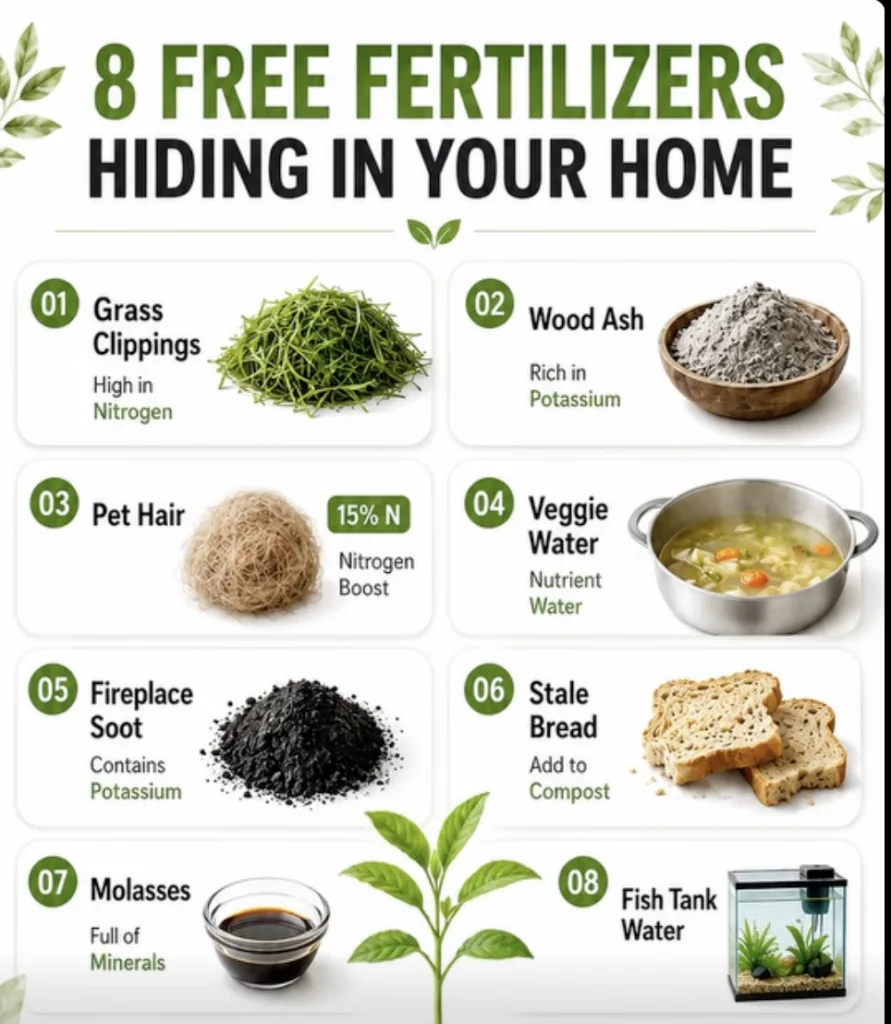
 You don’t always need to buy expensive plant food to give your garden a boost. Some everyday household leftovers can be reused to support healthier soil, compost, and plant growth.
The key is using them correctly and in moderation. Here are eight items you may already have at home—and the safest ways to use them.
1. Grass Clippings 🌿
Fresh grass clippings contain nitrogen, an important nutrient for leafy plant growth.
How to use them:
- Spread a thin layer around established plants as mulch.
- Add them to your compost pile.
- Mix fresh grass with dry “brown” materials such as leaves or cardboard.
Avoid piling grass too thickly, because it can become slimy, compacted, and smelly.
2. Wood Ash 🔥
Clean wood ash contains potassium, calcium, and other minerals that can benefit certain soils.
How to use it:
Sprinkle a very small amount onto garden soil or add a little to compost.
Wood ash can raise soil pH, so avoid using too much—especially around acid-loving plants such as blueberries and azaleas.
⚠️ Only use ash from clean, untreated wood. Never use ash from painted, pressure-treated, or chemically treated materials.
3. Pet Hair 🐶🐱
Pet hair contains nitrogen and breaks down slowly, making it more useful as a compost ingredient than as an instant fertilizer.
How to use it:
Mix small amounts of clean pet hair into your compost pile along with kitchen scraps and dry leaves.
Avoid using hair that has recently been treated with flea or tick chemicals.
4. Vegetable Cooking Water 🥕💧
Water left after boiling or steaming vegetables may contain small amounts of nutrients released during cooking.
Instead of pouring it down the drain, allow it to cool completely and use it to water plants.
Important: Only use vegetable water that contains no salt, oil, sauces, or seasonings.
5. Fireplace Soot ⚠️
Although soot may contain trace minerals, it is not something I recommend applying directly to garden plants.
Soot can contain unwanted compounds depending on what was burned. Coal soot and soot from treated or painted wood should never be used around edible plants.
If you want to reuse fireplace material in the garden, properly sourced clean wood ash is generally the safer option.
6. Stale Bread 🍞
Stale bread isn’t really a fertilizer by itself, but small amounts can be added to a well-managed compost pile.
Tear it into small pieces and mix it deeply with other compost materials.
Avoid leaving bread on top of the soil because it can attract rodents, insects, and other pests.
7. Molasses 🍯
Molasses contains sugars and small amounts of minerals. Gardeners sometimes use diluted unsulfured molasses as a supplemental ingredient in compost or soil-management routines.
It should not replace a balanced fertilizer.
If you use it, keep the amount very small and dilute it well with water. Too much sugar can attract insects or create unwanted microbial activity.
8. Fish Tank Water 🐟🌱
When you clean a freshwater aquarium, the old water can contain small amounts of nitrogen compounds and organic matter from fish waste.
Instead of throwing it away, it can sometimes be used to water ornamental or garden plants.
However, avoid using:
- Saltwater aquarium water
- Water containing medications
- Water treated with chemicals that may harm plants
The Best Way to Use Household “Fertilizers”
Not every kitchen or household leftover should be poured directly onto plants. In many cases, composting is the safest and most effective option.
A healthy compost pile combines:
🌿 Nitrogen-rich “greens” — grass clippings, vegetable scraps
🍂 Carbon-rich “browns” — dry leaves, cardboard, paper
💧 Moisture
🌬️ Air
Over time, these materials break down into rich organic matter that can improve soil structure and support plant growth.
Final Tip 🌱
Before trying any homemade fertilizer, remember that more is not always better. Different plants need different nutrients and soil conditions.
Start with small amounts, avoid salty or chemically treated materials, and observe how your plants respond.
Your garden may already have everything it needs hiding in your kitchen, backyard, or compost bin! 🌿♻️