Have you ever looked into your spice rack and wondered if those unassuming jars and bulbs hold more than just flavor? What if the everyday ingredients you use to season your meals are actually tiny powerhouses, packed with properties that could support your well-being in surprising ways?
We’re talking about garlic, oregano, and cinnamon – a trio so common, yet so profoundly beneficial, they might just be your unexpected natural wellness allies. Join us as we uncover the secrets these kitchen staples hold and how they can contribute to a healthier, more vibrant you.
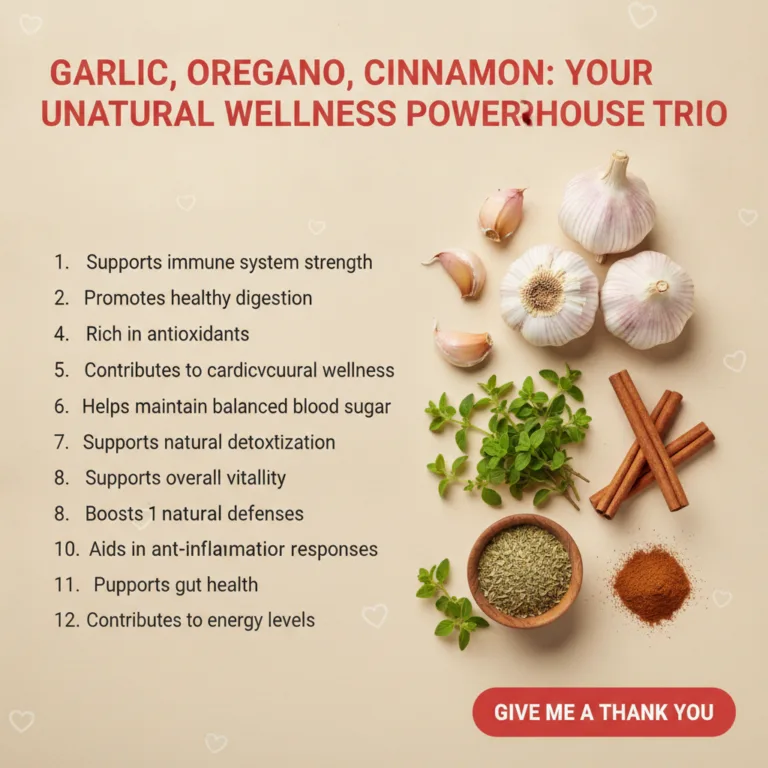
Why This Matters: Reclaiming Wellness from Your Kitchen
In our modern world, we often gravitate towards complex solutions for our health concerns. Yet, generations before us relied on the simple, potent gifts of nature – often found right in their gardens and kitchens. Garlic, oregano, and cinnamon have been cherished across cultures for centuries, not just for their culinary flair, but for their remarkable properties.
Today, as more of us seek natural, holistic ways to support our bodies and maintain vitality, these humble ingredients are making a comeback. Many are rediscovering their potential to aid everything from immune strength to balanced blood sugar, offering a gentle yet effective approach to everyday wellness. It’s about tapping into the wisdom of tradition, backed by modern understanding, to empower your health journey.
The Dynamic Trio: Unpacking Their Wellness Secrets
Let’s dive into what makes each of these ingredients so special and how they work synergistically to offer a spectrum of potential benefits.
Garlic: The Pungent Protector
Beyond its unmistakable aroma and flavor, garlic (Allium sativum) has been revered for its wellness properties since ancient times. It’s a staple in traditional medicine systems worldwide.
- Key Compounds: The magic in garlic largely comes from sulfur-containing compounds like allicin, which is formed when garlic is crushed or chopped.
- Traditional Uses: Historically, garlic was used to ward off illness, support heart health, and aid digestion.
- Potential Wellness Benefits:
- Immune Support: Some studies suggest that garlic may help support a healthy immune system, potentially due to its sulfur compounds.
- Heart Health: It has been associated with maintaining healthy cholesterol levels and supporting cardiovascular function already within a healthy range.
- Antioxidant Properties: Garlic contains antioxidants that help protect your cells from oxidative stress.
Oregano: The Mountain of Joy Herb
The name ‘oregano’ comes from Greek words meaning “mountain of joy.” This fragrant herb (Origanum vulgare) is a culinary delight and a traditional wellness powerhouse.
- Key Compounds: Oregano’s primary active compounds are carvacrol and thymol, which contribute to its distinctive aroma and potential benefits.
- Traditional Uses: Traditionally, oregano was used for respiratory comfort, digestive support, and as a general tonic.
- Potential Wellness Benefits:
- Antioxidant Power: Oregano is rich in antioxidants, which can help combat free radicals in the body.
- Digestive Harmony: It has been traditionally used to support healthy digestion and soothe occasional digestive upset.
- Immune Boost: Like garlic, oregano may play a role in supporting a robust immune system.
Cinnamon: The Sweet & Spicy Regulator
Known for its warm, comforting flavor, cinnamon (Cinnamomum verum or Cinnamomum cassia) is much more than just a baking spice. It holds a long history in traditional medicine.
- Key Compounds: The primary active compound in cinnamon is cinnamaldehyde, which gives it its characteristic flavor and many of its potential wellness properties.
- Traditional Uses: Ancient cultures used cinnamon for digestive issues, to balance energy, and as an anti-inflammatory spice.
- Potential Wellness Benefits:
- Blood Sugar Balance: Cinnamon is widely researched for its potential to help maintain healthy blood sugar levels already within a normal range.
- Anti-inflammatory Support: It contains compounds that may help support the body’s natural inflammatory response.
- Antioxidant Richness: Cinnamon is packed with antioxidants, contributing to overall cellular health.
Practical Guide: Incorporating This Trio into Your Daily Life
Embracing the benefits of garlic, oregano, and cinnamon is deliciously simple. Here are some easy ways to make them a regular part of your wellness routine:

- Cooking Creations:
- Garlic: Mince fresh garlic into stir-fries, pasta sauces, soups, and roasted vegetables. Roasting whole garlic cloves sweetens their flavor, perfect for spreading on whole-grain toast.
- Oregano: Add fresh or dried oregano to Italian, Greek, and Mexican dishes. It’s fantastic in marinades, salad dressings, on pizzas, or sprinkled over roasted chicken.
- Cinnamon: Beyond desserts, try adding a pinch of cinnamon to your morning oatmeal, smoothies, coffee, or even savory dishes like chili or curries for a warm, subtle kick.
- Wellness Teas:
- Garlic & Honey Tea: Mince a clove of garlic, steep it in hot water for 5-10 minutes, strain, and add honey and lemon for a soothing drink.
- Oregano Tea: Steep a teaspoon of dried oregano in hot water for 5 minutes, strain, and enjoy for digestive comfort.
- Cinnamon Tea: Simmer a cinnamon stick in water for 10-15 minutes, or use ½ teaspoon of ground cinnamon in a tea infuser for a warming, blood sugar-friendly beverage.
- Herbal Infused Oils: Gently heat garlic cloves or oregano sprigs in olive oil to create flavorful infused oils for cooking or salad dressings.
- Storage Tips: Store fresh garlic in a cool, dark, dry place. Dried herbs and spices like oregano and cinnamon should be kept in airtight containers away from direct light and heat to preserve their potency.
Safety & Precautions: Listening to Your Body
While garlic, oregano, and cinnamon are generally safe for most people in culinary amounts, it’s always wise to be mindful of potential interactions and individual sensitivities.
- Who Should Be Cautious: Individuals taking blood-thinning medications should consult their doctor before consuming large amounts of garlic, as it may have mild anticoagulant properties.
- Allergies: Though rare, allergies to garlic, oregano, or cinnamon can occur. Discontinue use if you experience adverse reactions.
- Pregnancy & Breastfeeding: If you are pregnant or breastfeeding, it’s best to consume these spices in typical culinary amounts and consult with a healthcare professional before using them in concentrated forms (e.g., supplements or large medicinal doses).
- Existing Medical Conditions: If you have an existing medical condition, especially diabetes or blood pressure issues, or are on medication, please consult your healthcare provider before significantly increasing your intake of these ingredients, particularly cinnamon due to its potential effects on blood sugar.
- Cinnamon Type: Be aware that Cassia cinnamon (the most common type) contains coumarin, which can be harmful to the liver in very large doses over time. Ceylon cinnamon has much lower coumarin levels and is often recommended for regular, higher intake.
Key Takeaways for Your Natural Wellness Journey
- Garlic, oregano, and cinnamon are more than just spices; they are potent natural ingredients with a long history of traditional use.
- Each offers distinct benefits, from immune support and digestive harmony to blood sugar balance and antioxidant protection.
- Incorporating them into your daily cooking and making simple herbal teas are easy ways to harness their power.
- Always be mindful of individual sensitivities and consult a healthcare professional if you have existing health conditions or are on medication, especially when considering higher-than-culinary doses.
- Embrace these kitchen staples as part of your holistic approach to health and vitality.
FAQ: Your Questions Answered
Can I use dried garlic and oregano instead of fresh?
Absolutely! While fresh garlic and oregano often have a more vibrant flavor, dried versions retain many of their beneficial compounds and are excellent for cooking and teas. Just remember that dried herbs are more concentrated, so you’ll generally use less than fresh.
How much cinnamon is safe to consume daily?
For most people, using cinnamon in culinary amounts (e.g., 1/2 to 1 teaspoon per day) is generally considered safe. If you’re considering higher doses, especially Cassia cinnamon, it’s wise to consult with a healthcare professional due to the coumarin content.
Do these ingredients interact with medications?
Yes, especially garlic, which may have mild blood-thinning effects and could interact with anticoagulant medications. Cinnamon can affect blood sugar, potentially impacting diabetes medications. Always discuss significant dietary changes or increased intake of these ingredients with your doctor if you are on any medications.
Can I give garlic, oregano, or cinnamon to children?
In small culinary amounts as part of a balanced diet, they are generally fine for children. However, avoid giving large or concentrated doses, and always introduce new foods cautiously, observing for any reactions.
What’s the best way to maximize their health benefits?
Consistency is key! Regular, moderate consumption as part of a varied, whole-food diet is often more beneficial than infrequent, large doses. Incorporate them into your everyday meals and enjoy the flavors while supporting your wellness.
Related Reading You Might Enjoy
- The Power of Turmeric: An Anti-Inflammatory Star
- Boosting Your Gut Health with Fermented Foods
- Herbal Teas for Everyday Wellness and Relaxation
- Natural Ways to Support Your Immune System Year-Round
- Healthy Aging: Foods and Habits for Lifelong Vitality