Do you often find yourself eyeing the clock long before lunchtime, stomach rumbling and energy dipping? That mid-morning slump, often arriving by 10 AM, is a common experience, but it doesn’t have to be your reality. If you’re consistently feeling hungry again shortly after breakfast, it’s a strong sign that your morning meal might be missing some crucial components.
A truly satisfying breakfast isn’t just about curbing immediate hunger; it’s about fueling your body for hours, stabilizing your blood sugar, and setting a positive tone for your entire day. In this article, we’ll uncover the key nutrients your breakfast might be lacking, reveal common breakfast mistakes, and share an easy formula to build morning meals that keep you feeling full, focused, and energized until lunch.
The 10 AM Hunger Riddle: Why Your Morning Meal Isn’t Enough
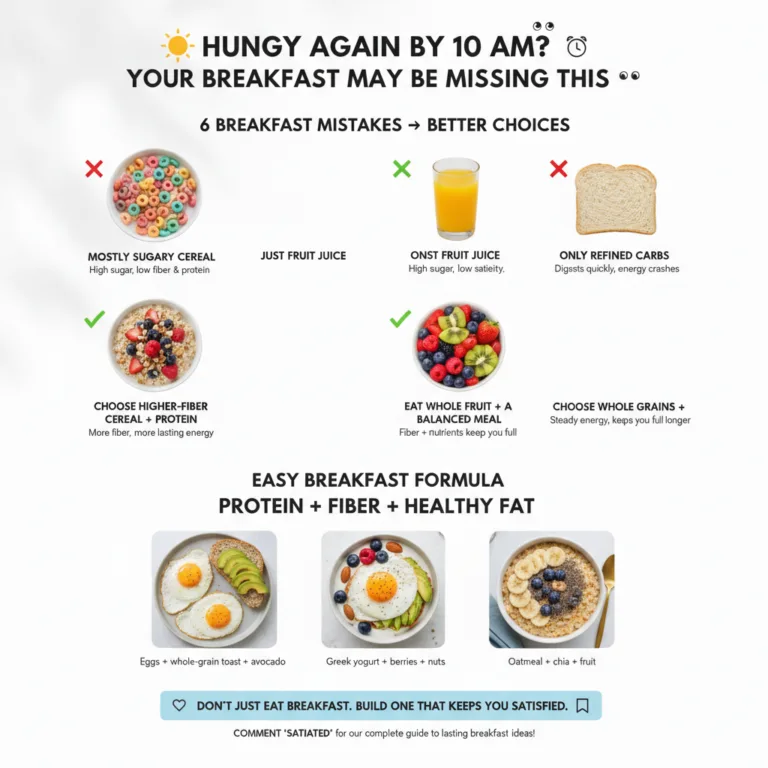
Many popular breakfast choices, while convenient, are often packed with refined sugars and simple carbohydrates. Think sugary cereals, pastries, or even just fruit juice. While these options might provide a quick burst of energy, they lead to a rapid spike in blood sugar, which is inevitably followed by an equally rapid crash. This roller coaster effect leaves you feeling sluggish, irritable, and, most notably, hungry again long before you’re ready for your next meal.
The secret to lasting satiety lies in understanding what makes a breakfast truly nutritious and filling. It’s not just about calories; it’s about the quality and balance of macronutrients.
The Easy Breakfast Formula for Lasting Satiety
To combat that pesky 10 AM hunger, embrace a simple yet powerful approach: your breakfast should include a balanced combination of Protein, Fiber, and Healthy Fats. This trio works synergistically to promote satiety, stabilize blood sugar, and provide sustained energy throughout your morning.
- Protein: Essential for building and repairing tissues, protein is also a powerhouse for satiety. It takes longer to digest, signaling to your brain that you’re full and satisfied, which helps prevent overeating later in the day.
- Fiber: This crucial nutrient slows down digestion, particularly the absorption of sugars, which helps to keep your blood sugar levels steady. Found abundantly in fruits, vegetables, whole grains, and legumes, fiber adds bulk to your meal and supports digestive health.
- Healthy Fats: Far from being the enemy, healthy fats are vital for absorbing fat-soluble vitamins and contributing significantly to satiety. They provide a concentrated source of energy that burns slowly, keeping you feeling full and preventing cravings.
Breakfast Blunders: 6 Common Mistakes & Smarter Swaps
Let’s look at common breakfast pitfalls and how to easily upgrade them using our powerful formula.
Sugary Cereal: The Quick Crash Culprit
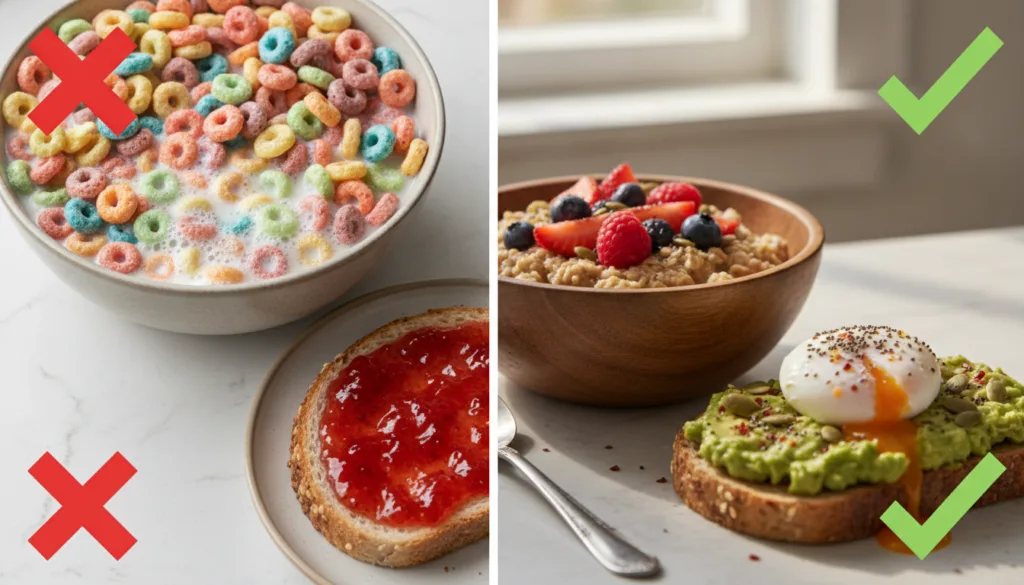
Many breakfast cereals are essentially dessert in a bowl. High in added sugars and often stripped of beneficial fiber and protein, they lead to a rapid increase in blood sugar. While tasty, this creates a short-lived energy surge followed by an inevitable crash, leaving you feeling tired and reaching for snacks.
Swap for Success: High-Fiber Cereal with Added Protein
Choose cereals that list whole grains as the first ingredient and have at least 5 grams of fiber per serving. Then, supercharge it with protein. Consider adding a scoop of protein powder, a handful of nuts, seeds, or a dollop of Greek yogurt. This combination provides slow-release energy, keeping you satisfied and focused.
Fruit Juice: Missing the Best Part of the Fruit
While seemingly healthy, fruit juice often removes the most valuable component of whole fruit: fiber. Without fiber, the natural sugars in fruit juice are quickly absorbed, causing a blood sugar spike similar to sugary drinks. This can lead to the same energy crash and hunger pangs.
Swap for Success: Whole Fruit Paired with a Balanced Meal
Opt for whole fruits instead of juice. The fiber in whole fruit slows sugar absorption and provides essential vitamins and minerals. Pair your whole fruit with other breakfast components like eggs, a slice of whole-grain toast with avocado, or a serving of cottage cheese to create a truly balanced and satiating meal.
Refined Carbs: Empty Calories, Empty Stomach
Pastries, white toast, bagels, and muffins, while delicious, are typically made from refined grains. This means they’ve been processed to remove the bran and germ, along with most of the fiber, vitamins, and minerals. They offer little nutritional value beyond simple carbohydrates, leading to quick digestion and leaving you hungry again soon after.
Swap for Success: Whole Grains for Sustained Energy
Upgrade to whole-grain options like 100% whole wheat bread, oats, or quinoa. These provide complex carbohydrates that break down slowly, along with vital fiber and nutrients for sustained energy. Remember to complement your whole grains with protein and healthy fats for maximum satiety – think a slice of whole-grain toast topped with an egg and avocado, or oatmeal mixed with chia seeds and nuts.
Building Your Power Breakfast: Satisfying Meal Ideas
Here are some practical examples of how to incorporate the Protein + Fiber + Healthy Fat formula into your morning routine.
Energizing Eggs with Avocado Toast
This classic combination is a powerhouse of nutrients.
Servings: 1
Prep time: 5 minutes
Cook time: 5-7 minutes
Ingredients:
- 2 large eggs
- 1 slice 100% whole-grain bread
- 1/4 ripe avocado, sliced or mashed
- Pinch of salt and black pepper to taste
- Optional: A sprinkle of red pepper flakes or everything bagel seasoning
Instructions:
- Toast the whole-grain bread to your desired crispness.
- While the bread toasts, cook your eggs: scramble, fry, or poach them.
- Once toast is ready, spread or layer the avocado on top.
- Place the cooked eggs over the avocado.
- Season with salt, pepper, and any optional toppings. Serve immediately.
Creamy Greek Yogurt Parfait with Berries & Nuts
A delicious and customizable option that’s rich in probiotics, protein, and antioxidants.
Servings: 1
Prep time: 5 minutes
Ingredients:
- 1 cup plain Greek yogurt (full-fat or 2% for extra satiety)
- 1/2 cup mixed berries (fresh or frozen)
- 1/4 cup mixed nuts (almonds, walnuts, pecans)
- 1 tablespoon chia seeds or flax seeds (optional, for extra fiber)
- 1 teaspoon honey or maple syrup (optional, for sweetness)
Instructions:
- In a bowl or glass, layer half of the Greek yogurt.
- Top with half of the berries and nuts.
- Add the remaining Greek yogurt, then the rest of the berries and nuts.
- If using, sprinkle chia/flax seeds and drizzle with honey/maple syrup. Enjoy!
Hearty Oatmeal with Chia Seeds & Fresh Fruit
Oatmeal is a fantastic whole-grain base, and adding chia seeds boosts its fiber and healthy fat content.
Servings: 1
Prep time: 2 minutes
Cook time: 5-10 minutes (or overnight soak)
Ingredients:
- 1/2 cup rolled oats (not instant)
- 1 cup water or milk (dairy or non-dairy)
- 1 tablespoon chia seeds
- 1/2 cup fresh fruit (sliced banana, berries, apple)
- 1 scoop protein powder (optional, for extra protein)
- Optional toppings: A dash of cinnamon, a handful of chopped nuts, a drizzle of nut butter
Instructions:
- Combine rolled oats and water/milk in a saucepan. Bring to a boil, then reduce heat and simmer for 5-7 minutes, stirring occasionally, until liquid is absorbed and oats are creamy. (Alternatively, combine oats, liquid, and chia seeds in a jar and refrigerate overnight for overnight oats).
- Stir in chia seeds after cooking (if not making overnight oats).
- Pour into a bowl and top with fresh fruit, protein powder, and any other desired toppings.
Tips for Smart Breakfast Prep
The key to consistently enjoying satisfying breakfasts is often preparation. Dedicate a small amount of time to meal prepping key ingredients or even entire meals in advance. This could mean chopping fruits, portioning out nuts and seeds, or even preparing overnight oats the night before. By doing so, you can ensure that you’re always ready to