Did you know you can enjoy stunning, fragrant flowers without a single speck of soil? It’s absolutely true! Some of the most beautiful flowering bulbs thrive simply with water and a little light, making them perfect for bringing nature indoors, even if you don’t have a green thumb. Imagine vibrant Amaryllis or wonderfully fragrant Hyacinths brightening up your home with minimal fuss and no messy dirt!
This super easy method is a game-changer for gardening beginners and a delightful twist for seasoned plant lovers. No dirt, no mess, just pure floral joy! We’re excited to share an incredible guide to 8 flowering bulbs that are perfect for water propagation, transforming your indoor spaces with ease.
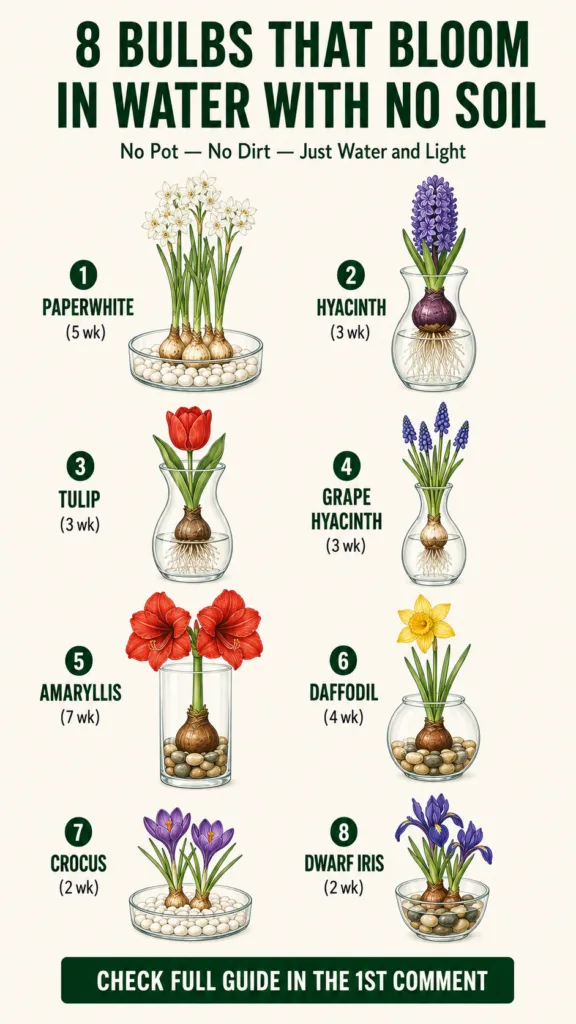
How Bulb Forcing in Water Works
Forcing flower bulbs in water is one of the cleanest, most rewarding ways to bring vibrant floral color and fresh fragrance into your home. It’s an ancient technique that leverages the bulb’s natural ability to store all the nutrients it needs to sprout and bloom.
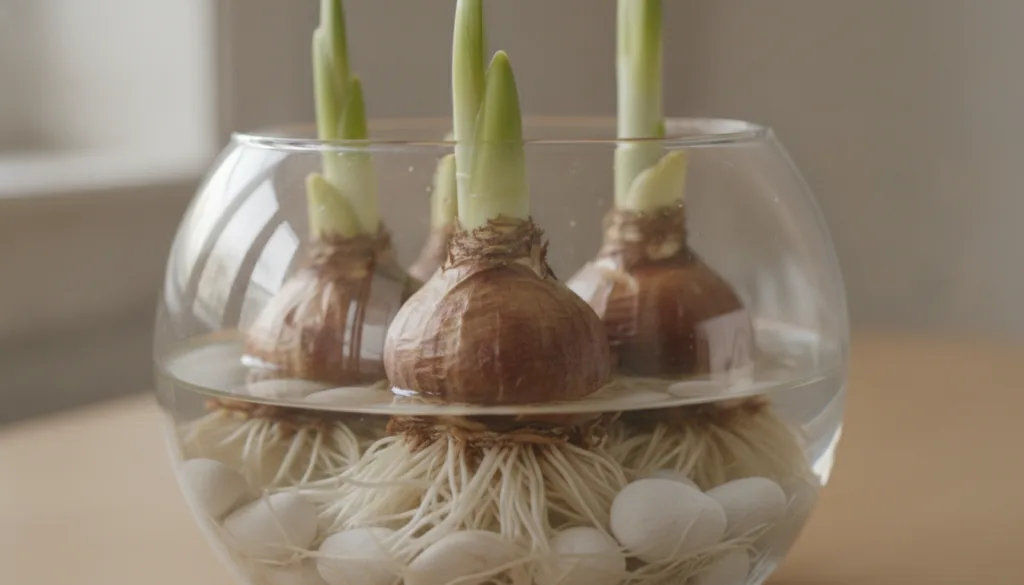
Flower bulbs are essentially nature’s self-contained storage organs, pre-packed with all the starches and energy required to sprout leaves and flowers. When suspended just above water, the basal plate (the bottom part of the bulb where roots emerge) sends roots down into the liquid. This provides the necessary hydration to trigger growth and ultimately, beautiful blooms.
Why Choose Water Forcing?
- Zero Potting Soil, Zero Mess: Say goodbye to spilled dirt and muddy hands. Water forcing is incredibly clean.
- No Soil-Borne Pests: Without soil, you dramatically reduce the risk of common garden pests like fungus gnats.
- Easy & Beginner-Friendly: With minimal care, even first-time gardeners can achieve stunning results.
- Beautiful Indoor Decor: Clear glass vessels allow you to admire the entire plant, from roots to blooms, adding a unique aesthetic to your home.
- Fresh Fragrance: Many water-forced bulbs, like hyacinths and paperwhites, fill your home with a delightful natural scent.
Getting Started: Essential Supplies
To embark on your water-forcing journey, you’ll only need a few simple items:
- Flower Bulbs: Choose high-quality, firm, and healthy bulbs.
- Glass Vessel: A clear vase, jar, or specific bulb-forcing vase. The key is a narrow neck or opening to support the bulb, keeping its base just above the water.
- Clean Water: Tap water is usually fine; distilled water isn’t necessary.
- Decorative Pebbles or Marbles (Optional but Recommended): These help anchor the bulb and add a pleasing visual element.
Step-by-Step Guide to Water Forcing Bulbs
- Choose Your Bulbs: Select the bulbs suitable for water forcing. Ensure they are firm and free of blemishes.
- Select Your Vessel: Pick a clean glass container. It should have a neck that can hold the bulb just above the water level, allowing only the very bottom to touch.
- Add Pebbles (Optional): If using, place a layer of pebbles or marbles at the bottom of the vessel.
- Position the Bulb: Place the bulb on top of the pebbles or in the neck of the forcing vase, pointed end up.
- Add Water: Carefully fill the vessel with water until it barely touches the very bottom (basal plate) of the bulb. It’s crucial not to submerge the entire bulb, as this can lead to rot.
- Provide Chilling (If Required): Some bulbs need a cold period to trigger flowering. Check specific bulb requirements below.
- Place in a Bright Spot: Once roots develop and shoots emerge, move your bulb to a bright location, but out of direct, intense sunlight, which can dry out the plant too quickly.
- Maintain Water Levels: Check the water level every few days and replenish as needed, ensuring it always just touches the bulb’s base.
8 Best Bulbs for Water-Forcing
1. Paperwhite (Narcissus papyraceus)
- Bloom Time: Approximately 3-5 weeks to bloom.
- Setup: Shallow glass dish with 2 to 3 inches of white pebbles.
- Cold Requirement: No pre-chilling needed – perfect for instant gratification!
- Care: Anchor bulbs snugly in pebbles and add water until it touches only the bottom root plate. Clusters of pure white, wonderfully fragrant blooms appear quickly.
2. Hyacinth (Hyacinthus orientalis)
- Bloom Time: About 3 weeks to bloom after chilling.
- Setup: Classic hourglass bulb-forcing vase, specifically designed to hold the bulb above water.
- Cold Requirement: Requires 10 to 12 weeks of chilling in the refrigerator (35°F – 45°F / 1.7°C – 7.2°C) or a cool, dark place.
- Care: Place the bulb in the vase, ensuring only the very base touches water. Store in a cool, dark place for chilling. Once roots are established and a shoot is about 1 inch tall, move to a brighter, warmer spot.
3. Tulip (Tulipa)
- Bloom Time: 2-4 weeks after chilling.
- Setup: Shallow bowl with pebbles or a wide-mouthed vase.
- Cold Requirement: 12-16 weeks of chilling at 35°F – 45°F / 1.7°C – 7.2°C.
- Care: Position bulbs upright in pebbles, with water just touching the base. Follow chilling requirements before moving to a bright location. Tulips offer a wide array of vibrant colors.
4. Grape Hyacinth (Muscari)
- Bloom Time: 2-3 weeks after chilling.
- Setup: Small glass jars or shallow dishes.
- Cold Requirement: 12-15 weeks of chilling at 35°F – 45°F / 1.7°C – 7.2°C.
- Care: These smaller bulbs look great in clusters. Place several together, just above water, and chill. Their clusters of tiny, bell-shaped flowers are charming.
5. Amaryllis (Hippeastrum)
- Bloom Time: 6-8 weeks, no chilling needed for most varieties.
- Setup: A heavy, clear vase or a large glass container with stones for support.
- Cold Requirement: Not typically required for standard forcing.
- Care: Position the bulb so its bottom third is above the water line, supported by pebbles or the vase neck. Amaryllis produces stunning, large, trumpet-shaped flowers.
6. Daffodil (Narcissus)
- Bloom Time: 3-6 weeks after chilling.
- Setup: A sturdy glass vase or bowl with ample space for roots.
- Cold Requirement: 12-15 weeks of chilling at 35°F – 45°F / 1.7°C – 7.2°C.
- Care: Place bulb(s) with the base just above water. Daffodils bring cheerful yellow and white blooms, signaling spring’s arrival.
7. Crocus (Crocus vernus)
- Bloom Time: 2-3 weeks after chilling.
- Setup: Small glass or ceramic bowl with pebbles.
- Cold Requirement: 10-15 weeks of chilling at 35°F – 45°F / 1.7°C – 7.2°C.
- Care: Arrange several small crocus bulbs in a shallow dish, ensuring only their bases touch water. Their delicate cup-shaped flowers are an early splash of color.
8. Dwarf Iris (Iris reticulata)
- Bloom Time: 2-3 weeks after chilling.
- Setup: Small, narrow-necked glass vase or a shallow dish with pebbles.
- Cold Requirement: 13-15 weeks of chilling at 35°F – 45°F / 1.7°C – 7.2°C.
- Care: Position bulbs just above water. Dwarf irises offer intricate, jewel-toned blooms in miniature form.
Tips for Success with Water-Forced Bulbs
- Choose Healthy Bulbs: Always start with firm, blemish-free bulbs.
- Maintain Water Level: Keep the water level consistent, just touching the bulb’s base. Change the water weekly to prevent mold and algae.
- Provide Adequate Light: Once growth appears, move to a bright, indirect light source.
- Rotate Regularly: Turn your vessel periodically to ensure even growth and prevent plants from leaning towards the light.
- Avoid Direct Heat: Keep bulbs away from direct heat sources like radiators, which can dry them out.
- Support Tall Stems: For taller plants like Amaryllis, you might need to stake the flower stalks as they grow.
Troubleshooting Common Issues
- Bulb Rot: Usually caused by the bulb being submerged too deeply in water. Ensure only the very base touches the water.
- No Roots/Growth: Could be insufficient chilling (for bulbs that require it) or an old/unhealthy bulb.
- Leggy Growth: Not enough light. Move your plant to a brighter spot.
- Algae in Water: Change water regularly (weekly) and consider using opaque vessels or placing clear vessels where they don’t get direct sunlight on the water.
Embrace the Simplicity and Beauty!
Growing flowers without soil is a magical way to bring the beauty of nature indoors with minimal effort. Whether you’re a seasoned gardener looking for a clean project or a beginner eager to see things grow, water-forcing bulbs offer a simple, rewarding, and incredibly beautiful experience. Which stunning bulb will you choose to brighten your windowsill?