Looking for a natural way to support the appearance of thicker, stronger hair? This simple DIY aloe vera hair oil is a popular home remedy for those seeking a healthier-looking scalp and more robust locks.
Quick Recipe
Prep time: 15 minutes
Best for: Thinning hair, dry scalp, promoting healthier-looking hair
Use type: Oil blend/Scalp treatment
Main ingredients:
- Fresh Aloe Vera Leaf
- Carrier Oil (e.g., Coconut Oil, Olive Oil, Jojoba Oil)
- Optional: Rosemary Essential Oil
Ingredients
- 1 large fresh aloe vera leaf (or 2 smaller ones)
- 1 cup (240ml) of a carrier oil of your choice (e.g., organic coconut oil, extra virgin olive oil, jojoba oil, or almond oil)
- 5-10 drops of rosemary essential oil (optional, but beneficial for hair support)
How to Make It
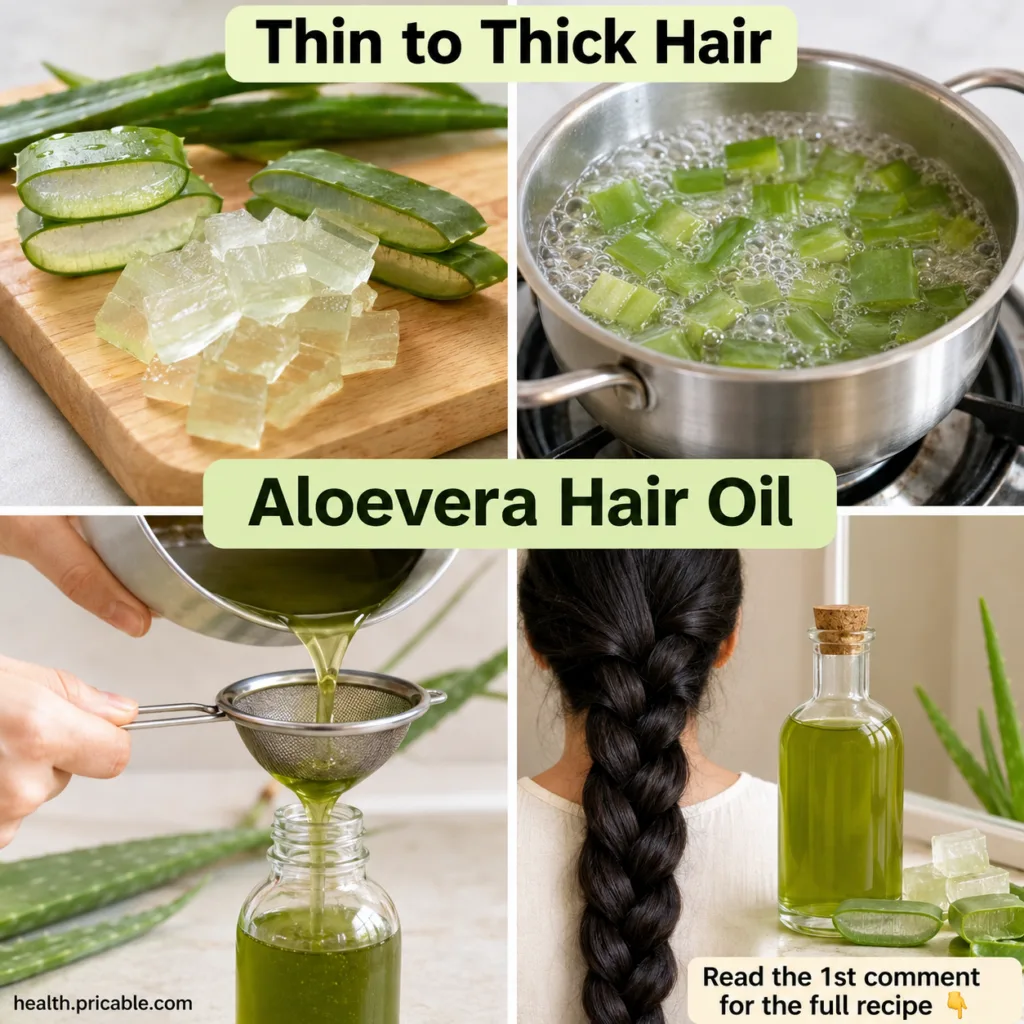
- Prepare the Aloe Vera: Wash the aloe vera leaf thoroughly. Carefully slice open the leaf lengthwise and scoop out the clear gel using a spoon. Discard the yellow aloin liquid that seeps out, as it can be irritating.
- Blend the Gel: Place the aloe vera gel into a blender and blend until it forms a smooth, lump-free liquid.
- Combine and Heat: In a clean, dry saucepan, combine the blended aloe vera gel with your chosen carrier oil. Heat the mixture over very low heat, stirring constantly. The goal is to gently warm the oil and allow the aloe vera moisture to evaporate, rather than to fry it.
- Simmer and Watch: Continue heating for about 10-15 minutes, or until the aloe vera pulp turns slightly brown and crispy, and all the water has evaporated. You should see the oil separating and becoming clear.
- Cool and Strain: Remove from heat and let the oil cool down completely. Once cool, strain the oil through a fine-mesh sieve or cheesecloth into a clean, airtight glass bottle. This will separate the infused oil from the solid aloe vera bits.
- Add Essential Oil (Optional): If using, add 5-10 drops of rosemary essential oil to the strained oil and shake gently to combine.
How to Use It
- Section Hair: Part your hair into small sections to ensure even application.
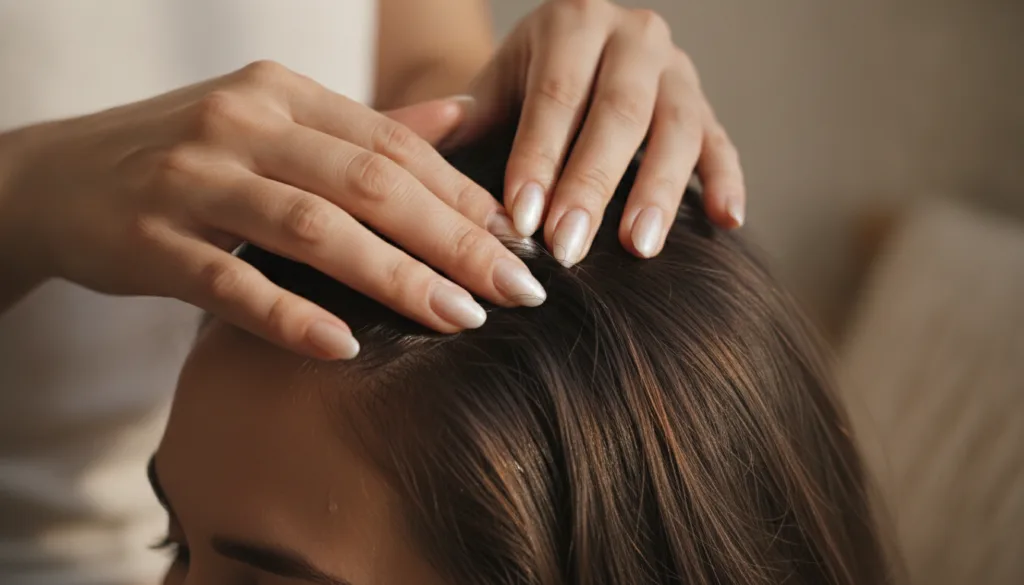
- Apply to Scalp: Take a small amount of the aloe vera oil and gently massage it directly onto your scalp using your fingertips. Ensure the entire scalp is covered.
- Distribute to Ends: You can also apply a small amount to the lengths of your hair, especially the ends, to help condition and add shine.
- Massage: Gently massage your scalp for 5-10 minutes to help stimulate circulation.
- Leave On: Leave the oil on for at least 30 minutes, or for best results, overnight. You can cover your hair with a shower cap or towel to protect your pillow.
- Rinse: Wash your hair thoroughly with a mild shampoo and conditioner.
How Often to Use It
Use this DIY aloe vera hair oil 1-2 times a week for consistent hair and scalp support.
Why These Ingredients Are Used
Fresh Aloe Vera
Aloe vera is celebrated in traditional beauty practices for its potential soothing and moisturizing properties. When applied to the scalp, it may help maintain a healthy environment for hair follicles and support overall scalp wellness, which is beneficial for hair that feels and looks stronger.
Carrier Oil (e.g., Coconut Oil, Olive Oil)
Carrier oils like coconut or olive oil are rich in fatty acids and vitamins that can deeply moisturize both the scalp and hair strands. They help to protect the hair from damage, reduce protein loss, and can leave hair feeling softer and looking shinier. They also serve as an excellent medium to infuse the beneficial properties of aloe vera.
Rosemary Essential Oil
Rosemary essential oil is a popular choice for hair care, often associated with stimulating the scalp. It’s believed to help improve circulation, which can be beneficial for hair follicles and may support healthy hair growth and reduce the appearance of hair thinning.

What Results to Expect
With regular use, this DIY aloe vera hair oil may help your scalp feel more nourished and balanced. You might notice your hair feeling softer, looking shinier, and appearing fuller over time. While individual results vary, many find this remedy supportive for maintaining overall hair health and promoting the appearance of thicker, stronger-looking hair.
Safety Notes
- Patch Test First: Always perform a patch test on a small area of your skin (e.g., behind the ear or inner forearm) at least 24 hours before full application to check for any allergic reactions or irritation.
- Use Gently: Apply and massage the oil gently. Avoid vigorous scrubbing, which can irritate the scalp.
- Avoid Irritated or Broken Skin: Do not apply the oil to areas of the scalp with open wounds, cuts, or severe irritation.
- Stop if Discomfort Occurs: If you experience any redness, itching, burning, or discomfort, discontinue use immediately and rinse thoroughly.
- Fresh Aloe Vera: Ensure you properly prepare fresh aloe vera by discarding the yellow aloin liquid, which can be a skin irritant.
- Essential Oil Dilution: If using essential oils, always dilute them in a carrier oil. Do not apply undiluted essential oils directly to the skin.
FAQ
Is this oil suitable for all hair types?
Generally, yes. This oil is designed to be gentle and nourishing. However, always perform a patch test, especially if you have a sensitive scalp or known allergies.
How long can I store the DIY aloe vera hair oil?
When stored in a cool, dark place in an airtight container, homemade aloe vera oil typically lasts for about 2-3 weeks. Adding a few drops of Vitamin E oil can sometimes extend its shelf life slightly.
Can I use a different carrier oil than coconut or olive oil?
Absolutely! You can use any carrier oil that suits your hair type and preferences, such as jojoba oil, almond oil, argan oil, or grapeseed oil. Choose one that you know your hair responds well to.
Final Thoughts
Embracing natural solutions for hair care can be a rewarding journey. This DIY aloe vera hair oil offers a simple, accessible way to nurture your scalp and support the healthy appearance of your hair. Give it a try and see how this homemade blend can become a cherished part of your beauty routine. Share your experiences in the comments below!