Garden Smarter, Not Harder: Essential Setups for a Joyful, Pain-Free Harvest
Do you love the idea of spending hours in your garden, nurturing plants and harvesting fresh produce, but dread the inevitable aches and pains that follow? Many gardeners experience discomfort from bending, kneeling, and lifting, which can turn a beloved hobby into a chore. But what if you could transform your gardening experience, making it easier on your body while still enjoying bountiful harvests and beautiful blooms?
The good news is that you don’t need a complete garden overhaul to achieve this. By making a few thoughtful adjustments to your garden setup and adopting some ergonomic practices, you can significantly reduce strain and increase your enjoyment. This guide will walk you through practical, body-friendly gardening solutions that help you work smarter, not harder, fostering a deeper connection with your plants without the post-gardening soreness.
Embracing Ergonomic Gardening for Lasting Joy
Ergonomics in gardening simply means designing your workspace and tasks to fit your body, rather than forcing your body to fit the task. This approach minimizes physical stress, reduces the risk of injury, and conserves your energy. When you garden ergonomically, you’re not just being kind to your body; you’re also setting yourself up for more consistent and productive plant care. Let’s explore some clever setup changes that can revolutionize your gardening experience.
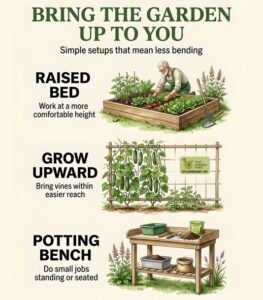
Raised Beds: Elevate Your Gardening Experience
Raised garden beds are perhaps the most popular and impactful ergonomic upgrade for any garden. By bringing the soil up to a comfortable working height, they drastically reduce the need for bending and kneeling, making planting, weeding, and harvesting far more accessible.
Benefits of Raised Beds:
- Reduced Strain: The primary benefit is less back and knee strain. Tending to plants becomes an upright or seated task rather than a crouched one.
- Better Soil Control: You have complete control over your soil mix, allowing you to create ideal growing conditions for your specific plants. This often means richer, looser soil that’s easier to work.
- Improved Drainage: Raised beds naturally offer superior drainage, preventing waterlogging and promoting healthier root development.
- Earlier Planting: The soil in raised beds warms up faster in spring, allowing you to plant earlier and extend your growing season.
- Pest Management: Raised beds can create a slight barrier against some ground-dwelling pests and make it easier to install protective netting or covers.
Practical Setup and Care:
When planning a raised bed, consider its height and width. Aim for a height between 18 and 36 inches, depending on your comfort. A width of no more than 4 feet allows you to reach the center of the bed from either side without stepping in, preventing soil compaction. Fill your raised bed with a high-quality soil blend specifically designed for vegetable gardens or container planting, ensuring it’s rich in organic matter and well-draining. For watering, soaker hoses or drip irrigation systems are excellent choices, delivering water directly to the root zone and minimizing effort.
Common Mistake: Making beds too wide. This forces you to stretch or walk on the soil, negating the ergonomic benefits and compacting your carefully prepared soil. Stick to a maximum 4-foot width for easy access.
Trellises: Go Vertical for Easier Access and Healthier Plants
Trellises are indispensable tools for any gardener looking to maximize space, improve plant health, and make harvesting a breeze. They provide vertical support for climbing plants, lifting them off the ground.
Benefits of Trellising:
- Easier Harvesting: Fruits and vegetables like cucumbers, pole beans, and indeterminate tomatoes are much easier to spot and pick when they’re hanging at eye level or waist level, rather than sprawling on the ground.
- Improved Airflow: Lifting plants off the ground increases air circulation around foliage, which helps prevent fungal diseases like powdery mildew.
- Cleaner Produce: Produce grown on a trellis stays clean and free from soil splash.
- Space Saving: Trellises allow you to grow more in a smaller footprint by utilizing vertical space, perfect for small gardens or container gardening.
- Pest Management: Trellised plants are often easier to inspect for pests, and treatments can be applied more effectively.
Practical Setup and Care:
Choose the right type of trellis for your plants. A-frame trellises are great for cucumbers and squash, while sturdy stakes or cages work well for indeterminate tomatoes. Netting can support a variety of vining plants. Install trellises at the time of planting or very early in the plant’s life to guide growth upwards from the start. For heavy fruiting plants, ensure your trellis is robust enough to support the mature plant’s weight, especially when loaded with produce.
Common Mistake: Waiting too long to install a trellis or using an flimsy support. Once plants begin to sprawl, it’s difficult to train them vertically without damage. A weak trellis can collapse under the weight of mature plants, ruining your harvest.
Potting Bench: Your Dedicated Workspace
A potting bench isn’t just a luxury; it’s a practical station that centralizes your potting and seeding tasks, keeping you comfortable and organized.
Benefits of a Potting Bench:
- Ergonomic Height: Most potting benches are designed at a comfortable standing or stool-height, eliminating the need to bend over a bucket on the ground for potting mix.
- Organization: With shelves, drawers, and hooks, a potting bench keeps your tools, seeds, and supplies neatly organized and within easy reach.
- Reduced Mess: Performing potting tasks in one designated area helps contain soil spills and simplifies cleanup.
- Versatility: Beyond potting, it’s a great spot for seed starting, mixing custom soil blends, and even displaying small plants.
Practical Setup and Care:
Position your potting bench in a convenient, well-lit area, perhaps near your garden or in a shed. Consider a model with a durable, easy-to-clean work surface, and look for features like built-in bins for soil or a small sink if you have access to water. Keep your most-used tools, such as hand trowels, pruners, and gloves, right on the bench or hanging nearby. Regularly clean the surface to prevent the spread of plant diseases.
Container Gardening Tip: A potting bench is invaluable for container gardening, allowing you to easily refresh soil, repot, and care for your potted plants without stooping.
Small Stool: A Portable Comfort Zone
Sometimes, tasks require you to be close to the ground, but that doesn’t mean you have to kneel. A small, sturdy stool or a garden kneeler with handles can be a game-changer.
Benefits of a Small Stool:
- Knee Protection: Avoids direct pressure on your knees, which can lead to pain and injury over time.
- Flexibility: Allows you to sit comfortably while performing detailed tasks like delicate weeding, planting small seedlings, or tending to low-growing plants.
- Portability: Easily moved around the garden, offering comfort wherever you need it most.
Practical Use:
Choose a lightweight, durable, and weather-resistant stool or kneeler. Keep it handy as you move through your garden, especially when working on ground-level beds or reaching into lower sections of raised beds. It’s also excellent for prolonged tasks like harvesting ground-cover crops or planting bulbs.
Common Mistake: Forgetting to use it! Keep your stool accessible. Make it a habit to grab it when you know you’ll be spending time close to the ground.
Cultivating Comfort Across US Climates
While these ergonomic tools and setups are universally beneficial, remember that regional climates and plant choices will influence how you utilize them. For instance:
- Warm Zones (9-11): Raised beds can be particularly helpful in mitigating heavy clay soils or sandy conditions, allowing for optimal drainage and nutrient control. Trellising is vital for many heat-loving vines that grow rapidly.
- Temperate Zones (6-8): Raised beds warm up nicely in spring, extending the growing season. A potting bench near a south-facing wall can be a warm spot for early seed starting.
- Cool Zones (3-5): Raised beds provide a distinct advantage by warming soil faster, which is crucial for maximizing the short growing season. Trellises help plants capture more sunlight.
No matter your USDA hardiness zone, prioritizing comfort in your garden setup will enhance your connection with nature and ensure you can enjoy your passion for years to come. Always consult your local extension services for specific advice on plant choices and seasonal planting for your microclimate.
Conclusion: Your Garden, Your Comfort
Gardening should be a source of joy and tranquility, not physical discomfort. By thoughtfully incorporating elements like raised beds, trellises, a dedicated potting bench, and a simple garden stool, you’re investing in your long-term health and the sustainability of your gardening passion. These adjustments aren’t just about making tasks easier; they’re about creating an environment where you can truly thrive alongside your plants. Start with one change, observe the positive impact, and gradually build a garden that supports both vigorous growth and your personal well-being. Happy gardening!