Overnight oats have become a staple for healthy eating enthusiasts, offering a quick, nutritious, and incredibly versatile breakfast. They’re the epitome of convenience, allowing you to prep your meal the night before and grab it straight from the fridge in the morning. But if you’re a fan of batch prepping, a common question arises: do overnight oats truly stay the same after a couple of days in the fridge? What actually changes?
We’re diving deep into the subtle shifts that occur between a freshly made batch of overnight oats and one that’s been chilling for 48 hours. Understanding these differences can help you optimize your meal prep, ensure maximum enjoyment, and maintain the perfect balance of flavor and texture for your daily breakfast.
Join us as we explore the transformation of overnight oats, from their initial creamy perfection to their state two days later, providing you with everything you need to know to keep them tasting their best.
The Appeal of Overnight Oats: Convenience Meets Nutrition
Before we explore the changes, let’s appreciate why overnight oats are a beloved choice. They’re packed with fiber, often low in sugar (depending on your additions), and can be customized with endless ingredients like fruits, nuts, seeds, and protein powder. The magic happens overnight as the oats soak in liquid, softening and thickening into a creamy, pudding-like consistency without any cooking required. This simple method saves precious morning minutes, making healthy eating accessible even on the busiest days.

Freshly Prepared: The Ideal Overnight Oats Experience
When you first pull your overnight oats from the fridge the morning after prepping, they are typically at their peak. The oats have fully absorbed the liquid, creating a wonderfully creamy texture that’s still slightly toothsome. Fruit add-ins are fresh and vibrant, nuts and seeds retain a slight crunch, and all the flavors are distinct and bright. This is the gold standard for many who enjoy this grab-and-go breakfast.
Unpacking the Changes: Fresh vs. 2-Day-Old Overnight Oats
So, what happens when you let those overnight oats sit for an extra day or two? The changes are indeed subtle, but noticeable if you pay attention. These shifts primarily affect texture, flavor, and appearance, while nutritional value largely remains stable.
Texture Transformation
- Fresh: Often described as creamy with a slight chew, maintaining some integrity of the oat flakes.
- 2-Day-Old: The oats continue to absorb liquid, becoming softer and often mushier. While still palatable, they might lose that desired ‘al dente’ texture, leaning more towards a smooth porridge.
Flavor Evolution
- Fresh: Flavors are bright, distinct, and vibrant, especially from fresh fruits and spices.
- 2-Day-Old: The flavors tend to meld and mellow out. Some fresh fruits, particularly berries, might release more liquid and become slightly softer or lose a bit of their initial zing. Spices and extracts become more integrated, sometimes less pronounced.
Nutritional Integrity
Generally, the nutritional profile of overnight oats remains largely consistent over two days. Macronutrients (carbohydrates, protein, fats) are stable. However, some delicate, water-soluble vitamins (like Vitamin C, if you added fresh citrus) might slightly degrade over time due to exposure to light and air, even in the fridge. For most ingredients, the nutritional impact is minimal.
Food Safety and Shelf Life Considerations
For most overnight oats recipes, a refrigerated shelf life of 3-5 days is generally considered safe. After two days, your oats are still well within this window. The key is proper storage in an airtight container to prevent bacterial growth and absorption of fridge odors. If you notice any unusual smells, discoloration, or mold, it’s always best to discard them.
Mastering Overnight Oats: Tips for Optimal Freshness
Want to enjoy your overnight oats at their best, even after a couple of days? Here are some strategies to maximize their freshness:
-
Choosing the Right Container
An airtight glass jar (like a Mason jar) is ideal. It prevents air exposure, which can lead to oxidation and staleness, and keeps out odors from other fridge items. Glass is also non-porous and won’t leach chemicals into your food.
-
Strategic Ingredient Additions
- Hardier Fruits: Apples, pears, and bananas (added just before serving to prevent browning) hold up better than delicate berries or sliced peaches.
- Nuts and Seeds: Add these just before serving to maintain their crunch.
- Dairy Alternatives: Stick to plant-based milks or regular dairy milk for soaking. Yogurt can be mixed in or layered just before eating for a fresher tang.
-
Ideal Refrigeration Practices
Ensure your refrigerator is set to 40°F (4°C) or below. Place your overnight oats towards the back of the fridge where temperatures are most consistent, avoiding the door.
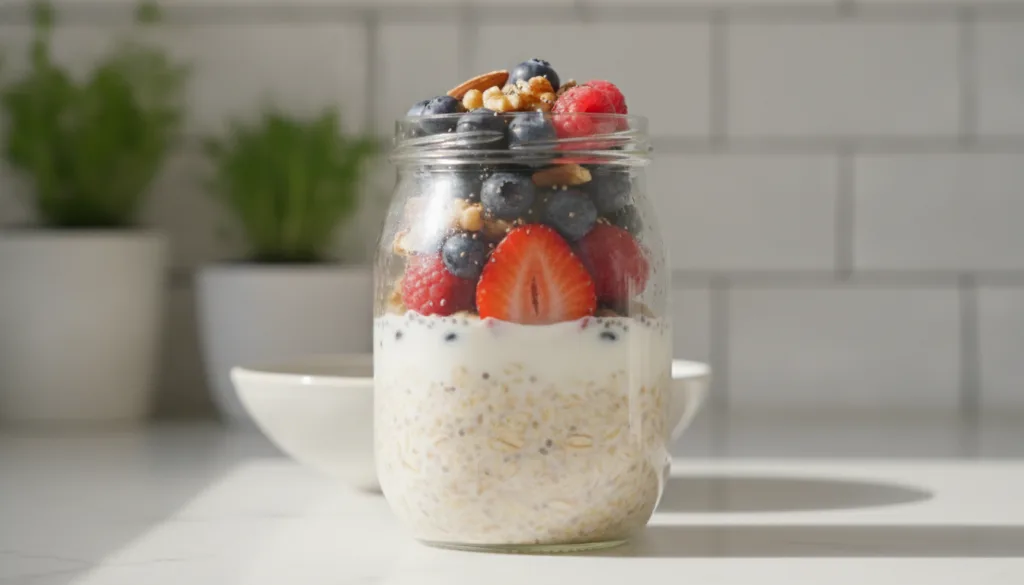
Your Go-To Overnight Oats Recipe
Here’s a simple, foundational recipe to get you started, which you can then customize to your heart’s content, keeping our freshness tips in mind:
Classic Overnight Oats
Servings: 1
Prep time: 5 minutes
Chill time: 4+ hours (or overnight)
Ingredients:
- 1/2 cup rolled oats (not instant)
- 1 cup milk (dairy or plant-based like almond, soy, or oat milk)
- 1-2 tablespoons chia seeds (optional, for extra thickness and nutrients)
- 1 tablespoon maple syrup or honey (optional, for sweetness)
- 1/4 teaspoon vanilla extract (optional)
- Pinch of salt
Instructions:
- In an airtight jar or container (like a Mason jar), combine the rolled oats, milk, chia seeds (if using), maple syrup or honey, vanilla extract, and salt.
- Stir well to ensure all ingredients are thoroughly mixed and the oats are submerged in the liquid.
- Cover the jar tightly with a lid.
- Refrigerate for at least 4 hours, or preferably overnight, for the best texture.
- The next morning (or up to 2 days later), remove from the fridge. Stir well.
- Add your desired toppings just before serving, such as fresh berries, sliced banana, nuts, seeds, or a dollop of yogurt. Enjoy!
Frequently Asked Questions (FAQs) About Overnight Oats Storage
Can I prepare a week’s worth of overnight oats?
While you can, for optimal texture and flavor, it’s best to prepare batches for 2-3 days at a time. This helps avoid overly mushy oats and preserves the quality of fresh additions.
What are the best containers for storing overnight oats?
Airtight glass jars, like Mason jars with tight-fitting lids, are highly recommended. They are non-reactive, easy to clean, and seal well to keep oats fresh.
How do I prevent my fruit from getting soggy?
For delicate fruits like berries or sliced bananas, it’s best to add them just before serving. For heartier fruits like chopped apples, you can add them during prep, but consider adding a squeeze of lemon juice to prevent browning.
Can I heat up overnight oats?
Yes, you can! While traditionally eaten cold, you can gently warm overnight oats in the microwave or on the stovetop if you prefer a warm breakfast.
Final Thoughts: Embrace the Oats, Smartly
Overnight oats remain a fantastic, healthy eating solution for busy mornings. While they undergo subtle changes in texture and flavor after two days, they are still perfectly safe and delicious to consume. By understanding these shifts and implementing smart storage and prep strategies, you can enjoy perfectly textured, flavorful overnight oats throughout your week, minimizing food waste and maximizing your healthy meal prep efforts. So go ahead, prep those oats, and savor the convenience!
Medical Disclaimer
The information provided in this article is for general knowledge and informational purposes only, and does not constitute medical advice. It is essential to consult with a qualified healthcare professional or registered dietitian for personalized advice regarding your health and dietary needs. Always read food labels and be aware of any allergies or dietary restrictions you may have.