Pruning is an essential gardening practice that can transform your plants, encouraging healthier growth, more abundant blooms, and a more structured appearance. However, the art of pruning isn’t just about how you cut, but also when. Timing is everything, and a poorly timed snip can do more harm than good, leading to stress, disease, or a lack of flowers and fruit.
Many gardeners, from beginners to seasoned enthusiasts, often wonder about the best time to prune. The truth is, there’s no one-size-fits-all answer, as it depends on the plant species, its growth cycle, and your specific gardening goals. But what if you get it wrong? Your plants have a way of telling you!
Why Pruning Timing is Crucial for Plant Health
Plants operate on a biological clock, driven by seasons, light, and temperature. Pruning at the wrong time can interrupt critical processes like flowering, fruiting, or storing energy for dormancy. Understanding these cycles is key to successful pruning.
- Dormancy: For many deciduous plants, late winter or early spring (before new growth begins) is ideal, as the plant is dormant, and diseases are less active.
- Flowering: Plants that flower on old wood (e.g., lilacs, forsythia) should be pruned immediately after they finish blooming. Those that flower on new wood (e.g., hydrangeas, roses) can be pruned in late winter or early spring.
- Fruiting: Fruit trees often have specific pruning times to encourage fruit production and maintain tree structure.
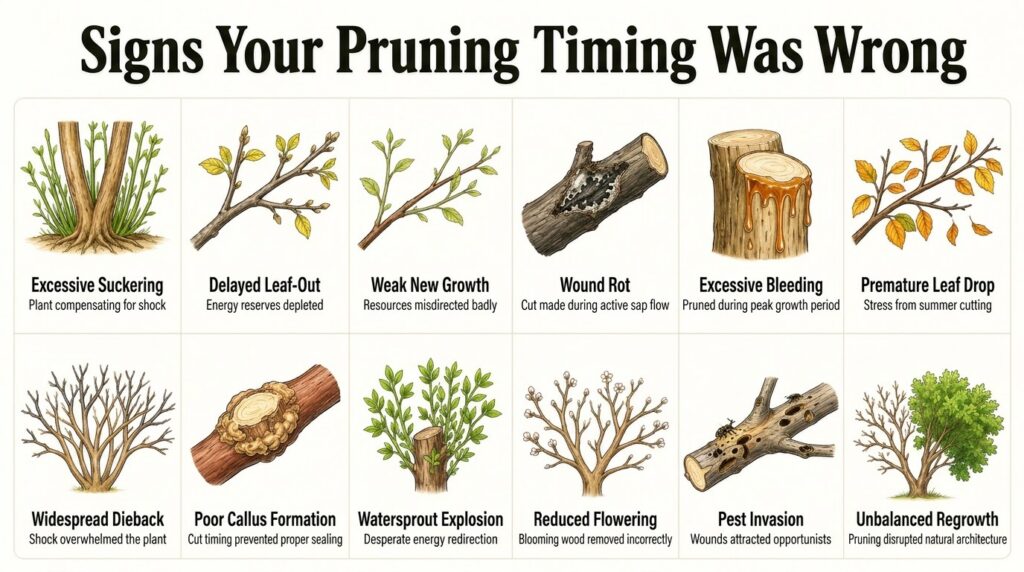
9 Signs Your Pruning Timing Was Wrong (and How to Avoid Them)
Let’s look at the common indicators that your pruning efforts might have been mistimed, along with tips to prevent these issues.
1. Excessive Suckering or Water Sprouts
If your plant is producing numerous vigorous, upright shoots from the base or main branches, you might have pruned too heavily or at the wrong time (often in late spring/early summer), stimulating rapid, undesirable growth. This is the plant’s stress response.
- Correction: Prune suckers and water sprouts as they appear. For general pruning, aim for dormancy or immediately after flowering, and avoid removing too much foliage at once.
2. Wound Rot or Disease Entry
Open pruning wounds are entry points for pests and diseases. If you prune during wet, humid conditions or when certain fungal spores are active, you increase the risk of infection, leading to rot or cankers.
- Correction: Prune on dry, clear days. Ensure your tools are clean and sharp to make clean cuts that heal quickly. Avoid pruning during periods of high disease pressure.
3. Pest Invasion
Fresh pruning cuts release sap and volatile compounds that can attract pests like borers or sap-sucking insects. Pruning during peak insect activity can make your plant vulnerable.
- Correction: Prune during dormancy when insect activity is low, or during cooler, drier periods. Monitor plants closely after pruning.
4. Reduced Flowering or No Blooms
This is a common disappointment! If you prune flowering shrubs or trees that bloom on old wood (growth from the previous year) in late winter or early spring, you’re essentially cutting off all the flower buds, resulting in fewer or no flowers that season.
- Correction: For old-wood bloomers, prune immediately after flowering. For new-wood bloomers, prune in late winter/early spring.
5. Weak Growth or Stunting
Over-pruning, especially at the wrong time (e.g., removing too much foliage during the growing season), can stress the plant and deplete its energy reserves, leading to stunted growth, sparse foliage, and overall weakness.
- Correction: Prune moderately and gradually. Understand your plant’s growth habits and energy cycles. Focus on removing dead, diseased, or crossing branches first.
6. Dieback of Branches
If branches start dying back after pruning, it could be due to several reasons related to timing: pruning too late in the season, exposing tender new growth to frost, or making cuts that are too close to the main stem or a bud, which prevents proper healing.
- Correction: Avoid heavy pruning late in the growing season. Ensure cuts are made at the correct angle and distance from buds or branch collars to facilitate healing.
7. Unusual Leaf Drop
While some leaf drop is natural, excessive or sudden leaf drop after pruning can indicate severe stress. This can happen if too much foliage is removed during hot weather, causing the plant to shed leaves to conserve moisture.
- Correction: Avoid major pruning during extreme heat or drought. Provide adequate water to stressed plants.
8. Plant Stress or Wilting
A plant showing signs of stress like wilting, yellowing leaves, or general decline after pruning often indicates that the timing was off or the pruning was too aggressive. This is particularly true if done during periods of active growth when the plant is expending a lot of energy.
- Correction: Aim for pruning during less stressful periods for the plant, such as dormancy or immediately after flowering. Ensure plants are well-hydrated before and after pruning.
9. Delayed Fruiting or No Fruit
For fruit-bearing plants, pruning at the wrong time can significantly impact yield. For example, pruning apple trees too late in the summer can remove fruit buds for the following year.
- Correction: Research the specific pruning requirements for your fruit trees and bushes. Most fruit trees are pruned in late winter for structure and late summer for fruit production.
General Pruning Timing Guidelines for Success
While specific plant needs vary, here are some general rules to help you achieve pruning perfection:
- Late Winter / Early Spring (Dormancy): Ideal for most deciduous trees and shrubs, especially those that flower on new wood. This is also a good time for structural pruning.
- After Spring Flowering: Prune shrubs that flower on old wood immediately after their blooms fade.
- Summer: Light pruning for shaping or removing dead/diseased branches. Avoid heavy pruning which can encourage late growth vulnerable to frost.
- Fall: Generally avoid heavy pruning in fall, as it can stimulate new growth that won’t harden off before winter, leading to frost damage. Only remove dead or dangerously broken branches.
Conclusion: Listen to Your Plants!
Mastering pruning timing might seem daunting at first, but by observing your plants and understanding their life cycles, you’ll soon develop an intuitive sense for when to make those cuts. Remember, pruning is about enhancing your plant’s natural beauty and health, not forcing it into submission. Pay attention to the signs, and your garden will thank you with vibrant growth, abundant blooms, and delicious harvests!