Most people walk right past it, mistaking its soft, velvety leaves for a common weed. Yet, Mullein, a towering plant with vibrant yellow spires, holds a surprising secret for easing some of our most persistent discomforts: aches and back pain. While its more famous applications often involve respiratory support, many herbalists turn to Mullein for its profound topical soothing properties. If you’ve been searching for a practical, natural way to address muscle soreness or that nagging backache, you might be overlooking a powerful ally growing right under your nose.

What It Is: Mullein, The Velvety Healer
Mullein (Verbascum thapsus) is a biennial plant native to Europe and Asia, now naturalized across North America. Easily recognizable by its tall flower stalk and soft, woolly leaves, it has been a staple in traditional folk remedies for centuries. While its flowers and leaves are commonly used for respiratory support, the plant’s properties extend to soothing external discomforts, making it an excellent candidate for topical applications aimed at relieving muscle aches, joint pain, and general body stiffness, particularly in the back.
Ingredients for Your Mullein Remedy
For topical relief from aches and back pain, we’ll focus on two primary preparations: a Mullein-infused oil and a Mullein compress. Each requires slightly different ingredients.
For Mullein Infused Oil:
- Dried Mullein Leaves and Flowers: Approximately 1 cup, loosely packed. Ensure they are fully dried to prevent spoilage.
- Carrier Oil: 2 cups of a high-quality, cold-pressed oil such as olive oil, almond oil, or jojoba oil. Olive oil is a popular choice for its stability and skin benefits.
For Mullein Compress:
- Fresh or Dried Mullein Leaves: 4-6 large leaves, depending on the size of the area you wish to cover.
- Hot Water: Sufficient to steep the leaves.
Approximate Measurements and Formula
Mullein Infused Oil:
The ratio for infusing Mullein in oil is generally 1 part dried herb to 2 parts carrier oil by volume. This ensures a potent infusion without excessive herb material that could be difficult to strain.
Mullein Compress:
The compress doesn’t require precise measurements as much as adequate coverage. Use enough leaves to create a layer over the affected area once softened.
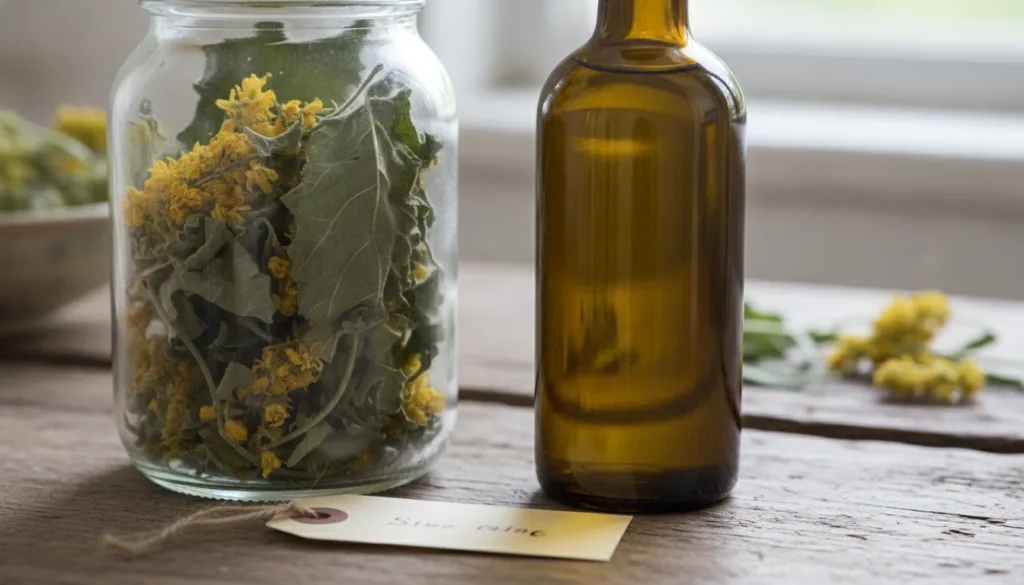
Step-by-Step Method: Mullein Infused Oil
- Prepare the Mullein: If using whole dried leaves and flowers, roughly chop them to expose more surface area.
- Combine Ingredients: Place the chopped Mullein into a clean, dry glass jar. Pour the carrier oil over the Mullein, ensuring the plant material is fully submerged.
- Infuse (Slow Heat Method Recommended):
- Double Boiler Method: Place the jar (uncapped) in a saucepan with a few inches of water, creating a double boiler. Heat on low for 2-4 hours, ensuring the water never boils and the oil doesn’t get too hot (ideally below 120°F/49°C). This gentle heat helps extract the compounds.
- Solar Infusion (longer): Cap the jar tightly and place it in a sunny windowsill for 2-4 weeks. Shake gently every day or two.
- Strain the Oil: After the infusion period, strain the oil using cheesecloth or a fine-mesh strainer into a clean, dark glass bottle. Squeeze the Mullein material gently to extract all the oil.
- Store: Label and store in a cool, dark place.
Step-by-Step Method: Mullein Compress
- Prepare Leaves: If using fresh leaves, wash them thoroughly. If using dried, they can be used as is.
- Steep: Place the Mullein leaves in a bowl and pour enough hot (not boiling) water over them to soften. Let them steep for 5-10 minutes until pliable.
- Apply: Carefully remove the warm, softened leaves. Gently squeeze out excess water. Apply the warm leaves directly to the affected area (back, shoulder, knee).
- Secure (Optional): You can cover the leaves with a clean cloth or towel and even a hot water bottle to maintain warmth for 15-30 minutes.
How to Use Your Mullein Remedies
Mullein Infused Oil:
Apply a small amount of the infused oil directly to the skin over the aching muscles or stiff back area. Gently massage the oil into the skin until absorbed. Focus on areas of tension or discomfort. This is excellent for chronic aches, post-workout soreness, or general stiffness.
Mullein Compress:
Ideal for acute discomfort or when you need immediate, localized soothing. The warmth from the compress, combined with the Mullein’s properties, can provide rapid relief. Use for sudden back spasms, localized muscle pain, or tension.
How Often to Use
- Mullein Infused Oil: Can be used daily, or 2-3 times a day as needed. Listen to your body and apply when you feel discomfort.
- Mullein Compress: Use as an acute treatment, up to 1-2 times daily for a few days, or until the discomfort subsides.
Quick Tip: Enhancing the Oil’s Power
Consider adding a few drops of essential oils known for pain relief, such as lavender, peppermint, or frankincense, to your finished Mullein oil for an extra boost. Always do a patch test first.
How to Buy / How to Choose Ingredients
When sourcing Mullein, prioritize quality. Look for:
- Organic or Wildcrafted: Ensures the plant material is free from pesticides and herbicides.
- Reputable Suppliers: Purchase dried Mullein from trusted herbal stores or online retailers.
- Freshness: Dried Mullein should have a vibrant color and a mild, earthy scent. Avoid anything that looks dull, dusty, or has an off smell.
- Carrier Oil Quality: Choose cold-pressed, unrefined carrier oils for maximum therapeutic benefit.
If harvesting Mullein yourself, ensure you correctly identify the plant and gather it from areas free of pollution, traffic, and chemical sprays. Harvest leaves and flowers when the plant is dry and vibrant.
Storage
- Mullein Infused Oil: Store in a dark glass bottle in a cool, dark place away from direct sunlight and heat. Properly stored, it can last for 6 months to 1 year, similar to the shelf life of your chosen carrier oil.
- Dried Mullein: Keep in an airtight container, away from light and moisture. It can last for 1-2 years.
Practical Tips for Best Results
- Patch Test: Always test a small amount of Mullein oil on a discrete area of your skin before widespread use to check for any sensitivity.
- Warm Application: Gently warming the Mullein oil before application can enhance absorption and provide additional soothing heat. You can do this by placing the bottle in a bowl of warm water for a few minutes.
- Consistency is Key: For chronic aches, consistent daily application of the oil will yield better results than sporadic use.
Did You Know? Fresh vs. Dried Mullein for Remedies
The choice between fresh and dried Mullein often depends on the specific remedy and intended use. Here’s a quick comparison:
| Feature | Fresh Mullein | Dried Mullein |
|---|---|---|
| Availability | Seasonal, requires identification | Year-round, easy to store |
| Compresses | Excellent, retains moisture well | Good, needs steeping to soften |
| Infused Oils | Avoid directly in oil (high water content leads to spoilage) | Ideal, stable, compounds extract well |
| Poultices | Very good, directly applied | Good, often rehydrated first |
Common Mistakes to Avoid
- Using Fresh Mullein Directly in Oil: Fresh plant material contains water, which can lead to mold and bacterial growth in your oil, spoiling the batch quickly. Always use thoroughly dried Mullein for oil infusions.
- Overheating the Oil: Boiling or excessively heating your carrier oil during infusion can degrade the therapeutic compounds of Mullein and the oil itself. Keep the heat low and gentle.
- Inadequate Straining: Leaving small plant particles in your finished oil can reduce its shelf life and potentially irritate the skin. Use multiple layers of cheesecloth or a very fine mesh filter.
- Using Sprayed Plants: Harvesting Mullein from areas treated with pesticides or herbicides will introduce harmful chemicals into your remedy.
- Misidentification: Always be 100% sure of your plant identification if wildcrafting. There are many similar-looking plants.
Cautions / Who Should Avoid It
Mullein is generally considered safe for topical use, but some precautions are necessary:
- Skin Sensitivity: Although rare, some individuals may experience skin irritation. Always perform a patch test first.
- Open Wounds: Avoid applying Mullein oil or compresses directly to broken skin or open wounds.
- Internal Use: This article focuses on topical use for aches. For internal use (e.g., Mullein tea for respiratory issues), consult with a healthcare professional, especially if pregnant, nursing, or taking medications.
- Allergies: If you have allergies to other plants in the figwort family (Scrophulariaceae), exercise caution.

Quick Summary: Your Mullein Aches & Pain Guide
- Best Preparation: Mullein-infused oil for chronic aches, Mullein compress for acute pain.
- Best Use-Case: Topical relief for muscle soreness, back pain, joint stiffness.
- Storage: Oil in a dark, cool place for 6-12 months; dried herb in an airtight container for 1-2 years.
- When to Use: Daily for oil; as needed for compresses.
- What to Avoid: Using fresh Mullein directly in oil; overheating oil; applying to broken skin.
FAQ
Q1: Can I use fresh Mullein leaves to make the infused oil?
A: No, it’s crucial to use thoroughly dried Mullein leaves and flowers for oil infusions. Fresh plant material contains water, which can cause the oil to spoil and grow mold.
Q2: How long does Mullein-infused oil typically last?
A: When stored properly in a dark glass bottle in a cool, dark place, Mullein-infused oil can last for 6 months to 1 year, depending on the shelf life of your chosen carrier oil.
Q3: Can I make Mullein tea for back pain?
A: While Mullein tea is traditionally used for respiratory issues, its direct impact on topical aches and back pain when consumed as a tea is less documented than its topical applications. For localized relief, the oil or compress is more effective.
Q4: Is Mullein oil safe for sensitive skin?
A: Mullein oil is generally well-tolerated, but it’s always wise to perform a patch test on a small area of skin before applying it widely, especially if you have sensitive skin.
Q5: What’s the best carrier oil for Mullein infusion?
A: Olive oil is an excellent and popular choice due to its stability, skin benefits, and affordability. Almond oil and jojoba oil are also good alternatives.
Q6: How long does it take to feel relief from Mullein oil?
A: The onset of relief can vary. Some individuals may feel soothing effects shortly after application, while for chronic aches, consistent daily use over several days or weeks may yield more noticeable long-term benefits.
Q7: Can I use Mullein during pregnancy or breastfeeding?
A: If you are pregnant or breastfeeding, it’s always best to consult with a healthcare professional before using any herbal remedies, including topical Mullein preparations.
Conclusion
Mullein, the unsung hero of the herb garden, offers a practical and accessible path to easing everyday aches and persistent back pain. By harnessing its gentle power through a carefully prepared infused oil or a comforting compress, you can tap into a traditional remedy that prioritizes topical soothing and natural comfort. Don’t let this humble plant remain overlooked; invite its surprising strength into your daily wellness routine and discover the difference it can make.
You may also like: The Full Guide to Arnica Oil for Bruises
Read more: DIY Ginger-Turmeric Compress for Joint Support