Ever wished your garden could produce even more, but felt limited by space? The secret to an abundant harvest often lies not in expanding outwards, but in growing upwards! Vertical gardening, powered by simple DIY trellises, is a game-changer for home gardeners and small growers. It’s an ingenious way to support climbing plants, improve plant health, and dramatically increase your yield without needing extra land. Imagine lush vines laden with cucumbers, pole beans, or vining tomatoes, all thriving in a compact footprint.
Embracing vertical growth transforms your garden into a multi-dimensional landscape, making it more productive and often easier to manage. This guide will walk you through the benefits of trellising, introduce popular DIY trellis designs, and help you choose the best support for your favorite vining vegetables. Get ready to elevate your gardening skills and enjoy a more bountiful harvest!
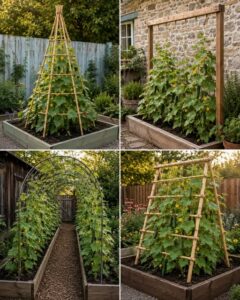
Why Go Vertical? The Power of Trellises
Vertical gardening with trellises isn’t just a trend; it’s a time-tested strategy for a healthier, more productive garden. Here’s why supporting your climbing plants makes such a difference:
- Space Maximization: This is the most obvious benefit. By training plants to grow upwards, you free up valuable ground space, allowing you to plant more or give other plants more room to spread. This is especially crucial for small space gardening or container gardening.
- Improved Air Circulation: Lifting foliage off the ground allows for better airflow around your plants. This significantly reduces the risk of common fungal diseases like powdery mildew and rust, leading to healthier plants and fewer pest problems.
- Cleaner, Healthier Produce: Fruit and vegetables that ripen off the ground are less susceptible to rot from soil contact and are generally cleaner, making harvesting easier and more enjoyable.
- Easier Harvesting: No more bending and searching through dense foliage! Produce hanging at eye level is simple to spot and pick, encouraging more frequent harvests.
- Reduced Pest Pressure: While not a guarantee, elevating plants can make them less accessible to some ground-dwelling pests. It also makes it easier for you to spot and address any pest issues quickly.
- Enhanced Sunlight Exposure: Vertical plants receive more even sunlight exposure across their leaves and fruits, promoting better growth and ripening.
Essential Tools and Materials for Your DIY Trellis
One of the beauties of DIY trellises is that they can often be made from materials you already have or can find affordably. Here’s a basic list:
- Support Structures: Wooden stakes (rot-resistant like cedar or treated lumber), bamboo poles, rebar, PVC pipe, old fence posts, or even sturdy branches.
- Climbing Material: Garden netting, twine (jute, sisal, or synthetic), chicken wire, hog panel, cattle panel, or sturdy wire mesh.
- Fasteners: Zip ties, garden clips, staples, screws, nails, or durable garden tape.
- Tools: Measuring tape, saw (for wood/PVC), wire cutters, hammer or drill, and a strong hand for driving stakes.
Popular DIY Trellis Designs and What to Grow On Them
Let’s dive into some practical trellis designs you can build and the best plants for each. Remember to choose materials that are strong enough to support the mature weight of your plants and their fruit.
A-Frame Trellis
An A-frame trellis consists of two panels hinged at the top, forming an ‘A’ shape. This design is stable and provides two vertical surfaces for climbing. It’s excellent for rows in a raised bed or in-ground garden.
- Best For: Cucumbers (vining varieties), pole beans, smaller vining squash.
- Materials: 2×2 or 1×2 wooden stakes, garden netting or cattle panel, hinges, screws.
- Setup Tip: Position the ‘A’ with the widest part at the bottom for maximum stability. Ensure the legs are firmly anchored in the soil.
- Planting: Plant along the base of each side of the A-frame.
Sturdy Wire or Cattle Panel Trellis
A simple, highly durable trellis made from a heavy-gauge wire panel (like a cattle panel or hog panel) supported by T-posts or wooden posts. These are incredibly strong and can last for many seasons.
- Best For: Vining tomatoes (indeterminate types), heavy vining squash (e.g., ‘Spaghetti Squash’, ‘Butternut’), small melons, large cucumbers.
- Materials: Cattle panel (typically 16 ft long, 50 inches tall), T-posts or sturdy wooden posts, U-bolts or heavy-duty zip ties for attachment.
- Setup Tip: Bury posts deeply (at least 1.5-2 ft) and securely attach the panel. For extra-heavy plants like melons, provide slings made from old pantyhose or fabric strips to support individual fruits.
Teepee or Obelisk Trellis
This classic design uses three or more poles tied together at the top, forming a cone or pyramid shape. It’s visually appealing and perfect for a central garden feature.
- Best For: Pole beans, shelling peas, sweet peas, ornamental climbing annuals.
- Materials: 3-5 sturdy bamboo poles or straight branches, strong twine or rope.
- Setup Tip: Drive the base of each pole firmly into the ground before tying them securely together at the top. You can add horizontal strings for additional climbing points.
String or Netting Trellis
Ideal for lighter vining plants, a string trellis consists of vertical strings anchored at the bottom and attached to a horizontal support at the top. Netting can also be stretched between two posts.
- Best For: Bush beans (if you want to give them light support), peas (snow peas, snap peas), lighter cucumber varieties.
- Materials: Sturdy posts or an existing fence for support, strong garden twine or lightweight netting, staples or clips.
- Setup Tip: Ensure the top horizontal support is taut and secure. For string trellises, spacing strings 4-6 inches apart works well for most plants.
Key Plants for Vertical Gardens: A Growing Guide
Choosing the right plants for your vertical garden is crucial. Here’s a quick guide to some top performers:
Cucumbers (Cucumis sativus)
Hardiness: Annual in all USDA zones.
Plant type: Vining vegetable.
Exposure: Full sun (at least 6-8 hours daily).
Height: Up to 6-8 feet, depending on variety.
Spread: Vining habit requires vertical support.
Cucumbers are a vertical gardening favorite. Look for vining or