Protein is a fundamental macronutrient, essential for building and repairing tissues, making enzymes and hormones, and providing a sustained source of energy. Whether you’re aiming to build muscle, manage your weight, or simply maintain overall vitality, understanding and incorporating top protein sources into your daily diet is crucial. This guide will reveal key protein-rich foods, from lean meats to versatile plant-based options, helping you unlock your protein power for optimal health and energy.
Many people wonder which foods truly stand out when it comes to protein content and nutrient density. We’ll explore a variety of everyday foods that effectively fuel your body, each packed with essential nutrients. From savory chicken to creamy Greek yogurt, discover how these staples can easily elevate your nutritional intake and support your wellness journey.
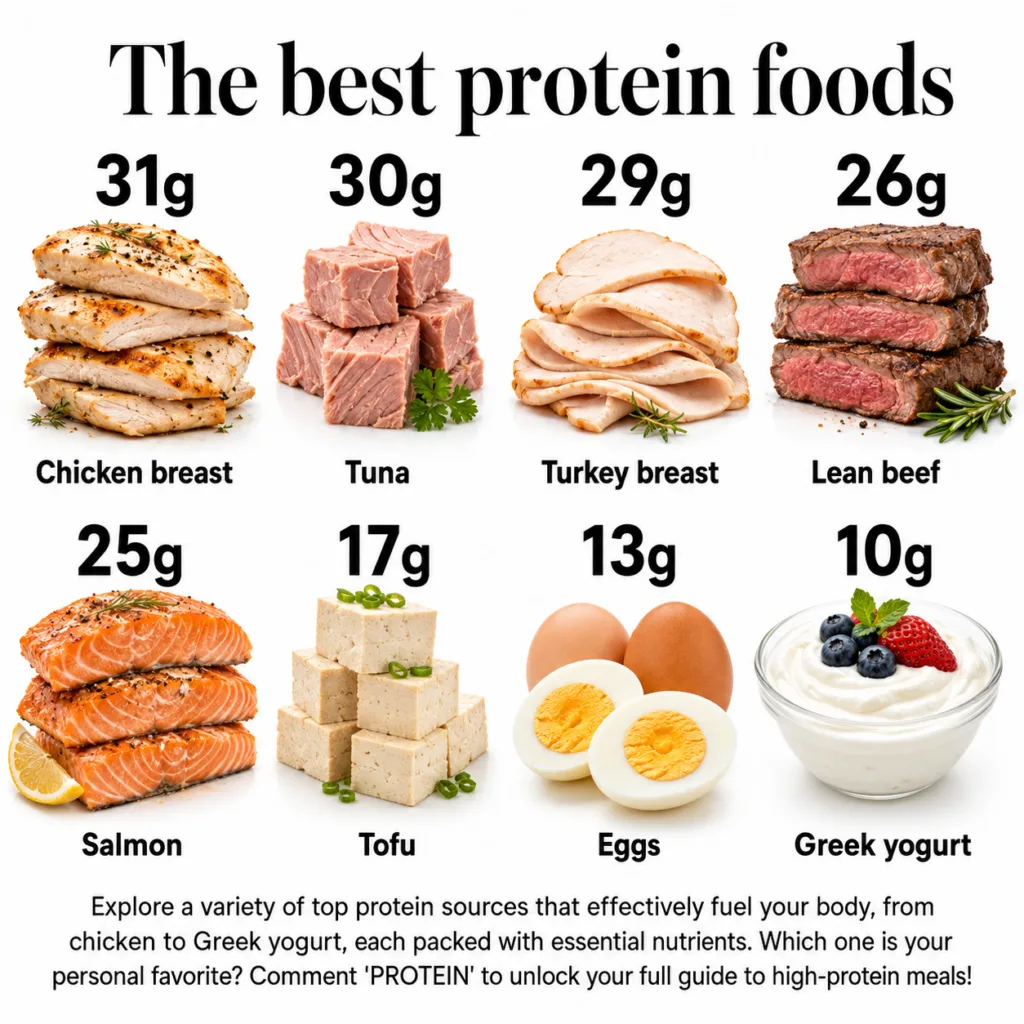
Lean Meats: Building Blocks for Strength
Lean meats are often celebrated for their high protein content and complete amino acid profile, meaning they provide all nine essential amino acids your body needs. They are an excellent choice for muscle growth, repair, and overall satiety.
Chicken Breast and Turkey
- Why they’re great: Both chicken and turkey breasts are lean protein sources, low in saturated fat when the skin is removed. They are incredibly versatile for various meals.
- Nutritional Highlights: Rich in B vitamins (especially B6 and B12), niacin, and selenium, which support energy metabolism and immune function.
- How to enjoy: Grill, bake, or stir-fry them. Add sliced chicken or turkey to salads, sandwiches, or integrate into wraps for a protein boost.
Fish and Seafood: Omega-3 Rich Protein
Beyond being a fantastic source of protein, many types of fish and seafood offer unique benefits, particularly their omega-3 fatty acid content, crucial for heart and brain health.
Salmon, Tuna, and Cod
- Why they’re great: Salmon is famous for its omega-3s, while tuna (especially light, canned tuna) is a convenient protein powerhouse. Cod is a lean, white fish with a mild flavor.
- Nutritional Highlights: Omega-3 fatty acids (EPA and DHA), vitamin D, iodine, and selenium. These nutrients support cardiovascular health, bone density, and thyroid function.
- How to enjoy: Baked salmon fillets, tuna salads, grilled cod, or incorporate into fish tacos for a healthy dinner.
Eggs: The Gold Standard of Bioavailability
Often referred to as nature’s multivitamin, eggs are an incredibly affordable and bioavailable source of protein, meaning your body can efficiently use the protein they provide.
- Why they’re great: One large egg contains about 6 grams of high-quality protein, along with a host of vitamins and minerals.
- Nutritional Highlights: Choline (important for brain health), vitamin D, B vitamins, and antioxidants like lutein and zeaxanthin for eye health.
- How to enjoy: Hard-boiled as a snack, scrambled for breakfast, poached over avocado toast, or added to salads for extra protein.
Dairy Delights: Creamy Protein Powerhouses
Dairy products like Greek yogurt and cottage cheese are not only delicious but also packed with protein, making them excellent choices for breakfast, snacks, or even desserts.
Greek Yogurt and Cottage Cheese
- Why they’re great: Greek yogurt offers significantly more protein than regular yogurt, along with beneficial probiotics. Cottage cheese is another high-protein, low-calorie dairy option.
- Nutritional Highlights: Excellent sources of calcium for bone health, vitamin B12, and often fortified with vitamin D. The probiotics in yogurt support gut health.
- How to enjoy: Top Greek yogurt with berries and a sprinkle of nuts, or mix cottage cheese with fruit or savory herbs for a quick snack.
Legumes: Plant-Based Protein and Fiber
For those seeking plant-based protein options, legumes are indispensable. They provide a powerful combination of protein and dietary fiber, supporting digestive health and sustained energy.
Lentils, Black Beans, and Chickpeas
- Why they’re great: Legumes are versatile, affordable, and provide both protein and complex carbohydrates, making them very filling.
- Nutritional Highlights: Rich in fiber, iron, folate, and magnesium. They can help regulate blood sugar levels and contribute to heart health.
- How to enjoy: Add lentils to soups or stews, make black bean burgers, or whip up a hummus dip with chickpeas for a flavorful, protein-rich snack.
Nuts and Seeds: Nutrient-Dense Protein Boosts
Small but mighty, nuts and seeds are nutrient powerhouses, offering a good amount of protein, healthy fats, fiber, and a wide array of vitamins and minerals. They are perfect for snacking or adding texture to meals.
Almonds, Chia Seeds, and Pumpkin Seeds
- Why they’re great: Almonds are known for vitamin E, chia seeds for omega-3s and fiber, and pumpkin seeds for zinc and magnesium. They offer a convenient way to boost protein intake.
- Nutritional Highlights: Healthy monounsaturated and polyunsaturated fats, fiber, vitamin E, magnesium, zinc, and selenium.
- How to enjoy: A handful of almonds as a snack, chia seeds in overnight oats or smoothies, or pumpkin seeds sprinkled over salads and soups.
Tofu and Tempeh: Versatile Plant-Based Staples
Derived from soybeans, tofu and tempeh are excellent plant-based protein sources that absorb flavors well, making them incredibly versatile in cooking.
- Why they’re great: Both are complete proteins, offering all essential amino acids. Tempeh, being fermented, also provides probiotics.
- Nutritional Highlights: Good sources of iron, calcium, manganese, and phosphorus. Tempeh adds beneficial probiotics for gut health.
- How to enjoy: Marinate and bake or pan-fry tofu for stir-fries, or crumble tempeh into chili or taco fillings as a meat alternative.